
Concrete Pool Waterproofing: 4-Step Method (That Works)
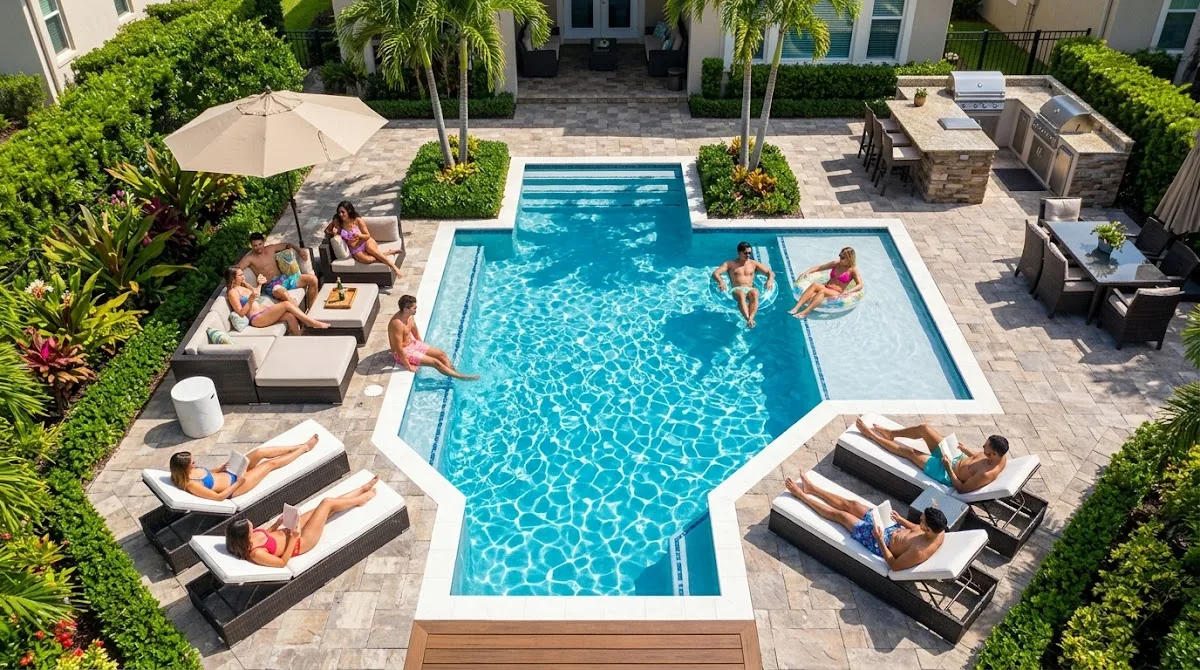
Concrete feels solid. It is solid. But it is also porous, which means a pool can slowly take on damage long before leaks become obvious.
Here’s the good part. With the right prep, the right system, and careful testing, you can build a finish that lasts.
Why Waterproofing Concrete Pools Is Essential
A concrete pool is strong, but strength alone does not make it waterproof. Concrete is a porous material. That means water can move through it, especially when the shell is left unprotected or the water proofing system is too thin.
Think about it this way. A pool is not just holding water. It is also resisting pressure from the soil, ground humidity, and changing temperatures. If the shell does not have a reliable waterproof barrier, small defects can turn into staining, loose finishes, and expensive repair work.
The Threat of Efflorescence in a Concrete Pool
Efflorescence is a mineral deposit left behind when water seeps through masonry or concrete and then evaporates. In a pool, that can show up as white powder, streaks, or embedded marks that ruin a luxury finish.
There are two types:
- Primary efflorescence happens during the concrete curing process.
- Secondary efflorescence happens after the structure has hardened and water keeps moving through unprotected concrete.
Calcium and lime can also appear differently from soft salt deposits. Instead of brushing off easily, they may bond into the finish and stain tile lines, grout joints, and exposed areas. That is why waterproofing concrete pools is not cosmetic. It is structural protection.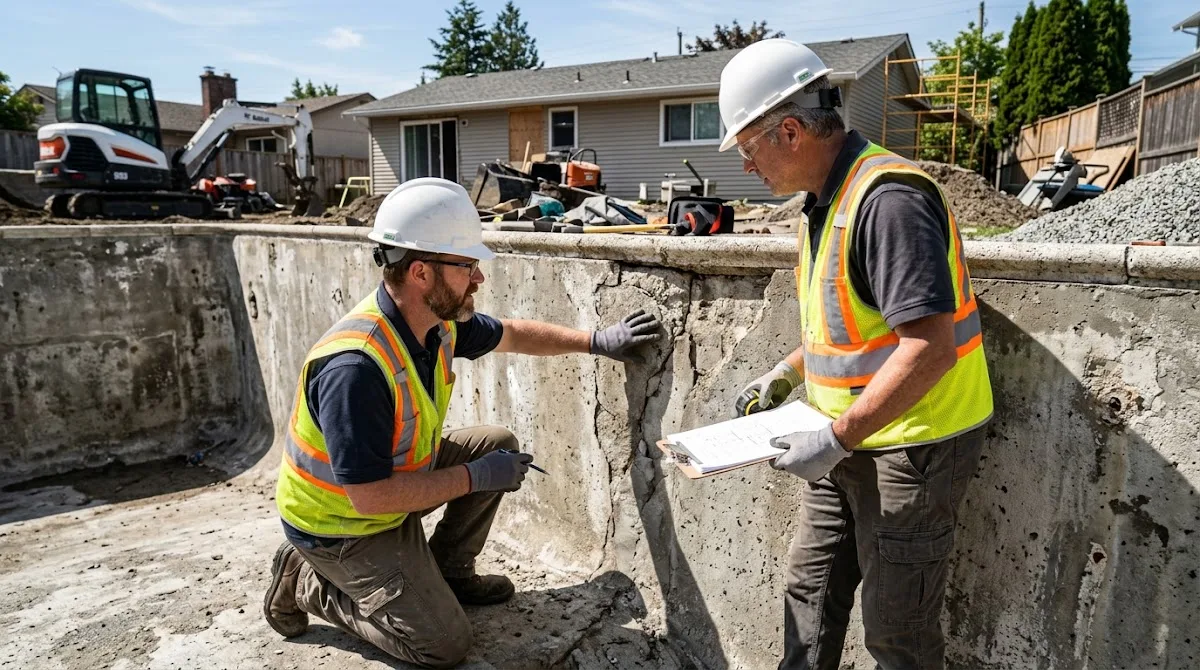
Managing Hydrostatic Pressure
Hydrostatic pressure is the force created by water pressing against a structure. In a swimming pool, that force works in two directions.
- Positive hydrostatic pressure comes from the pool with water pushing outward and downward on the inside.
- Negative hydrostatic pressure comes from groundwater or damp soil pushing inward from behind the pool.
Miss either one and problems can occur fast. Coatings can blister. Tile can release. Grout can discolor. In severe cases, the cost to repair a failed concrete pool shell climbs quickly because the issue is no longer just surface-deep.
Concrete vs. Reinforced Concrete: What You Need to Know
A reinforced concrete pool is a monolithic structure shaped with embedded steel and built for high resistance. Unlike beam-and-block construction, it uses a continuous shell across the floor and each wall, which gives the pool builder more freedom in depth, curves, benches, and a vanishing edge design.
That flexibility is a huge benefit. So is durability. But even reinforced concrete is still porous. Steel helps reinforce the structure, not waterproof it.
In some cases, dense gunite or shotcrete guidance is cited as a reason a shell may resist water on its own, especially in a fully in-ground pool. Still, most professionals recommend full waterproof protection because terrain humidity, internal pressure, and long-term exposure can still cause water movement through the concrete.
Choosing the Right Waterproof Concrete Product
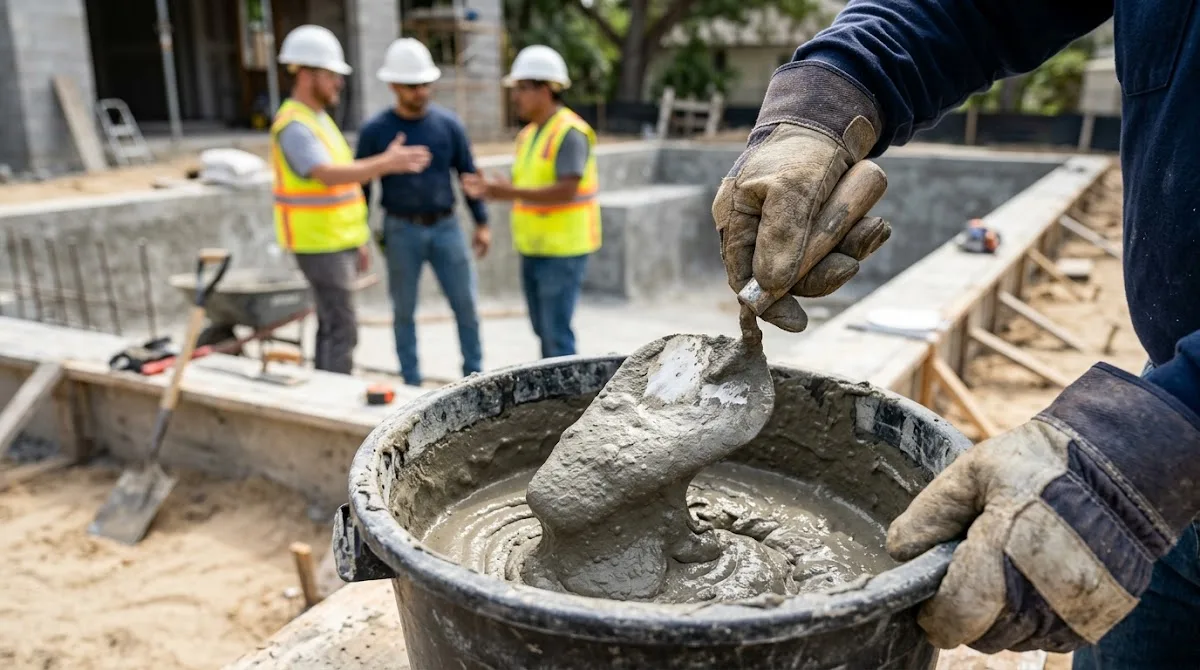 Not all systems are built for submerged wet areas. That matters.
For tile finishes, the industry standard under P602 of the TCNA handbook calls for a cementitious waterproof layer over the concrete shell. For higher-end construction, many teams now prefer advanced systems with stronger mechanical bonding, better flexibility, and a cleaner finish. You can explore pool waterproofing systems designed for this kind of work.
The best product for a pool application should do more than block liquid. It should bond correctly to bare concrete, support plaster or tile, and handle movement without becoming brittle.
Look for certified materials. ASTM, NSF, and Miami-Dade NOA approvals matter because they help confirm the product has been tested for performance and durability. There is also a health angle. Modern micro-ceramic systems can offer antimicrobial, antibacterial, and antiviral properties, which adds another layer of protection for the pool environment. This is one reason many owners now see pool health as part of material selection, not just maintenance.
The 4-Step Method for Waterproofing Concrete Pools
Here is where good jobs separate from risky ones.
1. Surface Preparation and Cleaning
Preparation controls bond strength. If the surface has grease, laitance, dust, old paint, honeycombing, or weak cement film, the waterproof coat will not grab properly.
Use the right equipment for the condition of the shell. Depending on the defect, that may include pressure washing, grinding, scarifying, sand blasting, or a stiff brush. Let the pool dry fully after cleaning. In most climates, that takes 3 to 5 days.
Pre-fill any crack up to 1/8 inch wide before moving on. Also inspect drains, returns, bench transitions, and every corner where movement or seepage may spot a weak detail.
2. Applying the Waterproof Product Membrane
This is the stage where details matter most. Flash all control joints, seams, drains, bench seats, fittings, and 90-degree transitions with mesh where required. Then apply the waterproof membrane from the deep end toward the shallow end.
Avoid work below 40°F or above 90°F. The ideal window is 1 to 2 weeks with no rain so the system can set correctly.
Depending on the mix and the substrate, installers may use a 3/4 or 1 inch nap roller, a v-notch trowel, or a brush for tight spots. Some systems also specify a layer of Basecrete or a similar liquid-applied base before the finish layer. The first coat should achieve even coverage and proper thickness, especially in submerged zones where 60 mil minimum is often required.
3. Curing, Quality Verification, and Testing
Every system has its own curing time. Some need 24 hours between coats. Others need 6 to 7 days before you fill the vessel. Follow the data sheet, especially when humidity is high.
Next, test in phases. Fill below the fixtures first and watch the level. If it holds, fill above the first row of penetrations and test again. Keep a bucket or other test vessel nearby with pool water inside it so you can compare evaporation against actual loss.
If the pool drops faster than the test container, you may need to inspect the shell, grout lines, fittings, or a hidden defect behind the pool before finish materials go in.
4. Pool Filling and Chemical Balancing
Once the system is fully dry, fill continuously until the pool is full. Do not stop midway, because ring marks and uneven exposure can affect the finish.
Then balance chemistry carefully. Keep pH, alkalinity, and hardness in range to protect the new waterproof layer. Start filtration, add treatment chemicals, and bring the pool water into normal operation. Done properly, this final step helps protect your investment over the long term.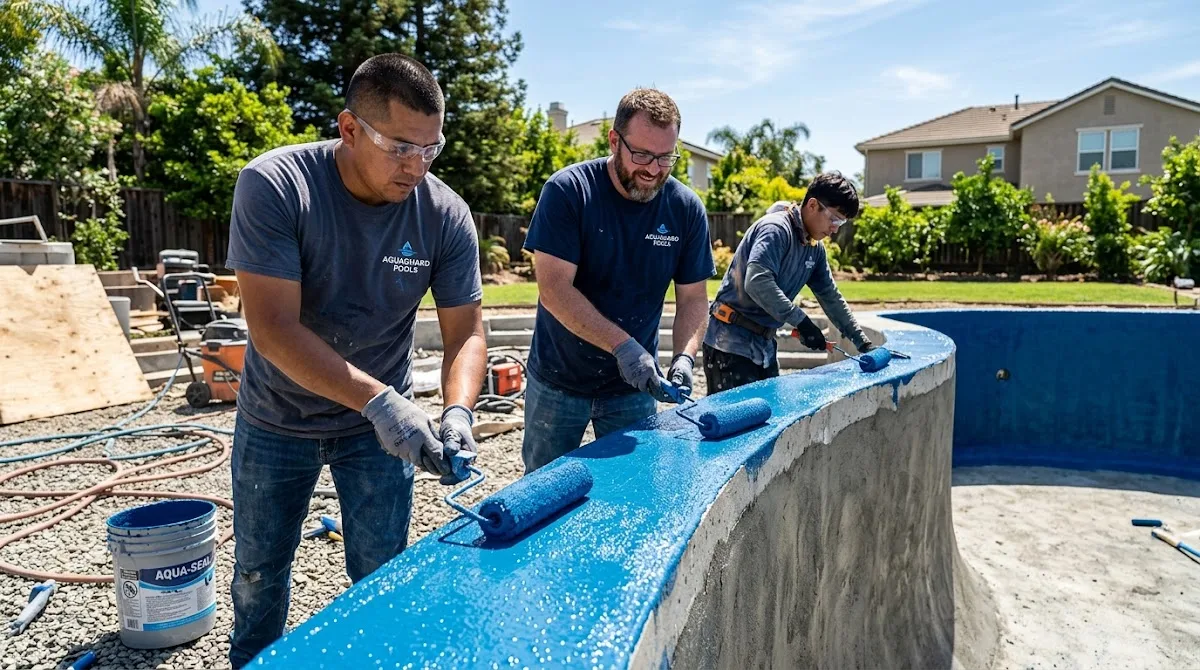 That is also why many teams focus on investment protection from day one.
Essential Data for Waterproofing Products and Application
Adhering to strict metrics helps the system perform as intended.
| Application Metric | Specification / Value |
|---|---|
| Crack Pre-filling Width | Up to 1/8” wide |
| Minimum Membrane Thickness | 60 mil (for submerged applications) |
| Coating Thickness (Standard) | Minimum 25 mils wet per coat |
| Temperature Constraints | Minimum 40°F / Maximum 90°F |
| Pool Drying Time (Post-Prep) | 3-5 days |
| Standard Cure Time Before Fill | 6-7 days (system dependent) |
| Optimal Weather Window | 1-2 weeks of zero rain |
| Floated Area Thickness | 1/8 inch (trowel applied) |
Conclusion
Waterproofing a concrete pool takes more than one coat and good intentions. You need clean prep, a tested system, careful sequencing, and solid verification.
When those pieces come together, the result is a pool that stays cleaner, lasts longer, and is far less likely to suffer leaks, staining, or finish failure.
Frequently Asked Questions About Concrete Pool Waterproofing
Does a concrete pool need to be waterproofed?
Yes. Concrete is porous, so a waterproof system helps prevent leaks, staining, and damage.
What are common waterproofing mistakes?
Poor prep, thin coverage, rushing dry times, and skipping testing are common mistakes.
What is the best waterproofing for a swimming pool?
A certified system designed for submerged use, strong bonding, and long-term durability is the best choice.
How to waterproof a concrete pool?
Clean the shell, repair weak areas, install the waterproof system, test it, then fill and balance the pool.
What is the downside of sealing concrete?
Some sealers are too thin, wear out fast, or trap problems if the substrate was not prepared properly.