
13 Pool Resurfacing Colors That Won't Fade Fast (Top Picks)
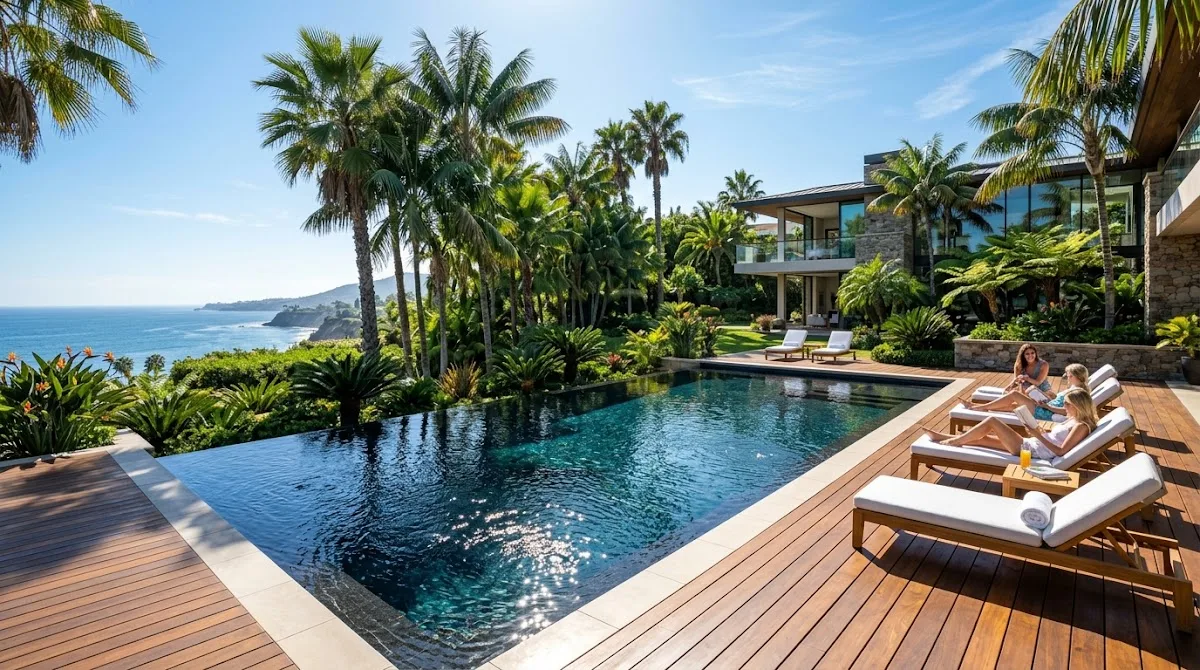
The best pool color should look good on day one and still look good after heat, chlorine, and constant sun.
Let’s walk through the top picks, what affects fading, and how to match the surface color to your space.
The Science Behind Fade-Resistant Pool Colors
Here’s the part most people skip.
They pick a color sample, hold it in the sun for ten seconds, and decide. But the color of your pool is not just about the chip in your hand. It’s about how light behaves once water, depth, and finish texture get involved.
Blue water appearance starts with physics. Water naturally absorbs longer light wavelengths like red, orange, and yellow. It scatters shorter blue wavelengths back to your eyes. That’s why pool water often reads blue even when the base material is not bright blue.
A swimming pool finish also changes that effect. Dark bases create more depth. Reflective particles create more movement. Blues and whites can shift dramatically between morning and afternoon because reflection changes with the angle of the sun.
Now add chemistry.
UV exposure, sanitizer levels, and heat all work on the top layer of a finish over time. That’s where darker colors often help. They absorb more light energy instead of reflecting it in a way that shows photodegradation quickly. Put simply, darker finishes tend to hide fading better and slow the visible loss of pigment.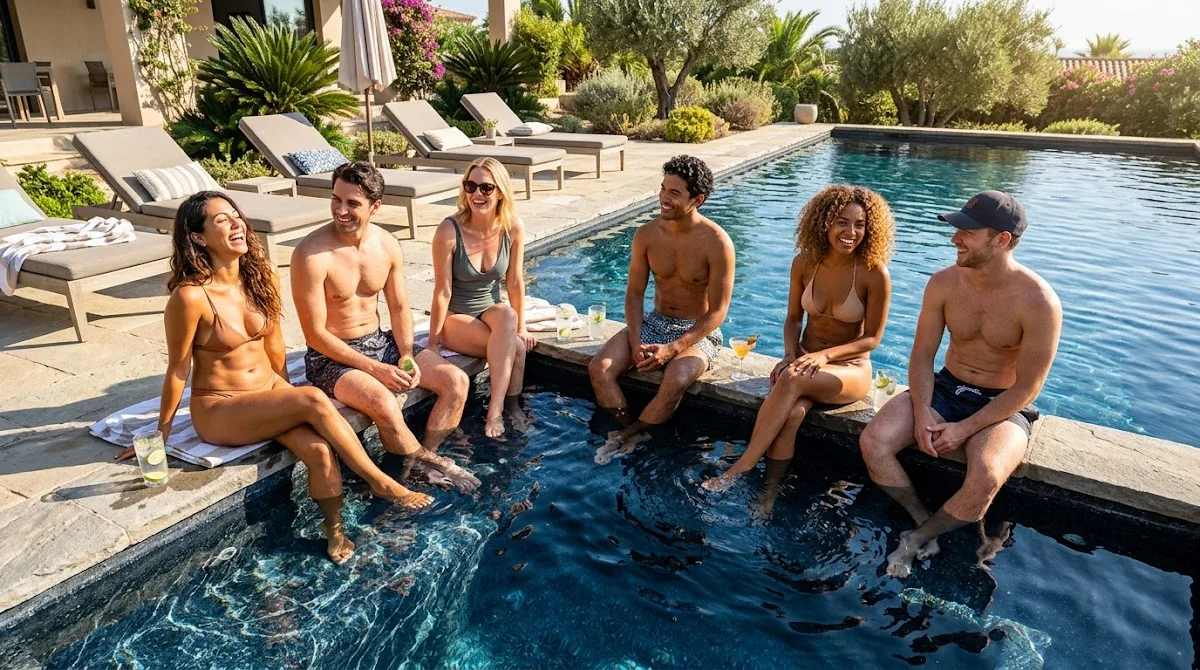
Modern premium systems go further. They use UV inhibitors, chemical resistors, and permanent color integration inside the material itself. That matters because a finish that holds pigment throughout its matrix is less likely to peel, flake, or delaminate. If you want to compare shades side by side, a pool color chart is a smart place to start.
Pool resurfacing is also moving beyond old-school plaster alone. Newer high-performance systems use micro-ceramic waterproofing and luxury finishing layers engineered to maintain appearance under heavy sun, water, and chemical exposure. That extra structure supports both beauty and superior durability.
How to Choose the Perfect Pool Color
Choosing the perfect swimming pool is not really about trends. It’s about matching water color, texture, and setting so the whole pool area feels intentional.
Start with depth and size.
Deeper water absorbs more light. Because of this, the same finish can look richer in a deep end than in a shallow tanning ledge. A compact pool may show a brighter hue, while a larger vessel can create a more dramatic field of color.
Next, think about the time of day.
Morning light softens everything. Midday sun makes vibrant colors look cleaner and brighter. Evening light adds warm undertones that can pull blue toward teal, gray, or even turquoise depending on the surrounding materials.
Then look outside the pool shell.
Your landscape matters more than most people expect. Trees, lawn, stone coping, and nearby walls all cast a subtle reflection onto the water. Warm decking can add beige or golden notes. Dense planting can add green undertones. Strong landscape design can completely change how the chosen pool reads from across the yard.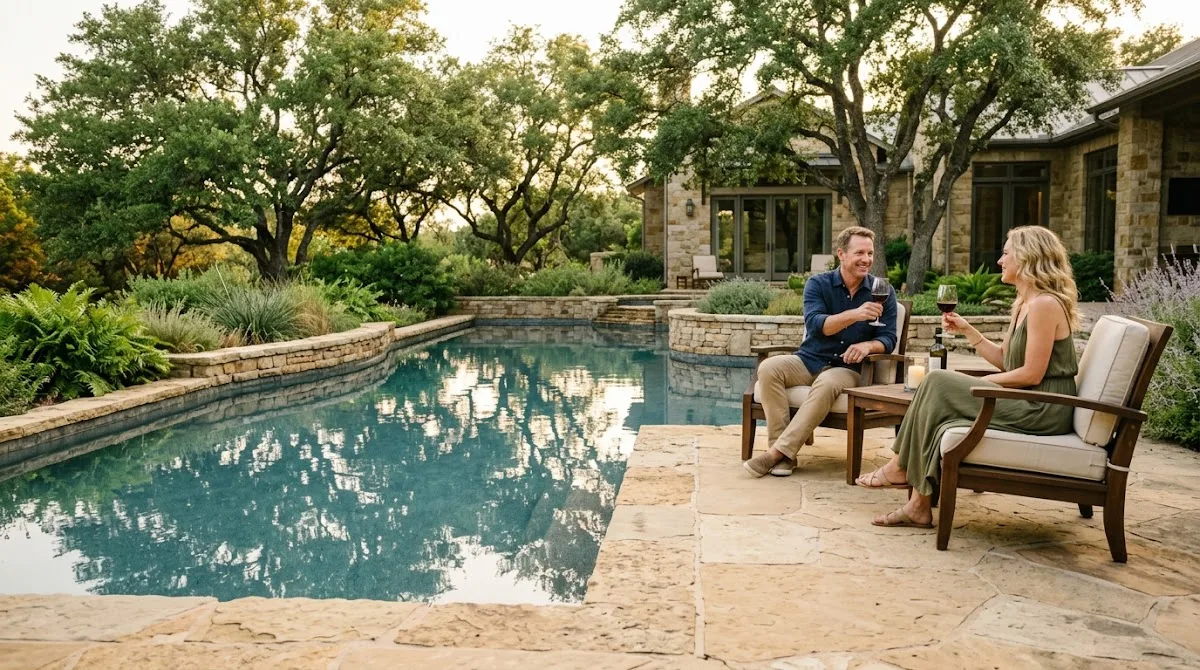
Maintenance matters too. Lighter colors show leaves and dust faster. Darker finishes do a better job hiding minor imperfections and small stains. If you want your pool to stay visually clean between service visits, that tradeoff matters.
Also, think about style. The perfect pool color should complement the home’s architecture, tile details, and the wider outdoor space. For a modern pool design, gray provides sophisticated contrast. For a tropical backyard oasis, richer blues or aquamarine tones often feel more natural.
Top 13 Fade-Resistant Swimming Pool Colors
1. Ebony Blue: The Deepest Water Color
Fade Resistance Rating: ★★★★★
Ebony Blue is the boldest option here. It uses a near-black base with blue and white highlights for dramatic depth and subtle shimmer effects.
Because the pigmentation is so dark, it offers strong natural resistance to visible fading. In advanced systems, integrated gelcoat-style technology helps lock the finish color in place instead of leaving it vulnerable at the surface.
2. Black Onyx: A Premium Dark Pool Finish
Fade Resistance Rating: ★★★★★
Black Onyx delivers a deep dark blue look with a natural stone feel. It’s one of those shades that can make a pool feel like the centerpiece of the whole outdoor living space.
This type of finish often uses river pebble with strong binders to resist chemical wear. The textured surface spreads sunlight and wear more evenly across the pool.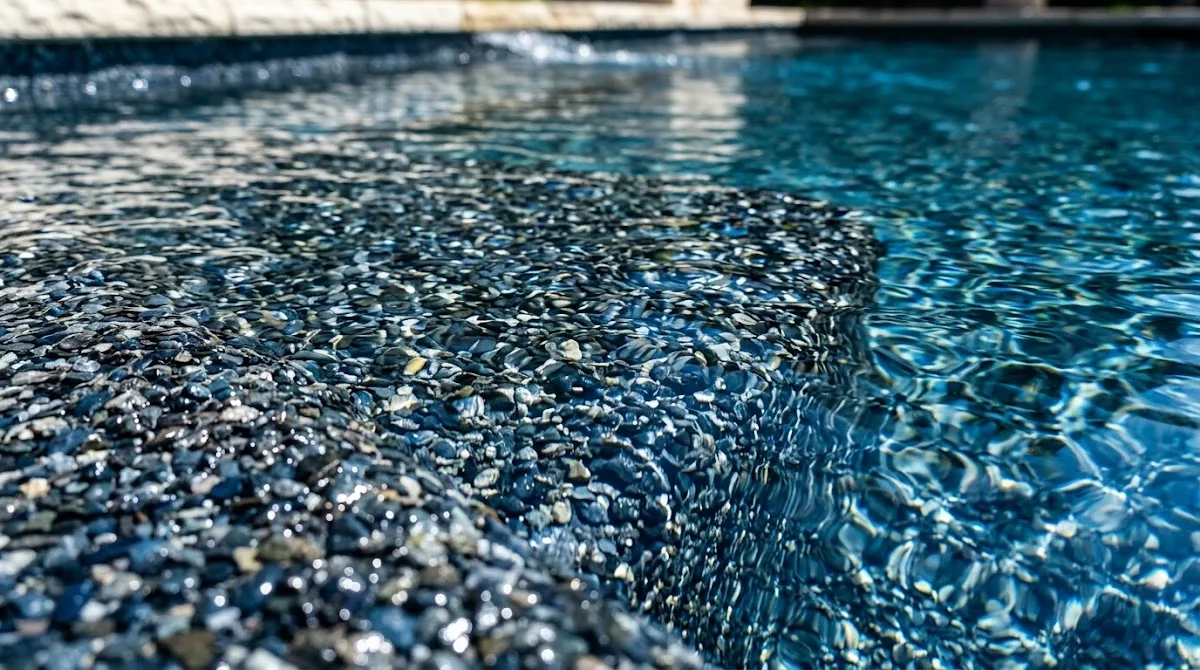
3. Shimmer Sky: Advanced Sparkle and Shine
Fade Resistance Rating: ★★★★★
Shimmer Sky is built for movement. Specialty materials catch the light from different angles and add sparkle without making the water look busy.
This is a newer formulation aimed at long-lasting visual depth. If you want a brighter finish that still feels upscale, this is a strong option.
4. Black Eclipse: Dramatic Swimming Pool Finish
Fade Resistance Rating: ★★★★★
Black Eclipse leans into drama. The deep black-blue base camouflages minor imperfections and keeps the pool’s appearance sharp even with age.
When pigments are locked into a natural stone matrix, fading becomes less obvious over time. It’s a practical choice that still looks luxurious.
5. Graphite Grey: Contemporary Pool Resurfacing Option
Fade Resistance Rating: ★★★★☆
Graphite Grey has a sleek, modern personality. It often creates clear, Caribbean-style water while keeping a crisp, architectural look that works well with modern homes.
The dark gray base absorbs light well, while cooler highlights add depth. For many projects, this is the right pool when the goal is clean lines and understated elegance.
6. Midnight Blue: Classic Dark Swimming Pool Tone
Fade Resistance Rating: ★★★★☆
Midnight Blue is familiar for a reason. It gives you a classic deep blue look without going fully black.
Well-built aggregate systems in this shade have a long record of solid fade resistance. If a homeowner wants timeless over trendy, this one stays easy to recommend.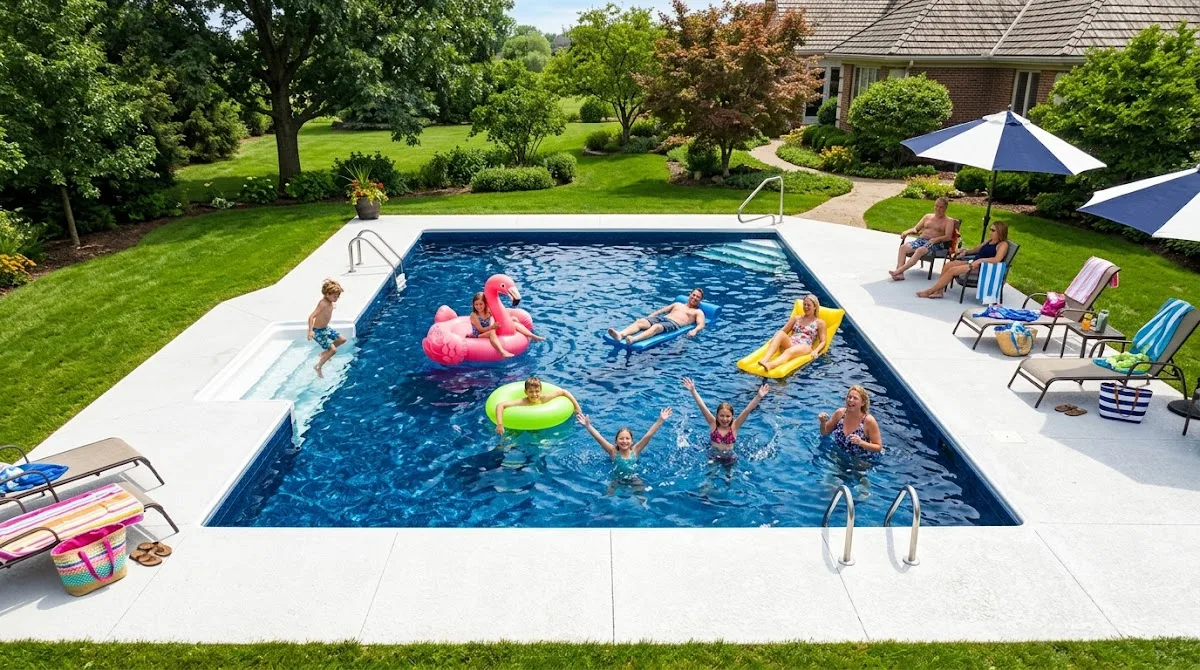
7. Sapphire Blue: Traditional Resurface With Diamond Sparkle
Fade Resistance Rating: ★★★★☆
Sapphire Blue balances tradition with polish. The royal blue base feels recognizable, but added reflective media create more life on the water.
Chemical-resistant additives help protect the pigment from chlorine stress. It’s a safe pick when you want color that feels rich, not risky.
8. Ocean Blue: Sophisticated Pool Water Depth
Fade Resistance Rating: ★★★★☆
Ocean Blue is saturated and confident. It gives pool water a lush, inviting look and usually performs better than light blues under strong sun.
Enhanced binders help keep the color stable inside the finish. That matters if long exposure is part of the jobsite reality.
9. Steel Grey: Refined Finish For the Perfect Pool
Fade Resistance Rating: ★★★★☆
Steel Grey tends to use a finer aggregate blend, which creates a smoother feel underfoot. That refined texture appeals to anyone who wants a luxury surface without an overly rugged profile.
Its gray-blue tone resists fading well, and the smoother structure can reduce uneven weathering. Light gray accents or tile can make this shade feel especially sharp.
10. Black Pearl: Dramatic and Durable Pool Finish
Fade Resistance Rating: ★★★★☆
Black Pearl has been popular for years because it works. The black-blue tone absorbs sunlight well, and pebble finishes in this category tend to wear evenly.
It’s a dependable option for resurfacing your pool when the brief is simple: dark, elegant, and long-lasting.
11. White Diamonds: Bright Finish With Lasting Sparkle
Fade Resistance Rating: ★★★★☆
White Diamonds is unusual on this list because lighter colors usually fade faster. This one performs better because the bright base reflects energy instead of storing it, and reflective particles help maintain appearance over time.
If you want a cleaner, brighter look, this is one of the better pool finish options available. It can also add sparkle to a compact courtyard pool or SPA.
12. Caribbean Blue: Tropical Water Color Ideal for Resurfacing
Fade Resistance Rating: ★★★☆☆
Caribbean Blue gives that familiar resort look. It creates cheerful, inviting water and works well in family settings where affordability also matters.
Still, it needs balanced chemistry to keep the finish looking fresh. Among medium blues, it’s attractive, but not the toughest against fading.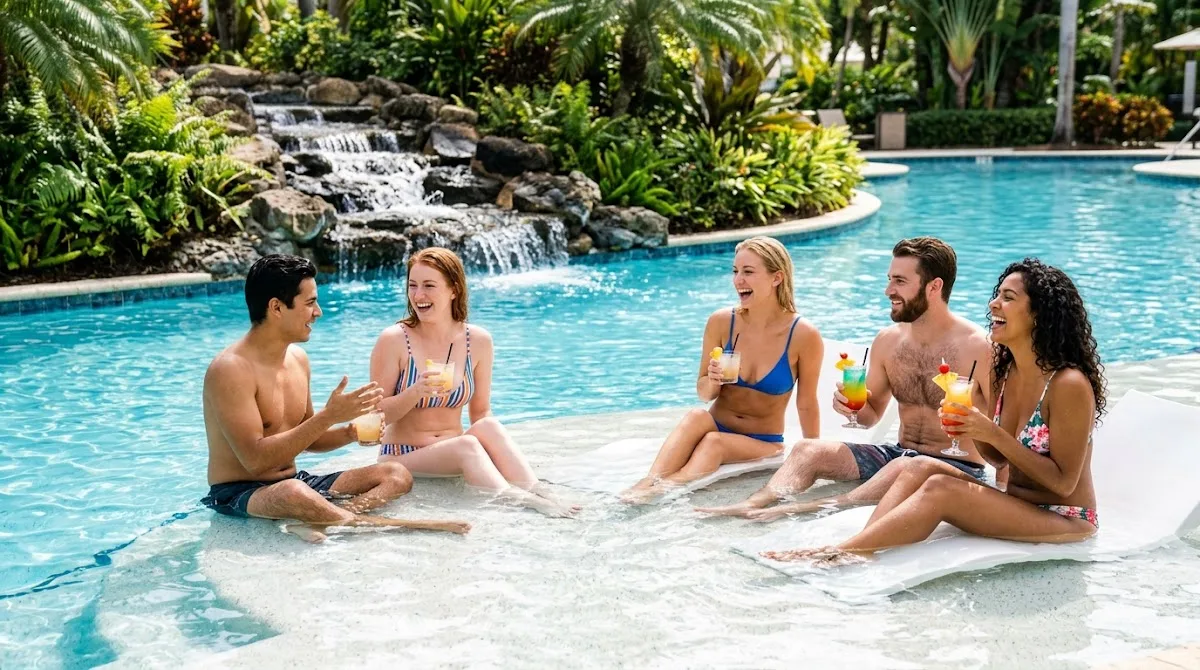
13. Diamond Sand: Light Finish For Fiberglass Pools
Fade Resistance Rating: ★★★☆☆
Diamond Sand brings warm, beach-like character. Think earthy tones, sunlit shallows, and a soft visual blend with natural stone.
This shade is especially appealing around fiberglass pools or warm-climate builds with beige decking and tan coping. A shimmer layer and integrated color help it hold up better than many light finishes.
Categorizing Your Perfect Pool Color Options
Sometimes the easiest way to narrow a range of colors is by final water effect, not sample chip. Here’s a simple breakdown.
| Water Color Category | Finish Examples | Aesthetic Result |
|---|---|---|
| Deep Dark Blue | Black Onyx, Black Eclipse, Black Pearl, Ebony Blue | Dramatic, reflective, sophisticated, mirror-like finish with excellent fade resistance |
| Dark Blue | Ocean Blue, Midnight Blue, Steel Grey, Emerald Bay | Rich, saturated water with a balance of classic style and performance |
| Medium Blue | Caribbean Blue, Tahoe Blue, Aqua Blue, Blue Granite | Bright and inviting, but more dependent on careful chemistry |
| Light Blue | White Diamonds, Soft White, Glacier Bay, Aqua Falls | Clean, bright water that makes debris easy to spot |
| Teal/Aquamarine | Prism Blue, Blue Lagoon, Oasis, Acquos | Tropical look that pairs well with rock, palms, and layered landscape |
Beyond Aesthetics: Resurfacing Your Pool For Ultimate Longevity
Color matters. Structure matters more.
A finish can look incredible and still fail early if the system under it is weak. That’s why experienced crews pay attention to the full assembly, not just the final coat. For a deeper look at materials, see finish guide.
Here’s the simple version. Vinyl liners often need replacement in 7-10 years. Traditional plaster and quartz or pebble systems usually need refinishing in the 10 to 15 year range, depending on water care and exposure.
The next step up is a proprietary three-part micro-ceramic waterproofing system. This kind of swimming pool finish is built for better waterproofing, stronger bond performance, and luxury aesthetics in one assembly. If you’re planning to resurface and want more than a cosmetic fix, explore pool waterproofing.
Certifications matter too. ASTM, NSF, and Miami-Dade NOA standards are worth looking for because they point to tested performance, not marketing claims.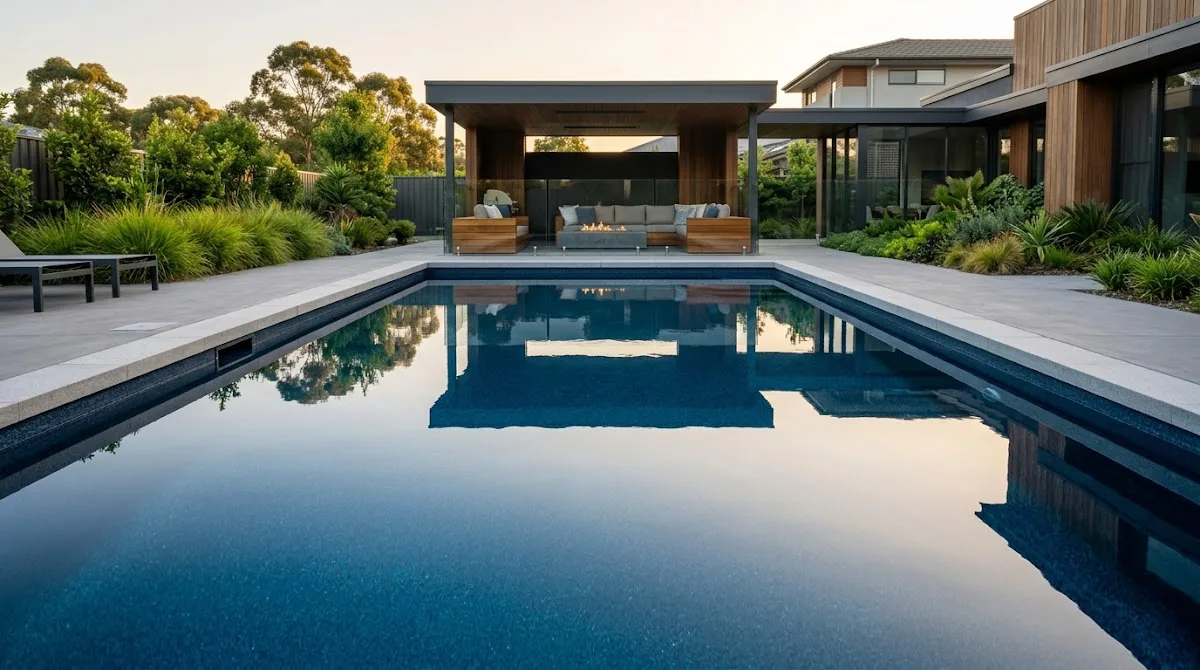
And there’s one more layer. Some premium systems are antimicrobial, antibacterial, and antiviral. That does not replace good water care, but it adds another level of protection for the finish and the swimming pool environment year-round.
Think about it this way.
The best color is the one that still looks good after the first season, the fifth season, and the hard summer in between. That takes more than pigment. It takes a system built for durability, wear resistance, and real-world use by every homeowner who wants to transform your pool into a lasting feature.
Conclusion
Fade-resistant pool colors work best when shade, texture, and material quality all line up. Darker tones usually last longer visually, but the best result depends on depth, light, landscape, and finish technology. If you want a surface that looks refined and lasts, choose color carefully and pair it with a certified, long-lasting resurfacing system.
Frequently Asked Questions About Pool Resurfacing Colors
What is the best color for a pool surface?
The best color depends on your personal style, sun exposure, and maintenance goals. Deep blue and gray are popular for longevity.
What time of year is best to resurface a pool?
Mild, dry weather is best. That helps the finish cure properly.
Can I paint my pool instead of resurfacing?
You can, but paint is usually a short-term fix. A full resurface lasts longer.
How much does it cost to replaster a 35,000 gallon pool?
Costs vary by region, prep work, and finish type. Size alone does not set the final price.
What is the most inviting pool color?
Many people find medium blue or turquoise the most inviting because the water appears bright and welcoming.
What color is number 1 in pool?
Blue remains the top choice for most pool owners because it feels clean, classic, and versatile.