
Pool Resurfacing vs Replastering (Cost & Lifespan Compared)
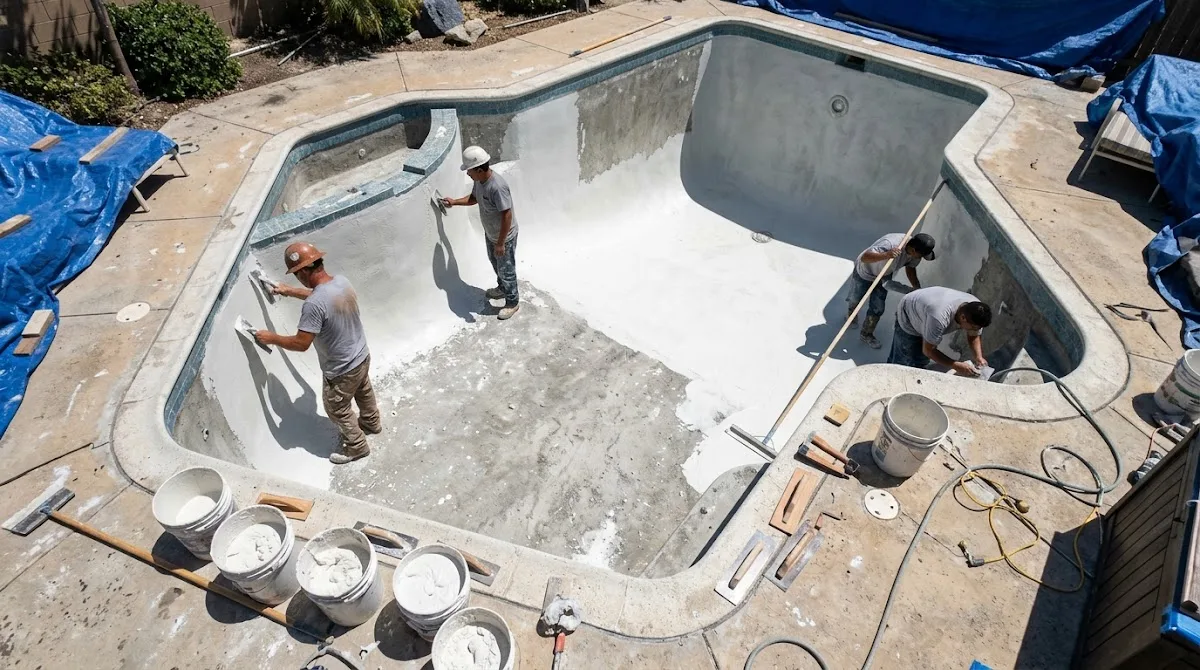
Your pool can look fine from across the deck and still be failing where it counts. Stains, rough spots, chalking, and tiny leaks often show up slowly, then all at once.
This guide breaks down pool resurfacing vs replastering, including cost, lifespan, finish options, and the signs that tell you it’s time to act.
Understanding the Basics: Pool Resurfacing vs. Replastering
If these terms have ever felt fuzzy, you’re not alone. They get used together all the time, even though they solve slightly different problems.
Think about it this way. One is often about renewing the look and performance of the exposed pool surface. The other is more tied to replacing the plaster layer that protects the structure underneath.
What Is Pool Resurfacing?
Pool resurfacing is a complete renewal of the visible interior pool surface using a new material such as plaster, quartz, pebble, fiberglass, or tile. Resurfacing is the process of removing or profiling the old layer so a new surface can bond correctly.
That prep matters. Crews usually hydro-blast or sandblast the old pool to create a rough profile before they resurface it.
Why do owners choose this route? Variety. Pool resurfacing opens the door to different types of finishes, colors, textures, and a more custom aesthetic. It can make an old pool look sharper, smoother, and more modern.
Also, not all finishes are created equal. Traditional options still work, but many luxury and commercial projects now lean toward advanced systems built for waterproofing, hygiene, and long-term performance. If you want a deeper look at modern finishes, see this guide to pool finishes.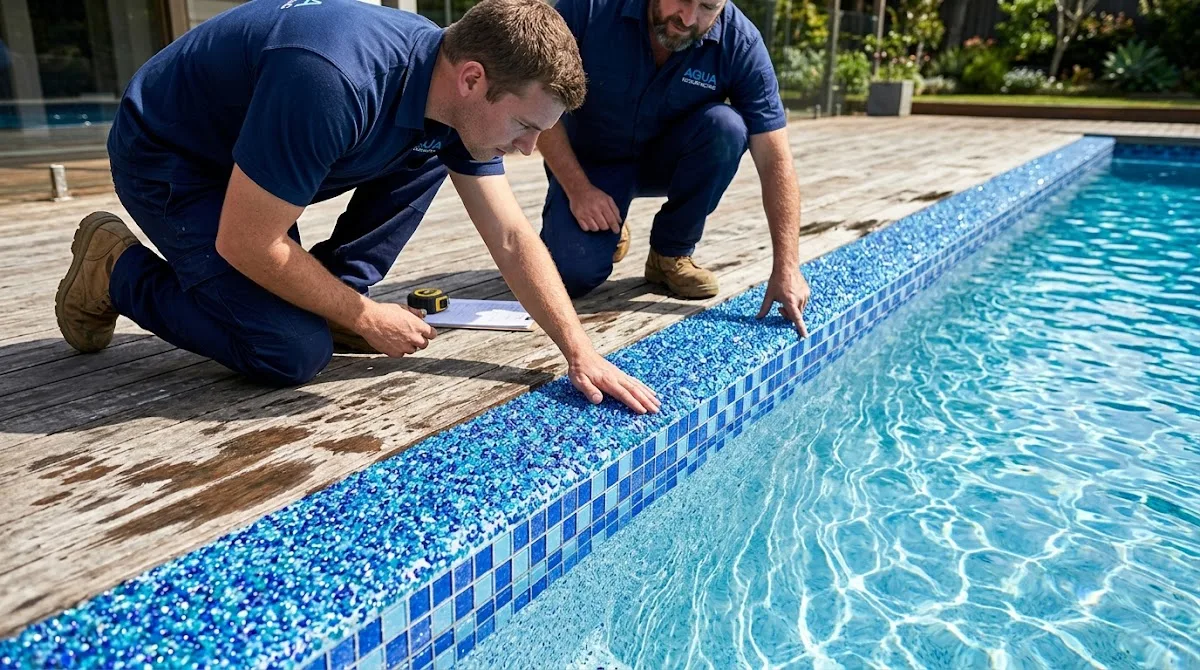
What Is Pool Replastering?
Pool replastering is a structural process that removes and replaces the bottom plaster layer inside the pool. It is less about cosmetic remodeling and more about rebuilding the non-porous barrier between water and gunite or concrete.
In most cases, crews apply a bonding agent first, then install a fresh coat of plaster made from white cement and marble dust. This helps restore the waterproof layer and strengthen the interior.
That matters because worn plaster lets water move where it should not. Over time, that can lead to crack formation, water absorption, and decay below the finish. Replastering a pool is often the right move when the base layer is failing, not just looking dated.
12 Signs It’s Time for Resurfacing or Replastering Your Pool
Here’s where decisions usually get easier. The pool tells you what it needs.
Some signs are visual. Others show up in chemistry, cleaning, or water loss.
Visible Pool Surface Deterioration
Watch for these clues:
- Staining and discoloration that won’t lift with treatment. A stubborn stain may come from copper, calcium, leaves, or organic debris.
- Flaking and peeling. This happens when plaster starts to separate, often after low pH or low calcium exposure.
- Crazing and cracking. Fine spider-web lines are one thing. A deeper crack that exposes the shell is another.
- Chalking. If white dust keeps shedding into the pool, the finish is breaking down.
- Chipped areas or a small chip near steps, benches, or fittings.
- Visible wear that leaves the pool looking tired even after cleaning.
When these issues spread, simple repair work may not be enough to fix the problem.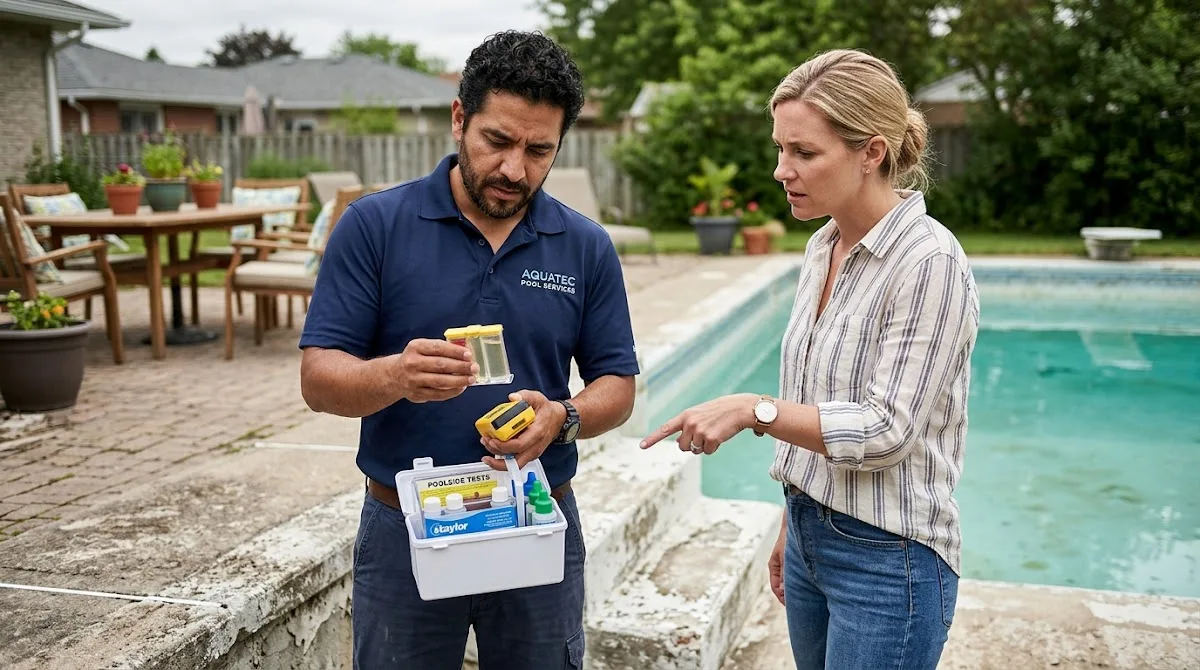
Performance and Water Chemistry Issues
Now the less obvious signs.
- A rough, sandpaper feel underfoot
- Chronic algae growth in pits and voids
- Chemical imbalance that keeps coming back
- Slow water loss from micro-cracks
- Hard-to-clean areas that never feel smooth
Porous plaster absorbs chemicals too fast, which makes balancing the pool more costly. Because of this, you end up chasing pH, sanitizer, and scale control more often than you should.
And there’s a modern angle here too. Many newer waterproofing and finish systems are naturally antimicrobial, antibacterial, and antiviral, which helps support a cleaner, lower-maintenance environment. You can learn more about that in this article on microplaster and this page on pool waterproofing.
Comparing Pool Surface and Finish Options
Once you know the pool needs work, the next question is material. That choice affects cost, maintenance, feel, and durability.
Traditional Plaster vs. Pebble Finishes
Standard plaster gives a classic, clean look. It starts smooth and bright, but standard plaster can show stain issues, etching, and imperfections over time. Plaster lasts well when water chemistry is controlled, though it usually needs closer monitoring.
Pebble uses rounded aggregate set in cement. It offers stronger resistance to chemical corrosion and surface wear, along with a more textured look.
You may also hear about quartz as an alternative that blends cement with aggregate for better appearance and performance than basic plaster. For many projects, the decision comes down to budget, feel, and how long you want the finish to last.
Traditional materials remain common, but many high-end installations now ask for systems backed by ASTM, NSF, and Miami-Dade NOA certifications. That level of testing matters when waterproofing is a priority.
Premium Options: Glass Bead and Tile
Glass bead creates a bright, reflective finish with a modern luxury look. It’s dense, stain-resistant, and built for longevity.
Tile finishes sit at the top end. They are highly customizable, easy to clean, and often the longest-lasting option, though installation takes longer and costs more. If you’re comparing pebble and tile, think of texture vs precision. Both can elevate a swimming pool, but tile usually wins on customization.
Cost and Longevity: Pool Resurfacing vs Replastering Breakdown
This is usually the first question after “what’s wrong?”
Fair enough. Costs vary by size, prep, and finish.
Cost Comparison by Surface Material
Basic pool replastering is usually cheaper upfront than a full custom resurface, with many jobs landing between $3,500 and $7,000. Broader pool resurfacing projects often run from $5,000 to $15,000, averaging around $10 to $12 per square foot.
Here’s a simple quote range by finish:
| Surface Type | Estimated Cost Range |
|---|---|
| Standard White Plaster | $4,000 - $7,000 |
| Colored/Tinted Plaster | $5,000 - $8,000 |
| Pebble Finish | $8,000 - $15,000 |
| Glass Bead Finish | $10,000 - $18,000 |
| Tile | $15,000 - $40,000+ |
A 35,000-gallon pool often falls in the middle to upper end, depending on prep, deck access, and needed repair.
Lifespan and Longevity Expectations
Most well-executed projects deliver a lifespan of 10 to 20 years. Basic plaster may last 7 to 15 years. Premium finishes often go longer.
As a rule:
- new plaster needs careful startup and brushing
- pebble and glass bead often last 15 to 20+ years
- tile can last 25+ years
- the longest-lasting results usually come from excellent prep and water care
So yes, premium work costs more. But it can end up saving you money and money in the long run by reducing premature failure, patching, and overcorrection.
The Application Process and Timeline to Resurface or Replaster
Most jobs take 5 to 14 days. That depends on access, prep, weather, and how much damage to your pool needs attention.
Standard Project Timeline
A typical pool renovation follows these steps:
- Drain and prep, 1 to 3 days
- Repair hollow spots, bond beam issues, or crack areas, 1 to 2 days
- Apply the new surface, 1 to 2 days
- Fill and cure, 2 to 5 days
If the shell is sound, work moves faster. If deeper repair is needed, timelines stretch.
New Plaster Startup and Maintenance Requirements
This part gets overlooked. It shouldn’t.
After new plaster goes in, brushing usually happens twice daily for two weeks. Salt systems should stay off for 30 days. Swimming often pauses for 3 to 7 days, sometimes longer.
Startup chemistry matters too. Keep pH near 7.2, monitor calcium, and use sequestrants to limit scale. Good maintenance protects the finish and helps restore a smooth, stronger interior.
Conclusion
Choosing between resurfacing vs replastering comes down to what your pool actually needs. If the finish is worn but the base is sound, a resurface may work. If the plaster barrier is failing, replaster is smarter. The right choice protects the pool, improves looks, and reduces future repair headaches.
Frequently Asked Questions
Is it better to Replaster or resurface a pool?
It depends on the condition of the plaster layer. If the structure is sound, resurface. If the base plaster is failing, replaster.
How much does it cost to replaster a 35,000 gallon pool?
Usually $4,000 to $8,000, though access, prep, and finish can push it higher.
Is pool resurfacing worth it?
Yes. It can improve looks, reduce leaks, help water balance, and protect the pool shell.
How long does resurfacing a pool last?
Most finishes last 7 to 20 years. Tile may last longer.
How much does it cost to replaster a 35,000 gallon pool?
Expect a similar range of $4,000 to $8,000 for many standard jobs.
What time of year is best to resurface a pool?
Mild, dry weather is best because curing and scheduling are usually easier.