
5 Fiberglass Pool Gelcoat Problems to Watch For (+ Fixes)
A good-looking pool is not just about appearance. The finish protects the shell, affects traction, and helps the entire system hold up under sun, chemicals, and pressure.
Let’s walk through the warning signs, the right repair path, and when a full resurfacing upgrade makes more sense.
Identifying Common Fiberglass Pool Problems Early
Constant exposure to water, sun, and harsh treatment chemicals wears down any pool over time. That includes a fiberglass pool, even one that started with a smooth, glossy gelcoat surface and strong factory finish.
Here’s the part many people miss.
Most fiberglass pool issues are easier to manage when caught early. A small crack, a little discoloration, or a slight bulge may look cosmetic at first. Sometimes it is. Sometimes it points to moisture intrusion, uneven pressure, or failing adhesion below the visible layer.
Gelcoat is a protective outer layer used on many fiberglass pool shells. It gives the pool color, gloss, and a barrier against moisture and chemical contact. When that layer starts to break down, deterioration can spread.
That is why early inspection matters. It helps reduce safety risks, protects the pool shell, and avoids a more expensive repair later.
In many cases, restoration does not mean tearing out the entire pool. A new protective surface can often be installed over the old one after the damaged material is removed and the substrate is prepared correctly. That is faster, less disruptive, and often saves up to 50% compared with replacement.
The right fix depends on your climate, soil, and how the pool was installed. Freeze-thaw movement, shifting ground, improper backfilling, and poor water chemistry all change the equation. If you want a deeper look at modern gelcoat repair, it helps to start with the source of damage first.
1. Spider Cracks in the Pool Surface
Spider cracks are small, shallow fractures that spread in a web-like pattern across the pool surface. They often begin as a hairline mark, then widen as the finish keeps moving under stress.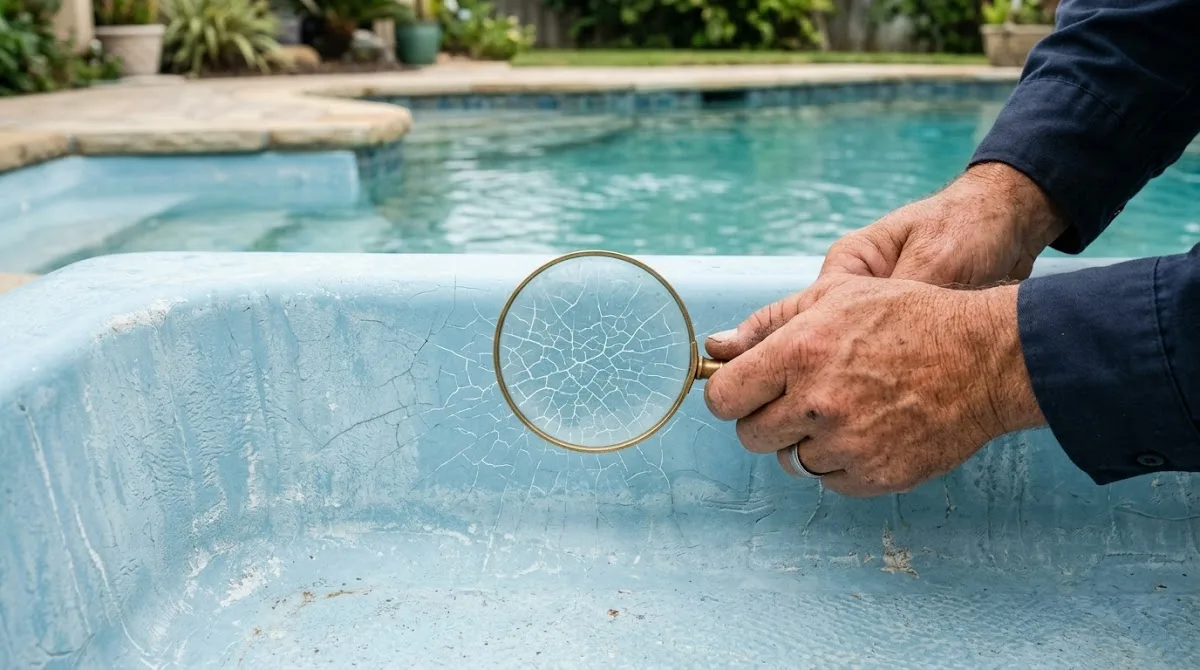
Think about what your pool goes through every year.
Heat. Cold. UV exposure. Water. Cleaning. Swimmers. Chemical swings. In colder regions, freeze-thaw cycles can be brutal, especially around rigid outdoor concrete and surrounding support areas. The surface expands and contracts, and standard gel coats may not keep up.
Minor chips and scratches from normal use can also become entry points for damage. Over time, these weak spots grow, and spider cracks show up along steps, corners, and high-use areas of the pool.
Not every crack is structural. Some are cosmetic. But if cracking spreads, or if you notice moisture behind the finish, the pool needs attention.
The fix
The fix starts with proper surface preparation. This means cleaning, profiling, and removing loose or failing material so the new finish can bond well. A rushed patch over old damage usually does not last.
A stronger resurfacing system can improve flexibility, adhesion, and long-term crack resistance. That matters if you want a fiberglass pool without constant touch-ups every season.
2. Severe Gelcoat Discoloration and Fading
This is one of the most visible fiberglass pool problems.
Standard gelcoat is highly sensitive to sunlight. Over time, UV exposure breaks down the glossy look and leaves the surface dull, chalky, or yellowed. In darker finishes, fading can be even more obvious.
Then there is everything else.
Leaves, algae, metal content, and poor cleaning habits can create a stain or patchy discoloration that makes the pool look older than it is. If water chemistry drifts, especially with imbalanced water, high chlorine, off-target alkalinity, or unstable pH levels, the finish can degrade faster.
Gel coat is a resin-rich outer layer that protects and colors the surface of fiberglass pools. But not all gelcoats hold up the same way under sun and chemical stress.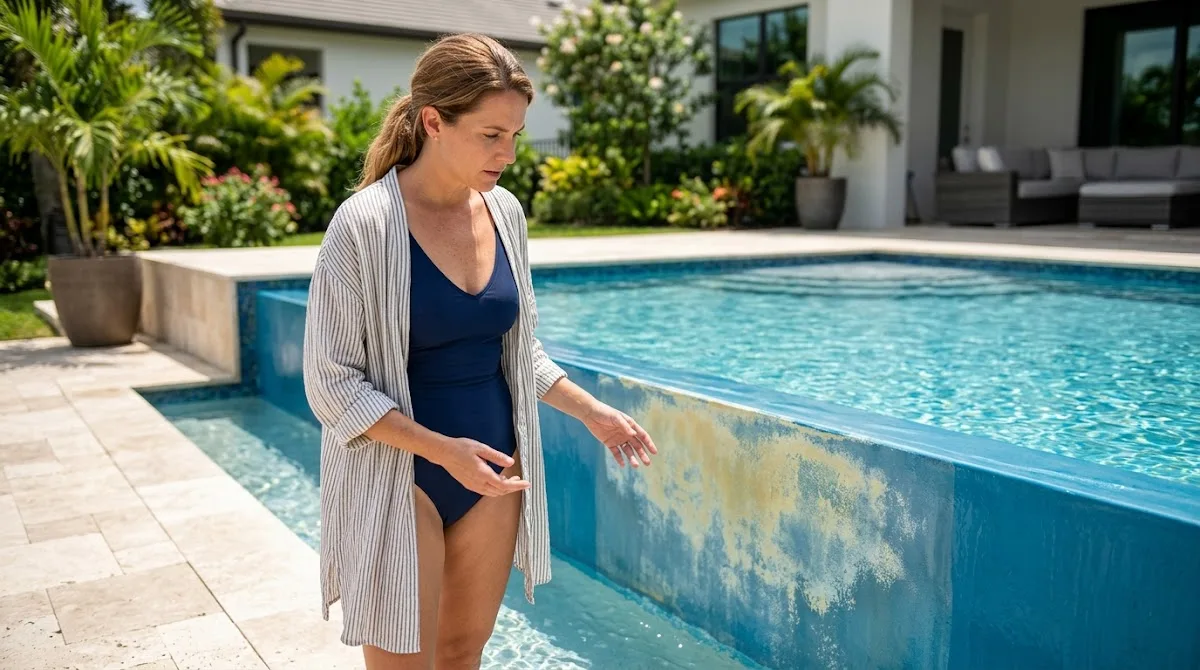
The fix
A finish upgrade with real UV resistance is the better long-term move. Some traditional coatings can improve appearance for a while, but many need ongoing topcoats to protect them from fading. For example, standard epoxy often needs regular resealing to maintain color and gloss.
That cycle gets expensive.
A more advanced surface finish helps reduce yellowing, keeps the pool looking cleaner, and cuts down on repeat labor. You can also explore fiberglass finishes designed for better long-term aesthetics and durability.
3. Managing a Bulge and Wall Bulging in Pool Walls
A bulge in one section of the pool is never something to ignore.
Bulging walls and wall bulging often point to pressure building where it should not. That pressure may come from groundwater, trapped moisture, poor drainage, or weak structural support behind the finish and shell. In some cases, improper backfilling or the wrong backfill material is part of the story.
Here’s the hard truth.
If the pool installation was rushed, or if the pool was installed without the right specification for soil and drainage conditions, the pool walls can begin to shift. Fiberglass pool walls need even support around the shell. When one area carries more load than another, a bulge can form.
Improper moisture control can make this worse. If water gets behind the finish and cannot drain, pressure pushes outward. That is how some fiberglass pool issues move from minor to serious.
The fix
Start with a full inspection. The goal is to confirm whether the problem is in the finish, the pool shell, the surrounding fill, or a mix of all three.
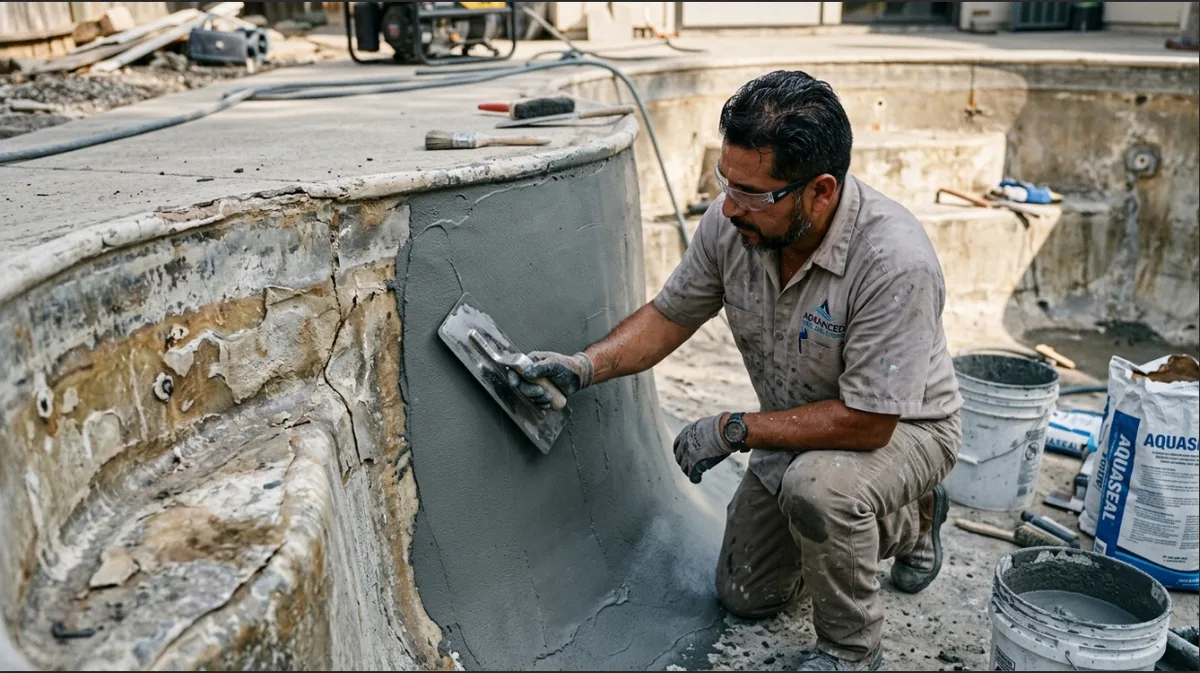
Then address waterproofing. SKIN Microplaster, known as SKIN2.0, is a proprietary three-part micro-ceramic waterproofing and luxury finishing system that helps seal the shell against invasive moisture. It is ASTM, NSF, and Miami-Dade NOA certified, which matters when you need a system built for demanding conditions.
If the concern is recurring moisture exposure, microplaster waterproofing can be the difference between a short-term patch and a lasting solution.
4. Surface Blistering and the Common Fiberglass Pool
A blister is a raised bubble in the finish caused by trapped moisture, gas, or loss of bond between layers. In many cases, it is tied to osmotic pressure, where water works its way through the outer layer and reacts below the surface.
This is common fiberglass pool territory.
Blisters may start small, then spread. Foot traffic, brushing, and chemical exposure weaken them further until the area peels, flakes, or feels rough underfoot. On some fiberglass pool shells, the problem may trace back to the original manufacturing process, manufacturing quality, or resin selection such as vinyl ester performance in wet conditions.
Spot fixes rarely blend well. A patched section can stand out in color, texture, and sheen. Worse, if moisture stays trapped, the problem simply returns.
The fix
Remove the compromised layer completely. Anything less tends to leave weak material behind.
From there, install a seamless waterproof finish built to resist moisture entrapment. SKIN2.0 works as both a waterproofing barrier and a luxury finish, which helps avoid the obvious patchwork look you often see after partial repair work on a common fiberglass pool.
5. Wear, Tear, and Repair Needs Over Time
Time changes every pool. Even premium fiberglass pools show wear after years of use.
The first sign may be subtle. The bottom of the pool feels smoother than it used to. Steps become slick. The gloss fades. Cleaning gets harder. A pool stain settles in and refuses to leave. What began as ordinary aging can turn into a safety problem.
That slippery feel matters.
Many traditional coatings become slick when wet. You can add grit or slip-resistant additives, but that often makes pool maintenance harder because dirt clings to the texture. It is a tradeoff most people do not want.
The fix
A textured overlay or grooved finish can improve traction without making the pool feel harsh. It also gives older designs a cleaner, more current look, which helps overall property value.
For a homeowner thinking beyond basic patching, resurfacing is often the better path. It restores the look, improves comfort, and can support safer pool ownership over time.

Evaluating Repair Options: Traditional Coatings vs. SKIN2.0 Microplaster
Traditional resurfacing usually runs about $3 to $12 per square foot. For many projects, resurfacing instead of replacement can cut costs by up to 50%.
That sounds great. But material choice matters.
Traditional coatings can work, but they come with tradeoffs:
- UV sensitivity that leads to fading
- slick surfaces without additives
- regular resealing and ongoing upkeep
- a shorter aesthetic lifespan in demanding climates
Polyurea and polyaspartic systems offer strengths too, but they are not always the right fit for every pool environment or finish goal.
SKIN2.0 takes a different route. It is a three-part micro-ceramic waterproofing and finishing system built for durability, appearance, and moisture defense. It is also antimicrobial, antibacterial, and antiviral, which supports a cleaner, lower-maintenance environment.
If you are comparing fiberglass pool problems and solutions, this is where the conversation gets practical. The best answer is not always another layer of the same material that failed before.
The 5-Step Process for Fixing the Pool Surface
Most successful pool restoration projects follow a clear sequence.
Step 1: Surface Preparation
This is half the battle. The technician removes debris, opens damaged areas, and prepares the pool surface for bonding. Any improper or loose material has to go.
Step 2: Primer Application
A bonding coat helps the next layer adhere to the existing pool shell. Without this step, even a good material can fail early.
Step 3: Mixing and Application
The finish is mixed to the right ratio, then sprayed, poured, or troweled based on the system. Quality control matters here because consistency affects strength, look, and cure.
Step 4: Curing Time
Traditional materials often need 24 to 72 hours to cure, depending on humidity and weather. During this period, you should monitor water level, temperature, and site conditions before you refill or stress the finish.
Step 5: Sealing for Extra Protection
Some systems need a final sealer for added defense against pool water, sunlight, and chemical attack. Others are engineered to provide that protection within the system itself.
Comparing Materials for Your Pool Area
When you are planning a repair or a surrounding renovation, material limits matter just as much as price.
| Feature | Traditional Epoxy | Polyurea/Polyaspartic | Coolcrete | Standard Concrete | Stone |
|---|---|---|---|---|---|
| Durability | High | High | High | High | High |
| UV Resistance | Low (yellows/fades) | High | High | High | High |
| Slip Resistance | Low (can be slippery) | Moderate | High | Moderate | Moderate |
| Maintenance | High | Low | Low | Low | Low |
| Cost Profile | Moderate ($3-12/sq ft) | Higher | Higher | Moderate | High |
| Cool-to-Touch | No | Yes | Yes | No | No |
Why Installation Quality Still Matters
Not every problem starts with the finish.
Some start with installation practices, poor drainage, or uneven support outside the shell. That is why proper installation matters so much. A quality manufacturer and a manufacturer and an experienced installer should account for soil conditions, drainage paths, and fill methods before the pool goes in.
For example, gravel backfill helps prevent pressure pockets and supports more even drainage around fiberglass pool walls. Improper backfilling can do the opposite. It can trap water, create uneven pressure, and increase the risk of bulging walls.
If you’re considering a fiberglass pool, choose a reputable manufacturer, ask about quality control, and confirm the pool builder follows the right pool installation steps. Ask what backfill material is specified. Ask how they plan to drain around the shell. Ask what protects the warranty.
That homework is not overkill. It is preventative care.
Conclusion
Most fiberglass pool problems start small, then grow with sun, moisture, soil movement, and chemical stress. Spider cracks, fading, blistering, and wall movement all point to one thing: the finish and shell need the right protection. With proper water chemistry, a non-abrasive cleaning routine, and a skilled installer, your pool can stay attractive, safer, and far easier to maintain.
Frequently Asked Questions About Fiberglass Pool Gelcoat Problems
Can the gel coating on fiberglass pool be redone?
Yes. Old gelcoat can often be removed and replaced, or the surface can be resurfaced with a more durable finish.
How long does a gel coat last on a fiberglass pool?
A gel coat may last many years, but sun, drain cycles, water chemistry, and use affect lifespan.
What are common problems with fiberglass pools?
Common fiberglass pool problems include spider cracks, fading, blistering, stain buildup, and wall movement from groundwater or backfill issues.
What is the best gel coat for a fiberglass pool?
The best option depends on exposure, maintenance goals, and manufacturing quality, but many projects now move beyond standard gelcoat to advanced waterproof finishes.
Can you put new gelcoat over old gelcoat?
Sometimes, yes, but only after proper prep. If the old layer is failing, full removal is often smarter.
How long does gelcoat last on a fiberglass pool?
With proper water chemistry and low maintenance care, it can last for years, but fiberglass pool problems can shorten that timeline fast.