
Fiberglass vs Concrete Pool: The Honest Truth (Pros & Cons)
Dreaming about an inground pool is the fun part. Choosing between a fiberglass pool and a concrete pool is where things get real.
This comparison breaks down cost, installation, maintenance, design freedom, and long-term value so you can make a smart call.
The Ultimate Inground Pool Cost Breakdown
Let’s start with the part that shapes every decision.
Initial costs for a fiberglass pool usually range from $45,000 to $100,000. A concrete pool often starts around $50,000 and can push past $120,000, especially once custom features like spas, sun shelves, or premium hardscape are added. A spa alone can add up to $25,000.
Base packages tell a similar story. For a 10’x20’ footprint, fiberglass pools typically begin near $55,000, while concrete starts around $65,000. That usually excludes fencing, final decking, and some electrical work.
Here’s the catch.
The upfront number is only part of the story. Your total cost is shaped by what happens after startup. Traditional plaster finishes on a concrete pool are porous, which means more brushing, more chemistry adjustment, and periodic work to resurface the vessel. You can read more in this guide to pool plaster.
A fiberglass pool tends to keep long-term spending simpler. Basic chemicals, electricity, and routine care make up most of the budget. That lower lifetime cost is a big reason many buyers lean this way.
Concrete pools need more. Acid washing every 3 to 5 years can cost $500 to $800, and complete resurfacing every 10–15 years can land between $8,000 and $15,000. If you want details on how long plaster holds up, this article on plaster lifespan is worth your time.
10-Year Total Ownership Cost Comparison Table
| Expense Category | Fiberglass Pools | Concrete Pools |
|---|---|---|
| Initial Investment | $55,000 - $100,000 | $80,000 - $120,000+ |
| Annual Maintenance | $800 - $1,200 | $1,800 - $2,500 |
| Periodic Major Maintenance | Minimal | $1,500 (Acid wash Yrs 3, 6, 9) |
| 10-Year Total Cost | $63,000 - $112,000 | $99,500 - $147,500 |
That gap matters.
If you are weighing fiberglass vs concrete pool choices strictly on budget, fiberglass usually wins the first decade. If you are building a highly customized backyard statement piece, the math may point you toward concrete anyway.
Concrete or Fiberglass: Analyzing Installation Time
Installation time changes everything. It affects schedules, financing, weather risk, and how long your yard stays torn up.
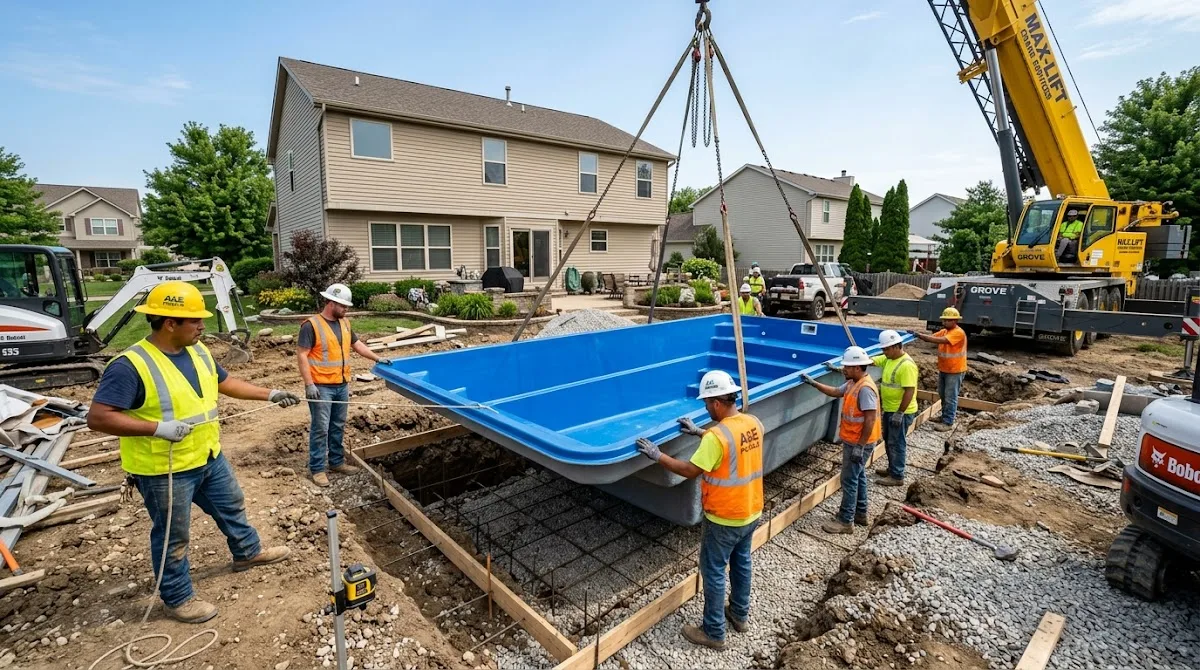
A fiberglass pool is a factory-made pool shell. Fiberglass pools are built off-site, then the shell is transported by truck and installed as a single unit. In some cases, the shell can be set, plumbed, and filled in as few as two days.
That does not mean the whole job is done in 48 hours. You still need excavation, base prep, plumbing, electrical, decking, and inspections. Still, most fiberglass projects run 3 to 5 weeks from dig to swim.
Now compare that to concrete or fiberglass decisions on custom builds.
Concrete pools are built on-site using steel rebar and sprayed material, often using the Gunite process. Because concrete pools are built in place, they need forming, curing, finishing, and more weather coordination. Concrete pools typically take 3 to 6 months to install, and delays are common.
Think about it this way.
If you need speed, fiberglass is hard to beat. If your design calls for something unusual in size and shape, concrete may justify the wait.
Assessing Design and Customization Capabilities
This is where fiberglass and concrete split sharply.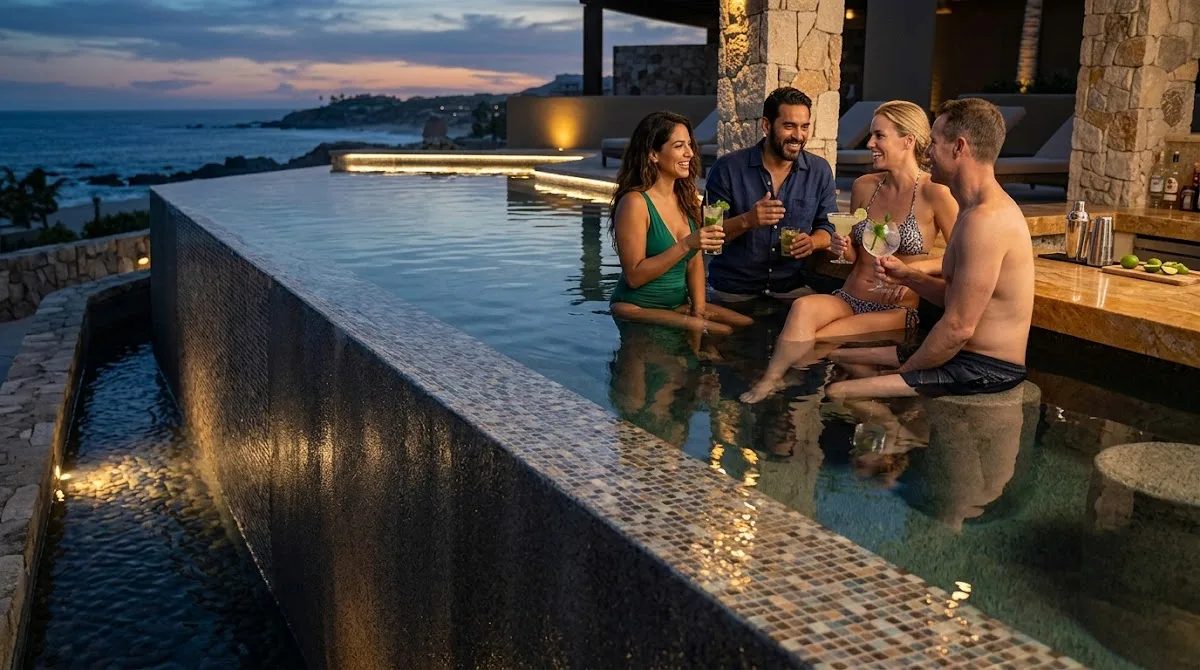
A fiberglass pool comes from a mold, so shape and size are limited by what fiberglass pool manufacturers can build and ship legally. Most top out around 16 feet wide, 40 feet long, and 8.5 feet deep. That still leaves plenty of attractive pool designs, including built-in steps, tanning ledges, benches, and bold color choices.
A concrete pool is different. It is customizable in almost every direction. Depth, curves, vanishing edges, grottos, beach entries, swim-up bars, and unusual dimensions are all possible because concrete pools can be formed to match the site and vision.
This is the real tradeoff in fiberglass vs.
You get speed and predictability with fiberglass. You get near-total customization with concrete. If your project depends on architectural alignment or a very specific size and shape, concrete is often the right choice.
Surface Texture and Structural Durability
Surface matters more than most people expect.
The surface of a fiberglass pool is a smooth gel coat finish. A gel coat surface is non-porous, soft on feet, and easier on swimsuits. Many shells also use advanced composite layers, making them durable and flexible enough to handle some ground movement.
Traditional plaster on a concrete pool feels very different. Plaster is a cement-based interior finish. It is rougher, more porous, and more likely to cause abrasions like pool toe over time.
Now the bigger issue.
Porous pool surfaces hold dirt more easily and support algae growth faster. They also affect pool chemistry because the surface interacts with the water. That is one reason concrete pools require more brushing and closer chemical control.
Salt systems add another layer. Saltwater can be tough on traditional plaster and grout, while a fiberglass gel coat is generally unaffected. That helps explain why fiberglass pools typically need less maintenance over time.
There is also a smarter way to finish concrete.
Instead of relying on standard plaster that may require acid washing and complete resurfacing every cycle, many in-ground pools now use high-performance micro-ceramic systems. These advanced finished surface options create a waterproof, luxury interior that avoids the weaknesses of a basic porous plaster layer. Systems that are ASTM, NSF, and Miami-Dade NOA certified, and that are antimicrobial, antibacterial, and antiviral, raise the bar significantly.
Which Swimming Pool Wins on Maintenance and Energy Efficiency?
This is where ownership gets very real.
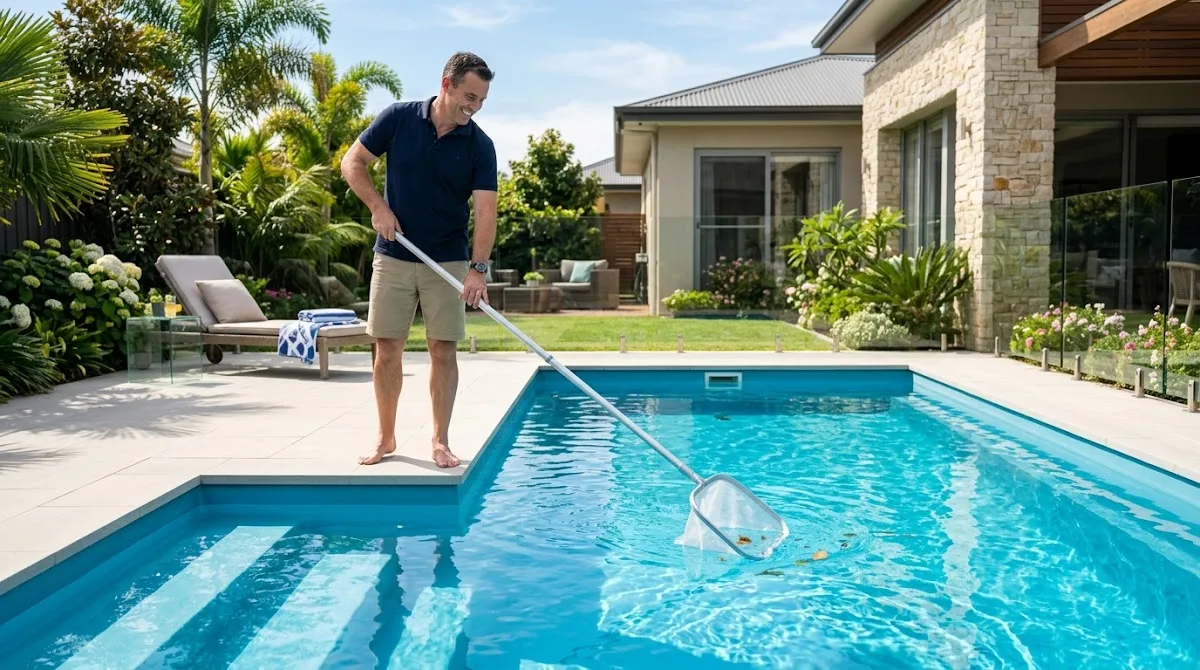 A concrete pool asks for regular work. Because the interior is porous, it can shift water balance and demand more acid to balance the water correctly. Concrete pools need frequent brushing, often with a steel brush 2 to 3 times a week, to control algae.
A fiberglass pool is easier to keep clean. The smooth gel coat surface resists dirt and algae, which means fewer chemicals, less brushing, and better ease of maintenance. For many homeowners, that means less maintenance every single week.
Energy use matters too.
Concrete has high thermal conductivity, so it loses heat faster. Fiberglass insulates better, heats faster, and often holds temperature longer. Over time, that can lower heating bills.
So if your priority is ease of ownership, fiberglass usually leads. If you prefer a concrete structure, pairing it with a premium waterproof finish can dramatically cut the usual maintenance burden.
The Third Option: How Do Vinyl Liner Pools Compare?
Vinyl deserves a quick look because it often enters the conversation early.
A vinyl pool usually carries the lowest entry price, around $40,000 to $70,000. A liner pool also installs fairly quickly, often in 6 to 10 weeks. For buyers focused on lower upfront spend, vinyl liner pools can look appealing.
But there is a catch here too.
The liner can tear, wrinkle, fade, or need to be replaced. Most need to be replaced after 8 to 10 years, with replacement costs around $5,000 to $7,500. That changes the 10-year math.
Once you add annual upkeep of roughly $1,200 to $1,800 and the liner replacement, a vinyl pool can reach a 10-year range of $58,000 to $94,000. If you want another side-by-side look at pools vs alternative liner systems, this vinyl comparison goes deeper.
Resale Value Impact of Concrete and Fiberglass Pools
Resale value is not just about cost. It is about perception.
A fiberglass pool often appeals to buyers who want predictable expenses, lower utility bills, and less maintenance. That can make the home easier to market in practical, value-focused segments.
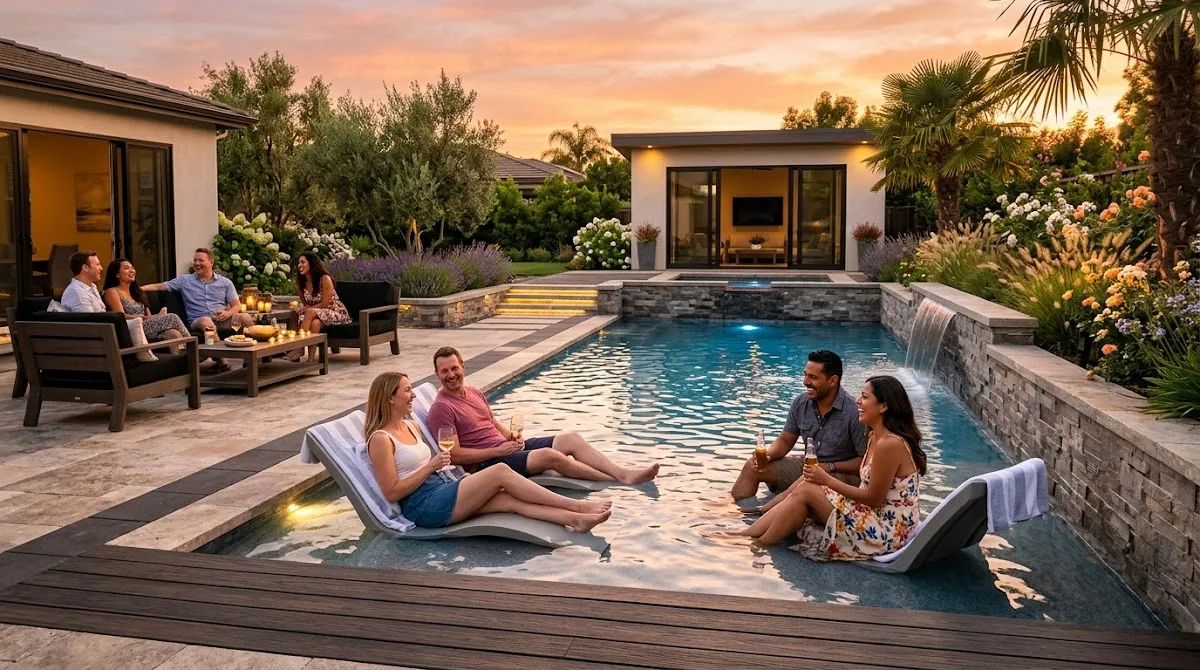
A concrete pool plays a different role. In higher-end homes, custom concrete and fiberglass pools are judged very differently. Concrete tends to signal luxury, especially when integrated with landscaping, lighting, waterfeatures, and architecture.
That is why concrete pools can last as value drivers when the design is strong and the finish quality is high. In some settings, a custom concrete build may feel longer than fiberglass in prestige, even if upkeep is higher.
Final Verdict: Which Pool Type is the Right Investment?
Here is the honest comparison.
Choose a fiberglass pool if you want faster installation, lower upkeep, fewer surprises, and a smoother surface. It is often the best pool for buyers who care about efficiency, lower annual costs, and less day-to-day work.
Choose a concrete pool if design freedom matters most and your budget can handle it. If you go that route, skip standard plaster when possible. A certified micro-ceramic finish protects the structure, reduces porous-surface headaches, and helps the investment last for decades.
Conclusion
There is no universal winner in concrete vs fiberglass debates. The right choice depends on budget, timeline, design goals, and how much maintenance you want to own. Fiberglass delivers speed and simplicity. Concrete offers freedom and prestige. If you choose concrete, a high-performance finish can change the ownership experience in a very good way.
Frequently Asked Questions About Fiberglass Vs Concrete Pool
What is the downside of a fiberglass pool?
Limited customization. The pool shell comes from a mold, so size and shape options are narrower.
What is the healthiest kind of pool?
A pool with stable water quality, low algae risk, and a non-porous surface is often easiest to keep healthy.
What is the lowest maintenance type of pool?
A fiberglass pool usually needs the least routine work.
What happens to a fiberglass pool after 25 years?
Many last well beyond that with proper care, though the gel coat may eventually need refinishing.
What happens to a fiberglass pool after 25 years?
The structure is often still sound, but cosmetic updates may be needed.
What is the healthiest kind of pool?
One with balanced water, clean circulation, and a smooth, non-porous interior.