
Fiberglass vs Concrete vs Vinyl Liner Pools (Cost & Durability)
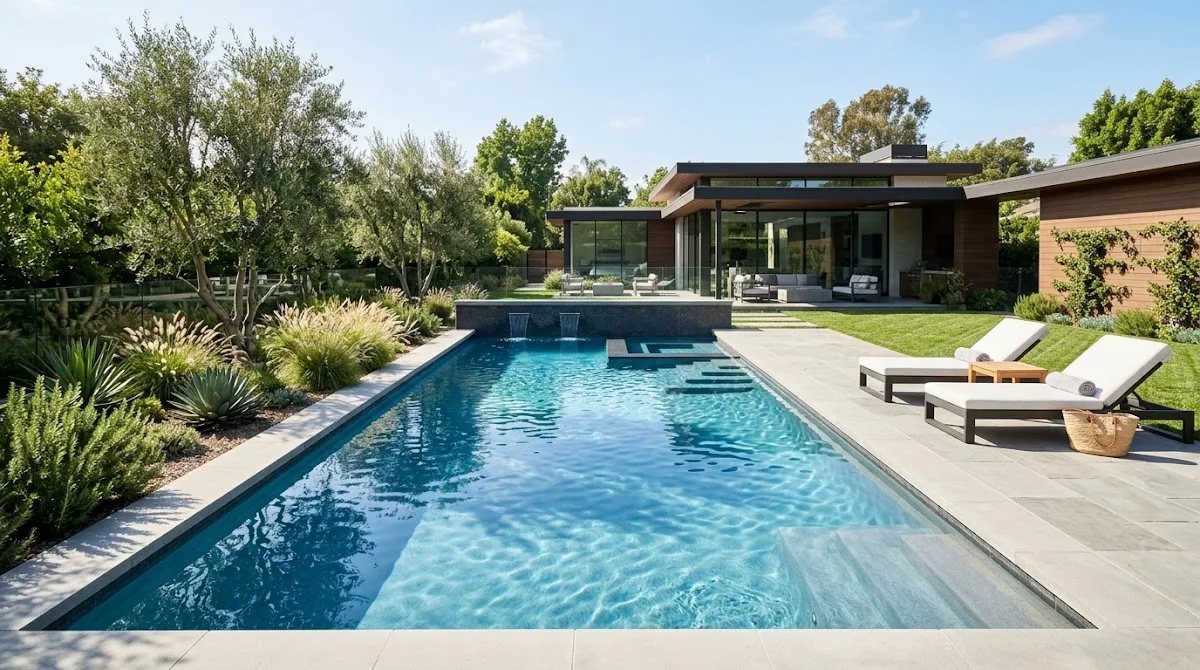
Choosing between a fiberglass pool, a concrete pool, and a vinyl liner pool is not only about price. It is about how you want the pool to perform.
This guide gives you an honest comparison of upfront cost, durability, repairs, and long-term value so you can choose with confidence.
Identifying the Best Type of Pool for an Inground Swimming Pool Project
An inground pool is a permanent structure, not a seasonal purchase. The material you choose shapes the whole pool experience, from startup to future repairs.
Here is the simple version. Different pools are built in different ways, and that changes almost everything.
Your main pool options are concrete, fiberglass, and vinyl. Each type of pool comes with trade-offs in customization, upkeep, and speed.
Before you decide, weigh these factors:
- Your budget today versus your comfort with future repairs
- The level of customization you want
- How much routine care you are willing to handle
- Whether fast installation matters
- How important resale value is to the homeowner
Think about it this way. One pool may have a lower upfront price but a higher long-term cost. Another may cost more upfront yet avoid major replacement cycles later.
That is why comparing pools cost on day one alone can be misleading.
1. The Concrete Pool: Unlimited Customization and Luxury
A concrete pool is a reinforced shell built on-site with excavation, steel, plumbing, and a sprayed structural layer. If you want deep customization, this is usually the benchmark.
Concrete pools are built for projects where standard molds will not work. Complex pool designs, vanishing edges, custom depths, beach entries, and oversized layouts all fit here.
The Pros and Cons of Gunite and Shotcrete
Gunite is a dry-mix sprayed concrete process. Shotcrete is a wet-mix sprayed concrete process. When people say gunite or shotcrete, they are usually talking about the same family of concrete pool construction.
The biggest advantage is freedom. Concrete pools offer nearly unlimited shapes and sizes, and they can be built around difficult sites.
That matters when the design itself is the selling point.
Still, there are trade-offs. The installation process is the slowest of the three pool categories. Concrete pools typically take three to six months, and some projects run longer depending on weather, inspections, and finish work.
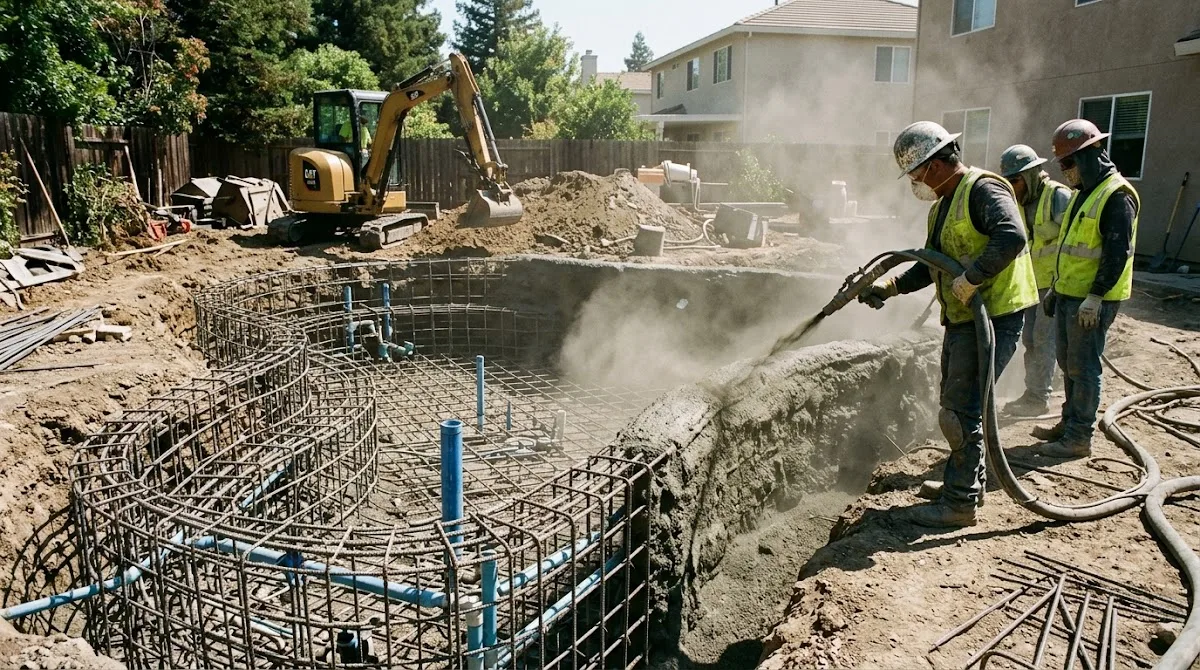
Traditional surface care is where frustration starts. Standard plaster is porous, which means it can trap minerals and support algae if the chemistry slips. Because of this, concrete pools require more brushing and tighter water balance than a fiberglass pool or a vinyl pool.
Routine ownership often includes:
- Brushing two to three times per week
- Closer monitoring of water chemistry
- Acid washing every 3 to 5 years
- Plans to resurface the interior finish later
That last point is a big one. A standard plaster surface may need resurfacing every 7 to 15 years, often at $10,000 to $20,000. If you want more detail on that expense, see resurfacing costs.
Surface texture also matters. Some traditional finishes feel rough underfoot and can contribute to irritation known as pool toe.
Modernizing Concrete with Advanced Micro-Ceramic Finishes
Here is the shift happening across the market. The old idea that a concrete pool must be high maintenance is no longer fully true.
Modern finish systems are changing the math.
A proprietary three-part micro-ceramic waterproofing and finishing system creates a dense, refined surface that helps solve the traditional weak points of plaster. That means less porosity, better protection, and a more refined finish in one system.
For the homeowner, that can reduce chemical demand, staining, and premature wear. For the installer, it creates a better path to long-term durability without sacrificing design freedom.
The best systems also bring tested performance. ASTM, NSF, and Miami-Dade NOA certifications matter because they point to real standards for safety and structural protection.
Just as important, some advanced finishes are antimicrobial, antibacterial, and antiviral. That helps create a cleaner surface environment and lowers the chance that hidden pores become a problem area.
If you want to understand how these systems help protect a build, read more about investment protection. For a broader look at surface choices, see this guide to pool finishes.
2. The Fiberglass Pool: Rapid Installation and Smooth Surfaces
A fiberglass pool is a factory-made shell installed into an excavated site. It is known for speed, low routine care, and a smooth surface.
Fiberglass pools are manufactured in molds, then shipped as a finished structure. A fiberglass pool manufacturer may reinforce the shell with composite layers and resins for added strength.
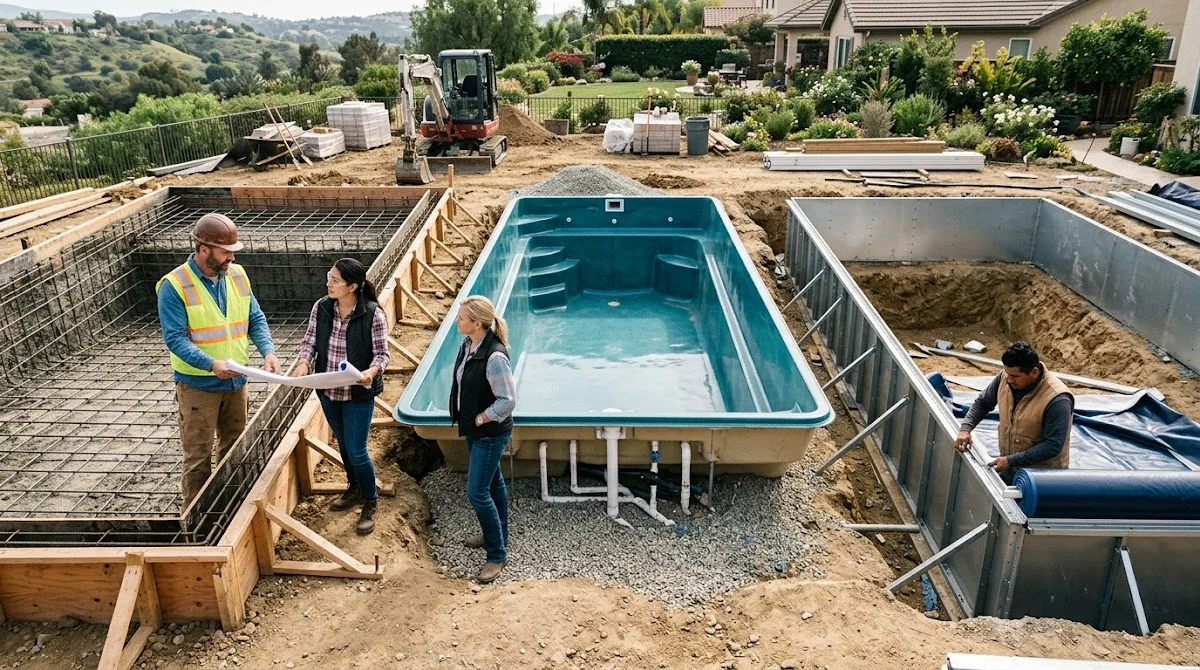
Because the shell arrives preformed, a fiberglass pool often has the fastest installation time of the three pool categories. Some projects finish in 2 to 6 weeks, and some pools may be ready for water just days after delivery.
Fiberglass vs Concrete: Structural Trade-Offs
When comparing fiberglass, the biggest advantage is simplicity. The gel coat surface is non-abrasive, comfortable, and easier to keep clean than old-school plaster.
That smoother finish also helps reduce algae attachment. Unlike concrete, the surface does not invite the same level of daily brushing and chemical correction.
A well-made fiberglass pool can be very durable. Many shells carry a strong warranty, and with proper support and care, pools can last for decades.
Still, fiberglass vs concrete is really a question of freedom versus convenience.
A fiberglass pool comes in fixed molds. That limits shapes and sizes. Most shells top out around 16 feet wide and 40 feet long because of size and transportation constraints. If you need a layout larger than 16 feet or want one-of-a-kind geometry, a concrete pool usually wins.
That is one of the real disadvantages of fiberglass. You get speed and low care, but not full design freedom.
Fiberglass pools are built off-site, then set into place. Compared to concrete pools, that is a major reason they move faster. But it also means your certain pool must fit a truck route, crane plan, and site access window.
You may also hear names like Latham fiberglass or Latham pool during research. The larger point is not the brand. It is the format. Fiberglass and concrete solve different problems.
If your priority is fast startup, lower weekly effort, and a long shell life, a fiberglass pool makes a strong case.
3. The Vinyl Pool Experience: Managing Upfront Costs
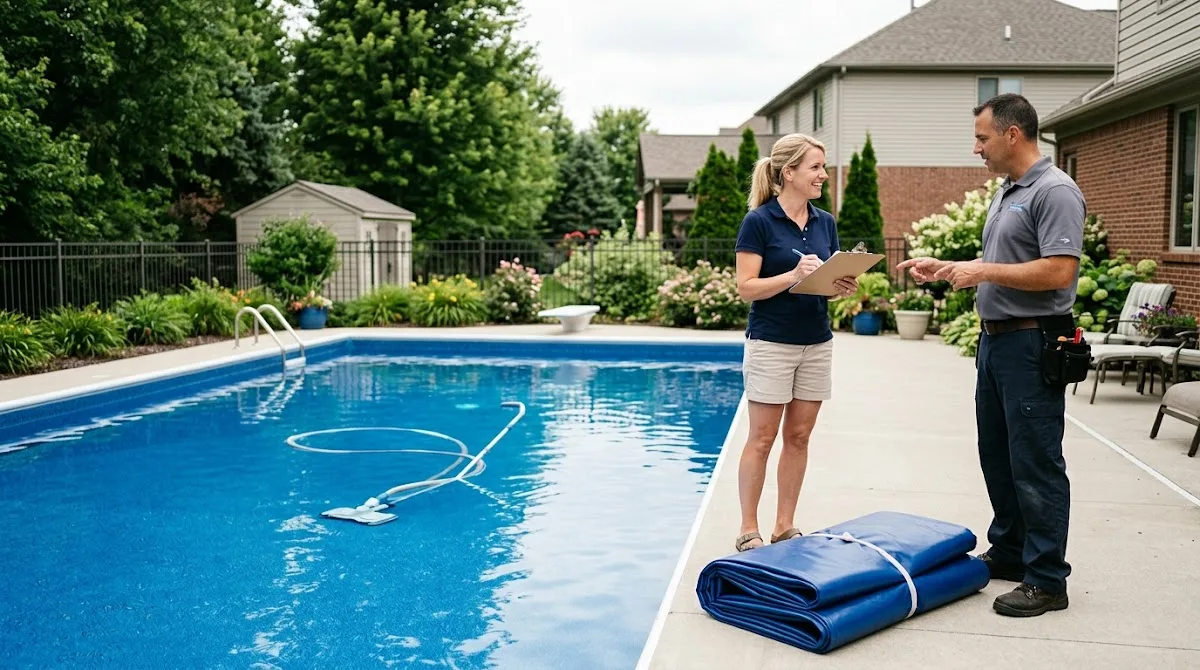 A vinyl liner pool is often chosen for one reason first: budget. It offers an accessible entry point into the inground market.
Vinyl liner pools use a structural wall system made from steel or polymer panels. A custom liner is then fitted inside to hold water and create the finished interior surface.
Installing a Vinyl Liner Pool
The build is usually quicker than a concrete pool and slower than a fiberglass pool. Many vinyl pool projects finish in 4 to 10 weeks.
The surface feels soft and comfortable. That smooth surface is one reason some families like a vinyl liner pool.
But there is a catch. The liner is the finish and the wear layer. Dog claws, sharp toys, falling branches, and accidental punctures can damage it.
That makes the liner a maintenance item, not just a finish choice.
The Financial Reality of Replacing Vinyl Liners
This is where vinyl vs other materials gets more complicated. The lower initial cost looks attractive, but vinyl liners typically need replacement every 7 to 10 years.
That means liner replacement is not an if. It is a when.
Replacement costs usually fall between $2,500 and $7,500 each cycle. Vinyl pools usually also need careful chemistry control because poor balance can wrinkle, fade, dry out, or shorten liner life.
In plain language, vinyl pools require attention. The liner can age from UV exposure, chemicals, and normal use. Vinyl pool liners also come with style choices, including colors and patterns, but appearance does not change the maintenance cycle.
And yes, warranty terms matter here too. A liner warranty may be prorated, limited, or tied to strict care conditions.
Vinyl Liner vs Other Materials: Evaluating Value
Vinyl liner vs fiberglass and concrete often comes down to timing. You spend less upfront, but you accept repeating liner expense later.
A fiberglass pool usually avoids that cycle. A concrete pool with an advanced micro-ceramic finish can also reduce the resurfacing burden that people associate with older plaster systems.
So while a vinyl pool can be the lowest barrier to entry, it often acts like a subscription model. The liner will age. The liner may stain. The liner will eventually need to be replaced.
For resale, that matters. A homeowner looking at a house with an aging liner often calculates that future bill immediately.
Comparing Inground Pools Cost: Initial Investment to 10-Year Outlook
Let’s put the numbers in one place. This is where fiberglass and vinyl, concrete vs fiberglass, and vinyl liner vs fiberglass become easier to evaluate.
The chart below compares typical upfront and 10-year ownership ranges.
| Pool Type | Initial Upfront Cost | 10-Year Total Ownership Cost | Major Repair Frequency | Major Repair Cost |
|---|---|---|---|---|
| Vinyl Liner | $40,000 – $70,000 | $58,000 – $94,000 | Every 7–10 Years (Liner) | $2,500 – $7,500 |
| Fiberglass | $55,000 – $100,000 | $63,000 – $112,000 | Minimal | N/A |
| Concrete | $80,000 – $120,000+ | $99,500 – $147,500 | Every 7–15 Years (Surface) | $10,000 – $20,000 |
A few things stand out fast.
First, concrete has the highest cost at the start. That reflects labor, steel, excavation, and fully custom work. It is also why many luxury projects still choose a concrete pool despite the higher cost.
Second, fiberglass can cost more upfront than vinyl, but the long-term cost often stays more stable because there is no liner cycle.
Third, the old version of concrete ownership is not the only version anymore. If you upgrade the finish from day one, a concrete pool can keep its design edge while reducing future maintenance and helping preserve warranty value.
This is the key takeaway. The best pool type is not always the cheapest bid. It is the one that matches your priorities over time.
Summary: Which Pool Type Is Right for Your Project?
Here is the clean summary.
| Operational Factor | Vinyl Liner Pool | Fiberglass Pool | Concrete Pool |
|---|---|---|---|
| Design Customization | Moderate | Limited (Pre-engineered) | Unlimited |
| Surface Feel | Smooth | Smooth | Rough/Abrasive (Unless upgraded) |
| Property Resale Value | Lower | Moderate to High | High (Luxury tier) |
| Routine Maintenance | Moderate | Low | High (Unless micro-sealed) |
If you want maximum customization, deep visual impact, and a built on-site structure, concrete remains the premium route.
If speed, comfort, and lower weekly maintenance matter most, a fiberglass pool is hard to ignore.
If the top goal is a lower upfront cost, a vinyl liner pool can work, but only if you accept future liner expense as part of ownership.
Conclusion
Choosing among the three pool materials comes down to trade-offs. A fiberglass pool offers speed and ease. A concrete pool gives unmatched design freedom. A vinyl liner pool lowers the entry price but adds recurring replacement costs. If long-term performance matters, compare more than bids. Compare lifespan, maintenance, and finish quality too.
Frequently Asked Questions About Fiberglass vs Concrete vs Vinyl Pools
Which pool lasts longest?
A fiberglass pool or well-finished concrete pool can last a very long time.
What is a vinyl liner?
A vinyl liner is a flexible interior membrane that holds water inside a vinyl liner pool.
Which pool is easiest to maintain?
A fiberglass pool is usually the easiest to maintain.
Which pool has the most design freedom?
A concrete pool has the most design freedom.
Do vinyl liners need replacement?
Yes. Most vinyl liners need replacement every 7 to 10 years.
Is fiberglass good for large custom layouts?
Not usually. Mold limits make large custom designs harder.
Can concrete be made less maintenance-heavy?
Yes. Advanced micro-ceramic systems can reduce traditional plaster issues.
Which pool has the lowest initial cost?
A vinyl liner pool usually has the lowest initial cost.