
Pool Resurfacing Cost Breakdown (& Hidden Fees to Avoid)
Most people ask one question first: how much does pool resurfacing cost? Fair question. The frustrating part is that the number on the first estimate is often not the number you actually pay.
Let’s make it simple. We’ll cover real price ranges, common finish choices, and five hidden charges that can wreck your budget.
Understanding The True Pool Resurfacing Cost
Pool resurfacing is a construction project, not a paint touch-up. That distinction matters because the pool resurfacing cost can range from about $1,500 for a short-term epoxy patch on a small shell to $65,000 for a full conversion with structural work.
That spread sounds wild. But it makes sense once you look at pool type, finish material, prep work, and repairs needed.
A pool usually needs to resurface every 7 to 15 years, depending on climate, water chemistry, use, and wear and tear. In hot, high-use markets like South Florida, surfaces often age faster. In places with freeze-thaw cycles, the finish can also break down sooner.
Here’s the key point. The material you choose affects far more than looks. It changes maintenance, lifespan, sanitation performance, and the final price.
Traditional porous plaster can work, but it often needs more upkeep. By contrast, advanced micro-ceramic systems are designed to create a watertight, long-lasting finish with certified performance. If you are comparing pool resurfacing options, this is where details matter.
How Much Does It Cost To Resurface A Pool?
How much does it cost to resurface a pool? For most residential pool projects, expect to pay anywhere from $10,000 to $25,000 for a standard resurface, while premium systems and full conversions can cost around $50,000 to $65,000.
That said, depending on the pool size, access, and substrate condition, the cost to resurface a pool can move quickly. A difficult to access backyard, old plumbing, or hidden shell damage adds to the cost fast.
Concrete Pool Finishes And Material Expenses
A concrete pool gives you the most finish flexibility, but also the widest pricing range. Concrete pool surfaces differ in texture, stain resistance, and how well they hold up over time.
Plaster is the least expensive option and the least durable of the major premium categories. A white plaster finish for a 15x35 pool may start near $10,000 and has a 7-10 year lifespan. It also may need acid washing every few years.
Aggregate finishes offer more style and strength. Quartz and marble aggregate blends typically start at $5+ per square foot, with many jobs landing well above 10 per square foot once labor and prep are included. Pebble finishes sit in a premium tier and often last 15-20 years.
Tile is the top shelf choice. It is nonporous, UV resistant, frost resistant, and can usually cost $30+ per square foot. For a full pool interior, expect to pay $25,000 or more.
Here’s a quick breakdown:
| Finish Type | Estimated Minimum Cost | Expected Lifespan | Characteristics |
|---|---|---|---|
| White Plaster | $10,000 (15x35 ft pool) | 7-10 years | Least expensive; requires acid washing every 3-5 years |
| Aggregate (Quartz) | $13,000 (Medium pool) | 10-15 years | High aesthetic appeal; materials start at $5+/sq. ft. |
| Aggregate (Pebble) | Premium pricing tier | 15-25 years | Strongest aggregate bond; maximum color options |
| Pool Tile | $25,000 ($30+/sq. ft.) | Longest lasting | Nonporous; frost-proof, fire, and UV resistant |
Some finishes also let you customize color and texture with glass beads or marble aggregate for a more refined look. If you want a deeper comparison of plaster, aggregate, tile, and other finish choices, see finish types.
One note here. Some searches include terms like Pebble Tec and polished aggregate. That language is common in the market, but what matters most is the actual finish quality, certified system, and installer skill.
Fiberglass Pools: Coatings And Paint Options
Fiberglass pools are low maintenance, but not maintenance-free. Over time, fading, chalking, or blistering can force you to resurface the shell.
Thermoplastic coatings for fiberglass pools often cost around $10,000 to $13,000 for a small or medium pool. They cure quickly, which helps when refilling your pool on a tight schedule.
Epoxy paint is the budget option. It may cost around $1,500, but epoxy paint only lasts up to five years, cures slowly, and cannot always bond over an older painted surface. In plain English, cheap now can mean expensive later.
Vinyl Liner Replacement vs. Full Conversion
A vinyl liner pool does not get resurfaced the same way as gunite or fiberglass. Instead, the pool liner is replaced every 5 to 9 years, and those jobs usually cost about $4,500 including labor, chemicals, and water.
Some owners choose a bigger move and replace one pool with another by converting a vinyl liner shell into a new pool structure with a more durable interior. That can cost to resurface in the broadest sense between $50,000 and $65,000.
5 Hidden Fees To Avoid
A calculator is a useful starting point. It is not a contract review tool.
Over the last five years, documented losses from contractor failures have topped $100 million. That is why the cheapest quote deserves the most scrutiny.
1. The Trap Of Unclear, One-Line Estimates
A real bid should itemize demolition, prep, plumbing, gunite review, tile work, finish application, startup chemicals, and cleanup. If it is one line, you are guessing.
In one case, a contractor took nearly $1 million from 14 families using vague estimates and left unsafe excavations behind, ending in a $2.2 million judgment.
2. Structural Failures From Poor Substrate Preparation
Substrate is the layer under the new surface. Substrate is a structural base that must be sound before any finish goes on.
Poor prep can create micro-fractures. A cheap $15,000 resurface can turn into a $45,000 rebuild within 24 months if the shell lacks 4,000 PSI strength. Better crews may use hydroblasting, not harsh jackhammering, to protect the shell.
3. Chemical Imbalances And Soaring Energy Bills
Old porous surfaces absorb chemicals. Rough walls also disrupt flow.
Because of this, a deteriorated finish can raise chemical demand and make pumps work harder. The surface may look tired, but the monthly bill tells the real story.
4. Choosing Uncertified Finishes Over Advanced Systems
Not all resurfacing materials are built the same. Certified systems matter.
ASTM, NSF, and Miami-Dade NOA certifications show that a finish has been tested to recognized standards. Advanced systems may also offer antimicrobial, antibacterial, and antiviral properties that traditional plaster often lacks. For more on that, read about microplaster waterproofing.
The High Cost Of Delaying Resurfacing A Pool
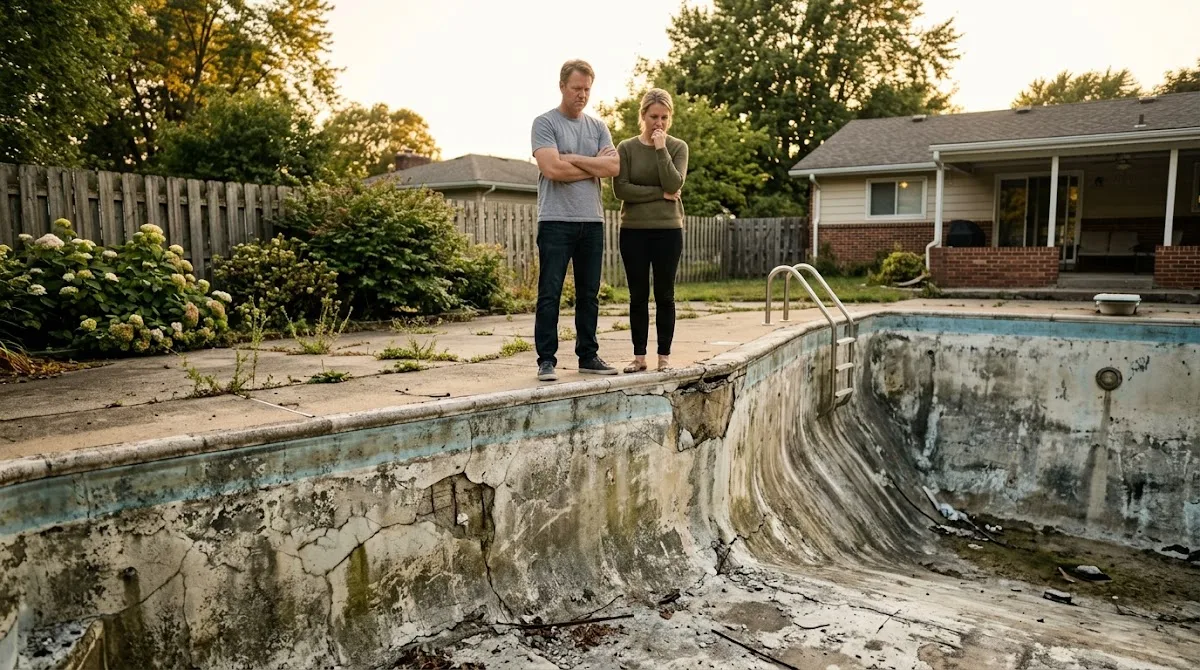 Waiting rarely saves money. It usually shifts the problem underground.
A worn finish can let moisture migrate into the shell, increasing the chance of a leak or deeper structural damage. Rough areas also become a safety issue, especially on steps, benches, and ledges.
There is also the value question. In markets like Fort Lauderdale and Boca Raton, a neglected pool can drag down appeal fast. For pool owners thinking about resale, a damaged surface is a visible liability.
Project Timeline: The Time To Resurface
Standard swimming pool resurfacing projects typically ranges from 5 to 10 days. Many crews can complete basic resurfacing in 5 to 7 days, including draining, prep, application, curing, and refill.
Major conversions, like swapping a vinyl shell for fiberglass, may take 3 to 6 weeks. That window is also the smart time to update tile, plumbing, lighting, or circulation equipment.
Essential Homeowner Strategies To Vet Contractors
Start with state license databases. Then confirm insurance and specialty credentials.
Next, ask for three local addresses from the past six months. Go see the work. Website galleries are easy to polish.
Also, protect cash flow:
- Never pay more than 10% down or $1,000 upfront, whichever is less
- Tie payments to completed phases
- Ask for written warranties
- Require updates every 48 hours
- Ask for weekly progress photos and one project contact
Conclusion
The cost of pool resurfacing depends on pool size, finish, prep quality, and contractor skill. Cheap bids can hide major risk, while better systems can lower maintenance and last longer. If you plan to resurface your pool, focus on certified materials, detailed estimates, and proper prep. That is how you protect both the finish and your budget.
Frequently Asked Questions About Pool Resurfacing Cost
How much to resurface a 10,000 gallon pool?
Expect to pay based on surface area, not gallons. Most small pool jobs start around $10,000 for plaster.
Is pool resurfacing worth it?
Yes, if your finish is rough, stained, or failing. It protects the shell and improves safety.
What is the cheapest way to resurface a pool?
Pool paint or epoxy is cheapest, but it has the shortest lifespan.
How often does an inground pool need to be resurfaced?
Most need it every 7-12 years, depending on finish and care.
What time of year is best to resurface a pool?
Off-season or mild weather is often best because schedules are more flexible.
What is the cheapest way to resurface a pool?
A basic epoxy coating is usually the lowest upfront option, but not the best long-term value.