
6 Pool Resurfacing Options Compared (w/ Costs & Pros/Cons)
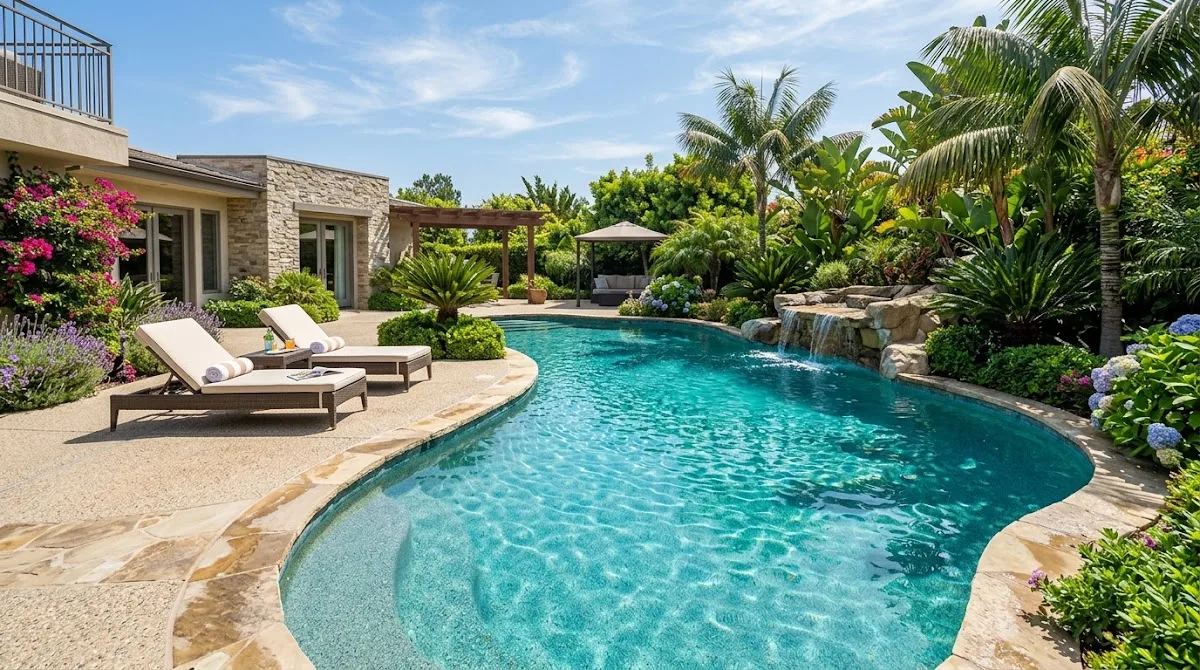
Picking a new finish can feel simple until you compare texture, lifespan, installation skill, and maintenance side by side.
Let’s make that easier by walking through six popular pool resurfacing options with clear pros, cons, and realistic expectations.
Recognizing When Swimming Pools Require a Pool Refinish
Most pool problems start quietly.
You notice fading on one wall. A rough patch near the steps. Maybe a few rust stains that seem cosmetic at first. Then a season later, the finish begins to flake, loosen, or crack. That’s usually how a pool refinish enters the conversation.
Here’s the key idea: visual decline often shows up before structural failure.
So what should you watch for?
- Uneven color fading
- Mineral staining
- Rust spots that may point to corroding steel
- Gritty texture underfoot
- Loose pebble or sand-like loss
- Areas where the finish starts to peel
A pool surface should feel stable and consistent. If it feels sharp, chalky, or worn down, the material may be starting to deteriorate.
Now let’s get more specific.
Crazing is a network of tiny, spider-web cracks across the shell. Crazing is a shallow pattern, but it often tells you the top layer is under stress.
A hairline crack is a very small fracture in the plaster or finish. Hairline cracks matter because hard minerals can work into those openings and make the damage worse over time.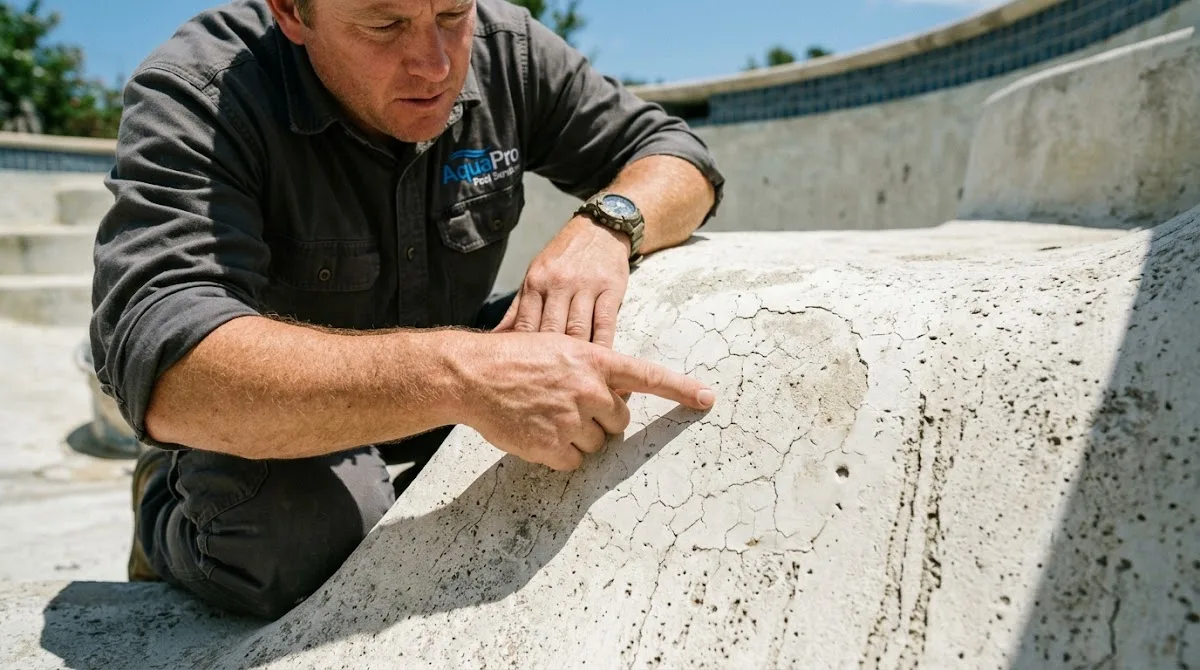
Spalling is surface breakdown caused by long-term chemical imbalance. If your plaster starts to chip, pop, or break away in spots, spalling may be the reason.
And then there are leaks.
Every pool loses some water to heat, wind, and splash-out. But if pool water drops faster than normal evaporation, you may have a hidden issue behind the visible wear and tear. In many swimming pools, that is the clearest sign the pool needs more than a cosmetic refinish.
6 Popular Pool Resurfacing Materials to Consider
If you’re comparing options for pool refinishing, don’t look at color alone.
Think about texture, prep requirements, maintenance, and how the finish behaves after years of sun, chlorine, and changing water chemistry. That’s what separates a smart choice from an expensive do-over.
1. Pebble Finishes: Premium Texture for a Long-Lasting Pool Surface
Pebble finishes are a blend of natural stone and modified cement. This aggregate system creates a textured, non-slip interior that hides imperfections well and holds up in busy pool and spa environments.
There’s a wide range here. Some pebble finishes feel coarse, almost like orange peel. Others use smaller media for a softer feel.
Why do many builders like it? Because pebble is tough, stain resistant, and forgiving in freeform designs.
Pros:
- Strong visual appeal
- Good traction
- Handles chemical exposure well
- Long-lasting durability
Cons:
- Highest upfront cost in many markets
- Texture may feel rough to some swimmers
- Can increase robot wear
- Installation quality matters a lot
If you want a natural look and fewer visible blemishes over time, this is one of the popular options.
2. Quartz Plaster: Vibrant Colors for Swimming Pool Resurfacing
Quartz plaster is a mix of white plaster, polymers, and quartz aggregate. It gives a smoother finish than standard pebble while adding sparkle and better stain resistance than basic marcite.
This is where design becomes a bigger factor.
A quartz system comes in a variety of colors, from sky blue and aqua to deeper tones that shift the water color dramatically. It works especially well in geometric designs where a clean, uniform look matters.
Pros:
- Smooth underfoot
- Strong color retention
- More stain resistant than plain plaster
- Good balance of beauty and performance
Cons:
- Costs more than traditional plaster
- Can fade if chemistry stays out of range
- Application still depends on good crew skill
For many projects, quartz sits in the middle sweet spot between price and upgraded performance.
3. Glass and Porcelain Tile: The Luxurious Way to Resurface a Pool
Tile is a premium choice, whether used across the full interior, at the waterline, or as a feature in a spa. Glass tiles reflect light beautifully and add shimmer that other pool materials simply can’t match.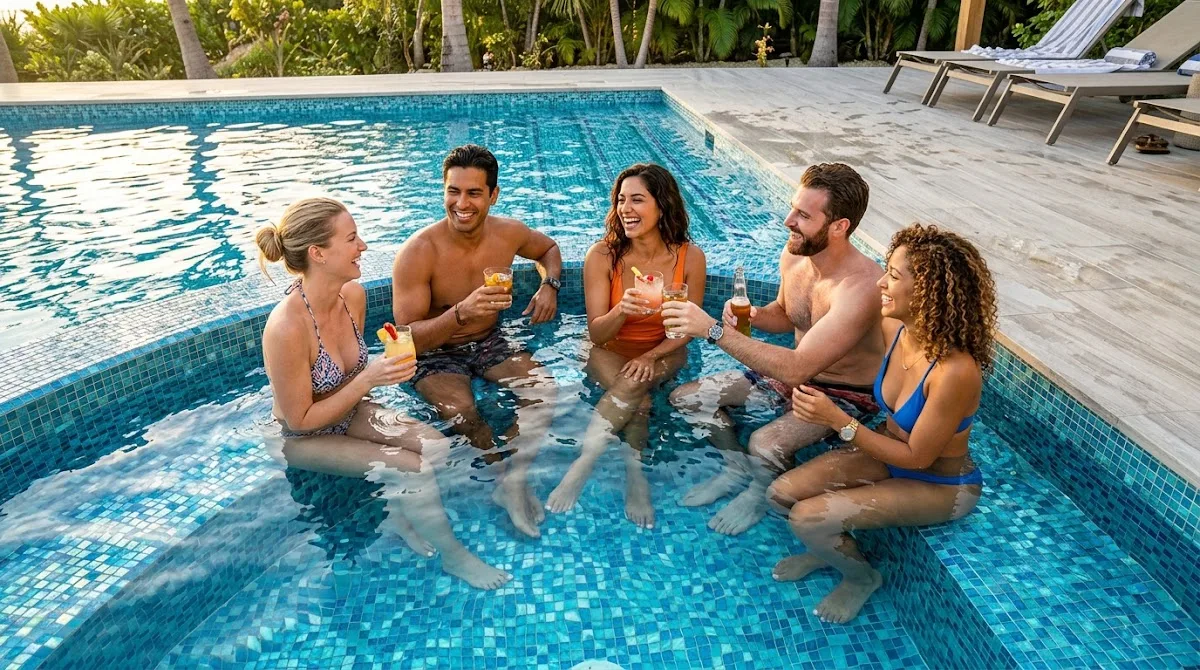
Porcelain offers a different advantage. It is dense, moisture resistant, and available in looks that mimic stone or wood. That gives you more design freedom without giving up performance.
Pros:
- High-end finish
- Extremely low shell maintenance
- Excellent mold and moisture resistance
- Great for custom detailing
Cons:
- Expensive material and labor
- Specialized setting and grout work
- Periodic cleaning is still needed
- Some tile systems require sealing attention
When done well, pool tile can last a very long time. But this is not the place to cut corners on labor.
4. Fiberglass: A Smooth, Non-Porous Resurfacing Option
Fiberglass resurfacing involves applying a solid shell over the existing pool structure. The result is a smooth, closed surface that helps resist algae attachment and reduces routine maintenance.
A fiberglass finish is often chosen for comfort and low porosity. Some systems also use epoxy, acrylic, or resin-based layers during installation, depending on the method and substrate.
Pros:
- Smooth finish
- Lower day-to-day cleaning demand
- Good UV resistance
- Helps limit chemical attack
Cons:
- Specialized installation
- Higher pricing than plain plaster
- Repairs can be technique-sensitive
- Poor install conditions may lead to peel and blister issues
Not every shell is a fit for fiberglass. Good evaluation comes first.
5. Traditional White Plaster: The Budget-Friendly Pool Resurface
Traditional white plaster is a mix of cement, sand, and water. If you’ve ever asked what pool plaster is, this is the classic version most people picture.
It remains one of the most common ways to resurface a pool because it is affordable, familiar, and widely available. A plaster pool also delivers that bright, clean look many people still want.
Pros:
- Lowest upfront cost
- Smooth traditional appearance
- Easy to source
- Familiar to many pool contractors
Cons:
- More likely to stain or etch
- Can crack more easily
- Shorter lifespan than upgraded finishes
- Demands careful chemistry control
If budget leads the decision, standard plaster still has a place. But it usually gives up some longevity in return.
6. Polished Marble: An Ultra-Smooth Pool Finish Upgrade
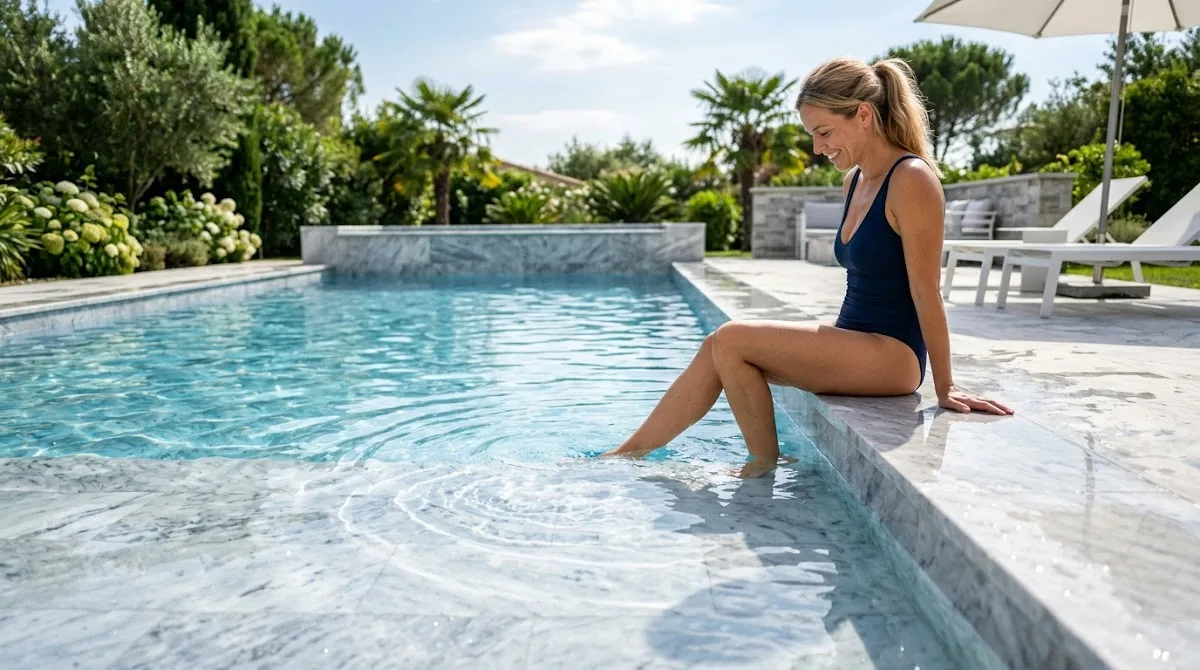 Polished marble is an advanced plaster-based finish where the cream layer is intentionally polished away to expose and refine the marble content. The result is a very smooth pool finish with a refined look.
Some systems also include glass beads to add subtle depth and light reflection. The feel is the main draw. It is sleek, comfortable, and elegant.
Pros:
- Ultra-smooth finish
- Elevated appearance
- More refined than standard plaster
- Great for high-end renovation work
Cons:
- Premium pricing
- Requires expert polishing skill
- Mistakes in application can damage the finish
- Not every crew has the right experience
For clients chasing feel above all else, polished marble is often near the top of the list.
Evaluating the Top Pool Resurfacing Options by Cost and Lifespan
Here’s where many estimates go sideways.
Material price is only one part of best pool resurfacing decisions. The real cost includes prep, repairs, crew skill, local labor, shell condition, and expected maintenance after startup.
Also, darker finishes can change how the pool behaves. Dark-bottomed quartz or pebble surfaces can absorb more heat and raise water temperature by 8 to 10 degrees, which changes chemical demand.
In general, a well-maintained pool resurface can last 15 to 20 years. But that range depends heavily on chemistry, use, climate, and the type of finish installed.
| Pool Resurfacing Materials | Average Cost Per Square Foot | Estimated Lifespan |
|---|---|---|
| Pebble | $10 – $19 | 15 – 25+ years |
| Quartz Plaster | $7 – $10 | 10 – 15 years |
| Glass / Porcelain Tile | $8 – $32 | highly variable |
| Fiberglass | $10 – $30 | highly variable |
| Polished Marble | Upgraded premium pricing | 10+ years |
| Traditional Plaster | $5 – $8 | 5 – 15 years |
A few practical notes:
- Pool replastering costs rise fast when shell repairs are needed
- A new layer of plaster should never hide unresolved structural problems
- Re-plastering is not the same as full waterproofing
- The best swimming pool resurfacing choice depends on how you use the pool, not just what looks good in a sample board
If you own a new pool, this table may feel premature. It’s not. Knowing the options available now helps you plan future maintenance smarter.
Beyond Traditional Finishes: The Future of Pool Surface Integrity
This is where the conversation changes.
Traditional finishes can look beautiful. Some are durable. But most still have one weakness: microscopic porosity. Over time, that opens the door to staining, bacteria, algae attachment, and slow degradation beneath the visible finish.
That’s why more pool construction professionals are looking past appearance alone.
A micro-ceramic system changes the goal. Instead of just adding a new surface, it aims to protect the shell as a complete system. Microplaster and waterproofing matter because a finish should do more than cover concrete.
SKIN2.0 is a proprietary three-part micro-ceramic waterproofing and luxury finish system built for that next step. It is ASTM, NSF, and Miami-Dade NOA certified. It also includes antimicrobial, antibacterial, and antiviral technology, which can support cleaner surfaces and reduce dependence on harsh treatment cycles.
Think about what that means for a homeowner or an experienced team managing a demanding pool resurfacing project.
You’re not only choosing a type of finish. You’re choosing whether the shell gets systemic protection against moisture movement and long-term degradation.
That difference matters in a spa. It matters in commercial settings. It matters in exterior pool environments exposed to heat, sun, and constant water pressure.
If your goal is more than a cosmetic refinish, this is where swimming pool resurfacing options are headed.
Conclusion
The right pool resurface depends on budget, texture, design goals, and how much long-term protection you want. Traditional plaster, quartz, pebble, tile, fiberglass, and polished marble each solve a different problem.
If your pool’s finish is failing, don’t wait for deeper damage.
Frequently Asked Questions About Pool Resurfacing Options
What is the best type of pool resurfacing?
The best pool resurfacing choice depends on budget, desired feel, maintenance goals, and shell condition.
What is the cheapest way to resurface a pool?
Traditional white plaster is usually the lowest-cost way to resurface a pool.
What are pool resurfacing alternatives?
Alternatives include tile, fiberglass, micro-ceramic waterproofing systems, and selective pool finish upgrades.
How much does it cost to replaster a 35,000 gallon pool?
Costs vary by region and prep, but pool replastering usually depends on square footage more than gallons.
What time of year is best to resurface a pool?
The best time to resurface is often the off-season, when weather is stable and schedules are easier.
What is the cheapest way to resurface a pool?
In most cases, white plaster remains the most affordable option for pool resurface work.