
Hairline Cracks in Swimming Pool Plaster (Fix or Ignore?)

Most cracks look worse than they are. That is the good news. The bad news is that some cracks point to deeper trouble inside the concrete shell.
Here’s how to tell the difference, avoid unnecessary panic, and protect your pool before a minor flaw turns expensive.
Understanding Types of Swimming Pool Cracks: Hairline vs. Structural
If you own or maintain a swimming pool, you will see surface flaws sooner or later. That alone does not mean failure. The key is knowing the different types of swimming pool damage and what each one usually means.
What Are Hairline and Spider Cracks in Pool Plaster?
A hairline crack is a thin, shallow line in the plaster surface, usually less than 1/8 inch wide. In many cases, it stays on the top layer and does not affect the pool shell underneath.
These small cracks often show up in a random spider pattern or around steps, benches, and corners. They can form as plaster begins to cure, as the shell and finish settle slightly, or as temperature swings make materials expand and contract.
Here’s the part that surprises many people. In an older pool, this kind of crack is often cosmetic and largely harmless. It may look ugly, but it may not leak, spread, or reduce the integrity of the structure.
Still, appearance matters. If older plaster starts to flake, pop, or show discoloration, the surface may be nearing the point where pool resurfacing becomes the smarter long-term move.
Identifying Structural Cracks in Concrete Pools
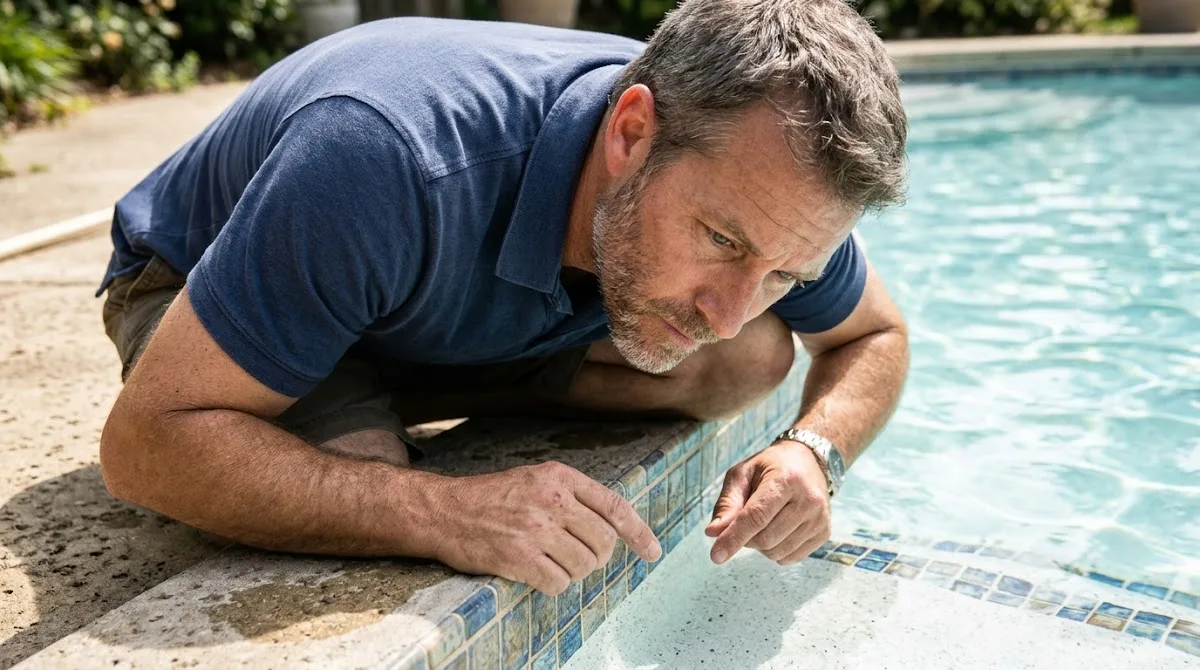
A structural crack is a deeper fissure that extends through the concrete shell or foundation. This is the kind of crack that can allow water to seep out, let pressure build behind the finish, and cause serious damage.
These cracks are commonly tied to soil movement, hydrostatic pressure, or a shell that began to shift over time. You may also notice tile movement, deck separation, or rust staining near the spot.
That’s the difference in plain terms. A surface crack affects looks. Structural problems affect performance, safety, and leakage risk.
| Feature | Hairline Cracks | Structural Cracks |
|---|---|---|
| Width Threshold | Less than 1/8 inch wide | Deeper than a fingernail’s width |
| Depth | Topcoat/plaster surface only | Extends through concrete shell/foundation |
| Primary Pattern | Spiderweb patterns or fine lines | Vertical, horizontal, or diagonal lines |
| Severity Level | Cosmetic and visual nuisance | Causes continuous leaks and displacement |
Should You Fix or Ignore a Hairline Crack?
This is where people often overreact or wait too long. A crack that stays stable may not need immediate work. A crack that begins to widen or worsen should be addressed quickly.
When to Ignore and Monitor Your Pool Crack
If the crack is strictly on the surface, has not changed shape, and there is no unusual water loss beyond normal evaporation, monitoring is reasonable. Take a photo every month from the same angle. That gives you a baseline.
Also watch the waterline tile for rust marks, damp spots, or mineral trails. Those clues can reveal a hidden leak before the crack becomes more visible.
If you already expect a pool renovation soon, you can often leave a stable hairline crack alone until the larger project. For many owners, that is the most practical choice.
When to Repair to Protect Your Pool
Now the other side. If water chemistry balanced poorly for too long, the finish may etch, plaster wear can speed up, and a simple crack can turn into a bigger repair issue.
A negative saturation index, low calcium, or improper chemical care can make plaster more prone to surface breakdown. Once water gets behind the finish, it can damage bond layers and even affect steel below.
That is why early action matters. A temporary plaster repair can buy time, reduce worry, and help protect your pool until a full resurface makes sense.
How to Test a Swimming Pool Crack for Leaks
You do not need special equipment to start. Two simple checks can help you tell whether the crack is just surface-level or tied to actual water loss.
The DIY Bucket Test Method
The bucket test is a simple way to compare pool evaporation against real leakage. Fill a bucket with pool water, place it on a step, and match the water level inside the bucket with the surrounding pool water.
Leave it alone for 24 hours, or longer if you want a clearer result. If the pool level drops more than the bucket, you likely have a leak and not just evaporation. You can also review common leak causes if the numbers point that way.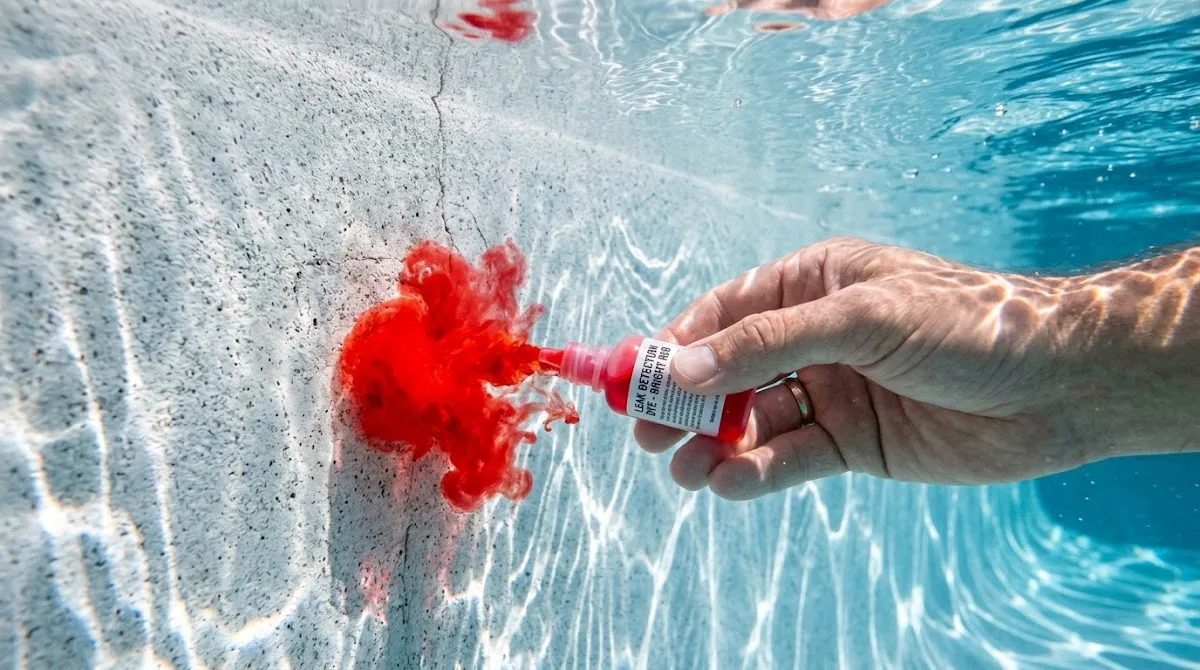
The Plaster Dye Test
Turn off the pump, filter, and all moving water. Then squeeze dye or food coloring gently near the crack.
If the color gets pulled into the line, water is escaping there. That is a strong sign the crack needs more than casual observation.
Effective Methods to Fix Swimming Pool Plaster
For minor surface flaws, a DIY fix may work. For deeper movement, calling in a specialist is the safer choice.
Step-by-Step DIY Concrete Pool Repair
For a small plaster flaw, a patch can be a cost-saving stopgap. Some people drain below the crack, clean out dirt, widen the line slightly, and apply a cement-based plaster mix for better bonding.
That dry method can work, but use care. Draining a pool can change pressure around the shell and sometimes worsen the crack.
An underwater option avoids that risk. Brush the area clean, press the material in firmly, and smooth the finish flush. If you are thinking about surface prep later, read more about acid washing.
When to Call a Professional to Fix Structural Cracks
If multiple cracks appear, return after filling, or keep growing, stop treating it like a surface issue. That pattern points to structural issue territory.
Professionals may use epoxy injection, urethane systems, or reinforcement methods to seal the break and restore strength. If you are comparing options, this overview of structural repair is useful.
And if your pool is simply showing widespread aging due to age, a deeper reset may be smarter than another spot fix. This guide on pool lifespan helps frame that decision.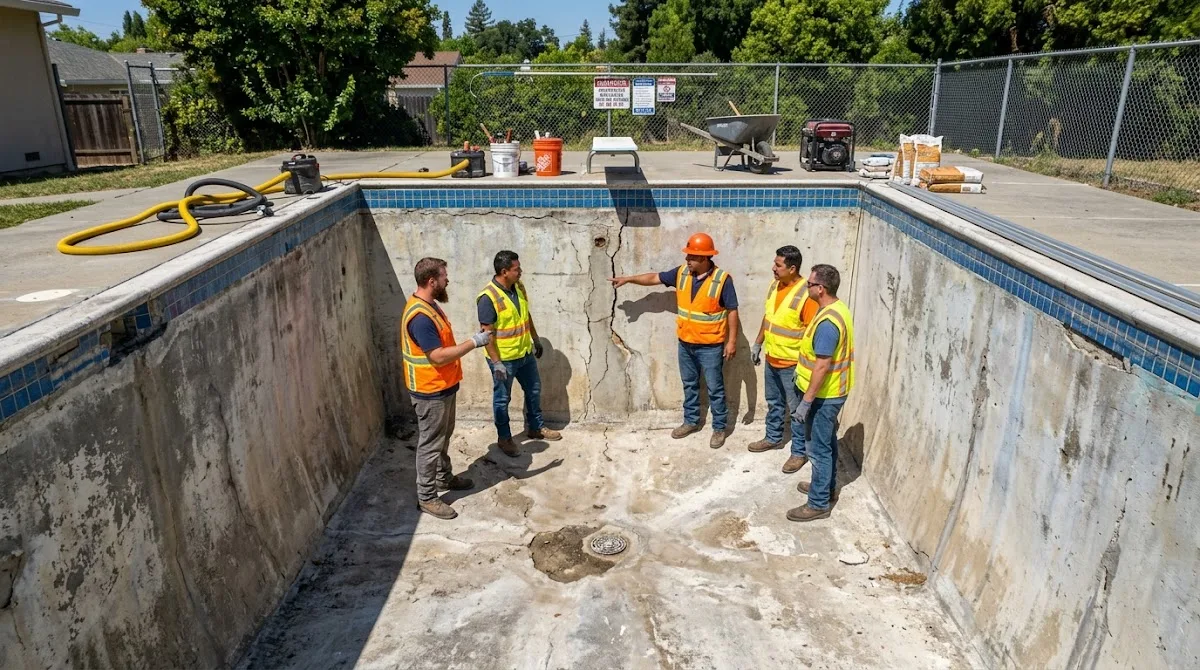
Long-Term Solutions: Resurface to Protect Your Swimming Pool
Traditional pool plaster can wear down from water, movement, hardness imbalance, and daily use. Over time, older plaster becomes more fragile, more likely to crack, and less able to seal the shell well.
That is why many projects move beyond patching and into a full finish upgrade. A modern waterproofing system built with a three-part micro-ceramic design can create a denser, more durable finish than standard plaster.
These advanced systems are ASTM, NSF, and Miami-Dade NOA certified. They also offer antimicrobial, antibacterial, and antiviral performance, which matters anywhere moisture, alga, and surface wear meet.
Think about it this way. If you are repeatedly fixing the same spot, the problem may not be the crack. It may be the finish itself.
Prevention still matters:
- Keep pH and calcium hardness in range
- Maintain proper drainage around the pool
- Keep roots away from the shell
- Inspect annually in regions where weather makes structures shift
In areas with heavy rain, expansive soil, or coastal exposure, weather can stress finishes faster. This look at weather impacts explains why regular checks matter.
Frequently Asked Questions
Are cracks in pool plaster normal?
Yes. Many surface cracks are normal in an aging finish and are often harmless.
Should I be worried about hairlines in plaster?
Only if the crack grows, leaks, or appears with other signs of damage.
What does a settlement crack look like?
It often appears as a longer line that follows stress points as the shell begins to settle.
How to fix hairline crack in pool?
Clean the area and use a suitable pool plaster repair product for a small fix.
How many years should pool plaster last?
It depends on care, water chemistry, and finish quality, but plaster does not last forever.