
How to Repair Swimming Pool Plaster (Easy DIY Patch)
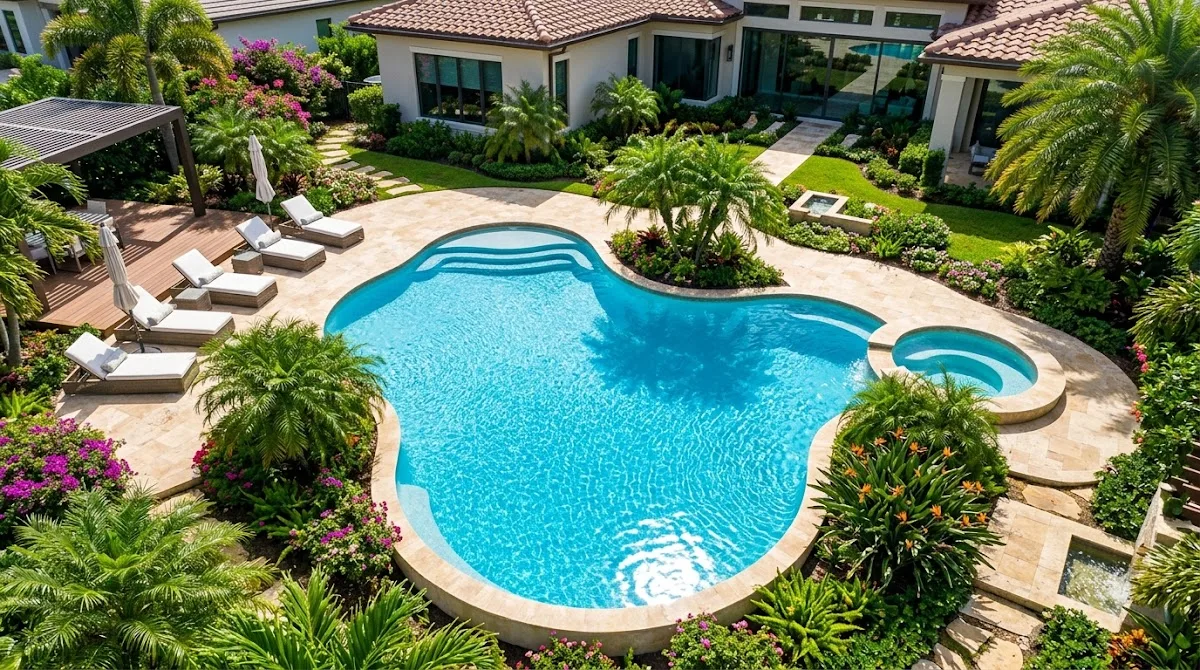
A rough pool wall rarely starts as a big failure. It starts small. A faint line, a stubborn stain, a patchy area that feels different under your hand.
This guide breaks down what those signs mean, what you can repair yourself, and when it makes more sense to stop patching and plan a better finish.
Identifying Common Pool Plaster Problems
Traditional plaster is affordable. That’s why it’s still common in swimming pools across the country. But cost up front is only part of the story.
The real issue is wear. Harsh weather, shifting soil, chemical imbalance, and heavy use all stress the finish. Over time, the coating can break down faster than most people expect.
This is where most frustration begins.
Common pool plaster problems usually show up as cracking, surface loss, separation, etching, scaling, or stain buildup. A plaster pool can look fine from a distance and still have deeper weakness underneath.
Craze cracks are clusters of tiny plaster cracks caused by shrinkage during curing. They often look minor, but severe crazing usually means the entire pool should be replastered.
Spalling is a failure where about a 1/8-inch layer flakes off the top. It often comes from poor trowel timing or overwatering during finishing. Delamination is a bond failure where plaster separates from the concrete base. Weak prep, shell movement, or moisture issues underneath can trigger it.
If you want a deeper look at small surface cracking, read more about hairline cracks.
Crack Types and Repair Approaches
| Crack Type | Symptoms | DIY Solution | Professional Required |
|---|---|---|---|
| Hairline Cracks | Small surface crack | Plaster crack filler | Usually not needed |
| Deeper Cracks | Visible gaps, minor leaking | Chip damaged plaster, patch | If multiple or recurring |
| Structural Cracks | Spreading, continuous water loss | Not recommended | Yes, immediate help |
| Spalling | Flaking or peeling 1/8-inch layer | Sand down if minor | Yes, if large area |
| Delamination | Separation from concrete | Patch if small area | Yes, large area replaster |
How to Fix an Etch or Scale Issue
An etch is a form of surface loss where lines, dents, and rough spots are carved into the finish over time. It usually comes from low pH, low alkalinity, or low calcium.
Scaling is the opposite problem. It is a hard mineral buildup caused by high pH, alkalinity, or calcium. Both issues are signs that standard swimming pool plaster is vulnerable to chemical swings.
Think about it this way. If your pool surface is porous, the chemistry has more chances to leave a mark. Certified micro-ceramic systems are built to resist chemical degradation, reduce microbial growth, and maintain a tighter seal than traditional cement-based plaster finish materials.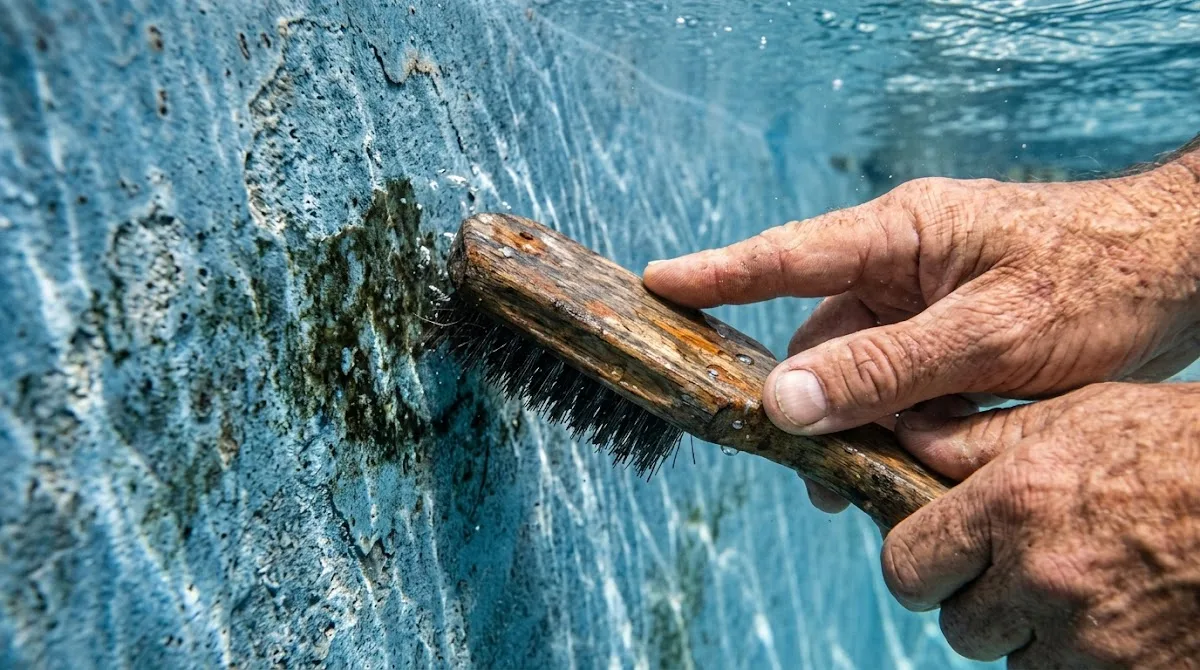
Dealing with a Stubborn Pool Stain
A stain is a discoloration caused by debris, minerals, or metal in the water. Organic material like leaves and dirt often responds to chlorine and brushing. Inorganic stain issues are trickier.
If metal is involved, use a stain guide to help identify the source before treatment. That matters because the wrong chemical can make the stain worse.
For deep discoloration, professionals may recommend an acid wash, often around $450. But there’s a catch. A surface can only handle so much washing before it must be replastered, often at $10,000 or more.
Assessing the Damage: DIY vs. Professional Pool Plaster Repair
DIY pool plaster repair can save money. For small cosmetic damage, it makes sense. A tiny plaster patch, a shallow spot of delamination, or a narrow crack may be manageable without bringing in a contractor.
But repeated failure tells a different story.
When the same area keeps opening, flaking, or leaking, the problem is usually structural or internally connected to the shell. That is when a repair specialist should inspect the concrete pool and resolve the cause, not just the symptom.
This is also why many owners move from repeated pool repair to a permanent upgrade. When standard finishes fail again and again, a three-part micro-ceramic waterproofing system offers a more durable coating. Systems like SKIN2.0 are ASTM, NSF, and Miami-Dade NOA certified, antimicrobial, antibacterial, and antiviral. That matters when you want a finish that does more than look flat and smooth.
You can also compare traditional and advanced options in this finish guide.
Cost Comparison: DIY vs. Professional Services
| Solution Type | Estimated Cost | Suitable For |
|---|---|---|
| DIY filler / Patch® | $29.99 to $299.99 | Hairline cracks, small repairs |
| Professional acid washing | Around $450 | Stubborn stains, maintenance |
| Professional full replaster | $10,000 and up | Severe crazing, delamination, structural issues |
Gathering Materials for White or Colored Pool Plaster
Traditional white or colored pool plaster tends to fade by year eight to twelve. UV, chlorine, and rough water chemistry wear the color down fast.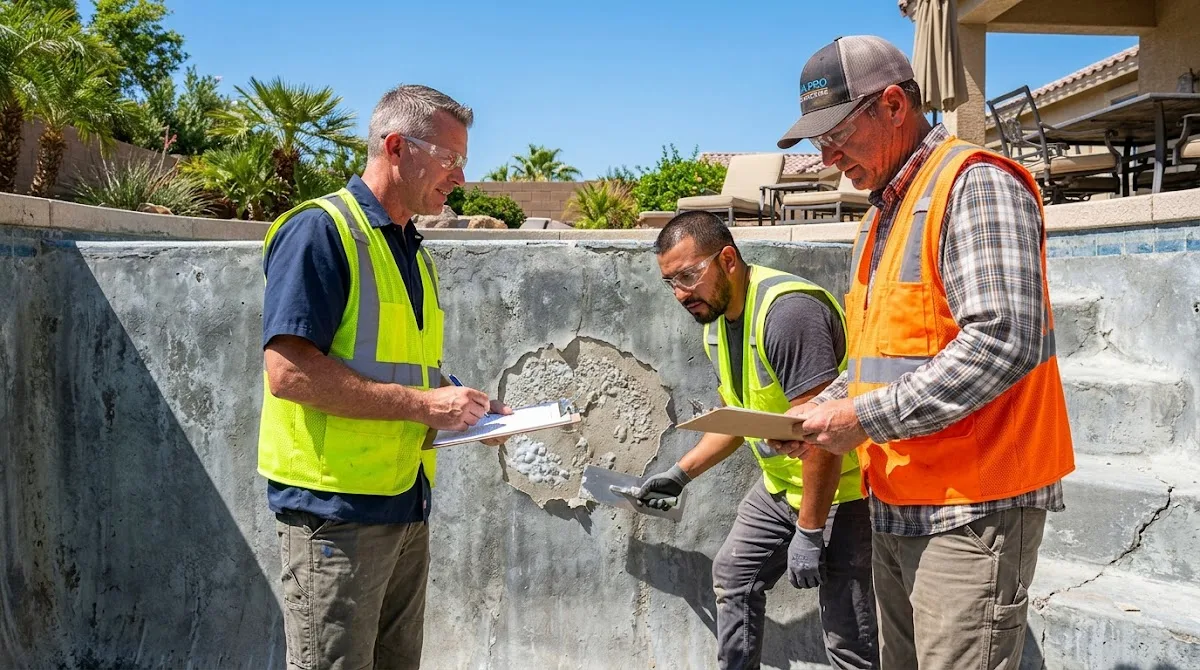
Bromine and other sanitizers can be a little gentler. Still, fading and patch mismatch remain common.
A basic pool plaster repair kit should include a pool trowel, putty knife, wire brush, sponge, eye protection, and at least one glove. Because the material contains cement, it is an alkaline substance irritating to eyes. Follow all label instruction, especially in case of product contact eyes, and use of rubber gloves during mixing and applying.
If you are planning a small DIY patch, see these DIY materials.
Pro Tips for Colored Pool Plaster Repair
Colored pool plaster repair depends on matching the existing surface while it is wet, not dry. Mix a spoonful of dry repair dust, mix with water, and compare it to the damp area.
To lighten a plaster mix, add Titanium Dioxide. To darken it, add black dye. Some installers also compare blends against 5 NPT® Plasterscapes® colors by tone and size, though age, UV, and waterline tile exposure can still shift the final shade.
Material Coverage Rates for Pool Patch® Kits
Many kits use pozzolan-blended cement with acrylic latex admixtures to improve bond strength.
Coverage at 3/8-inch depth:
- 1.5 lb kit: 3/4 sq ft
- 3 lb kit: 1.5 sq ft
- 10 lb kit: 5 sq ft
- 25 lb kit: 12.55 sq ft
- 50 lb kit: 25 sq ft
Step-by-Step Instruction: How to Apply Plaster Repair Materials
Method 1: Standard Drain and Repair
Drain the pool water below the damaged edge. Chip loose material away until you reach sound concrete or solid plaster.
Next, clean the area well. Then add 2 oz. of liquid bonder for every 1.5 lbs. of dry mix in a container. Add enough water to make an easy to mix putty with thick consistency.
Apply the material firmly with a trowel. Press it into the cavity, remove excess, and smooth the edges with a moist sponge. You want the patch flat and smooth so it can cure before refill.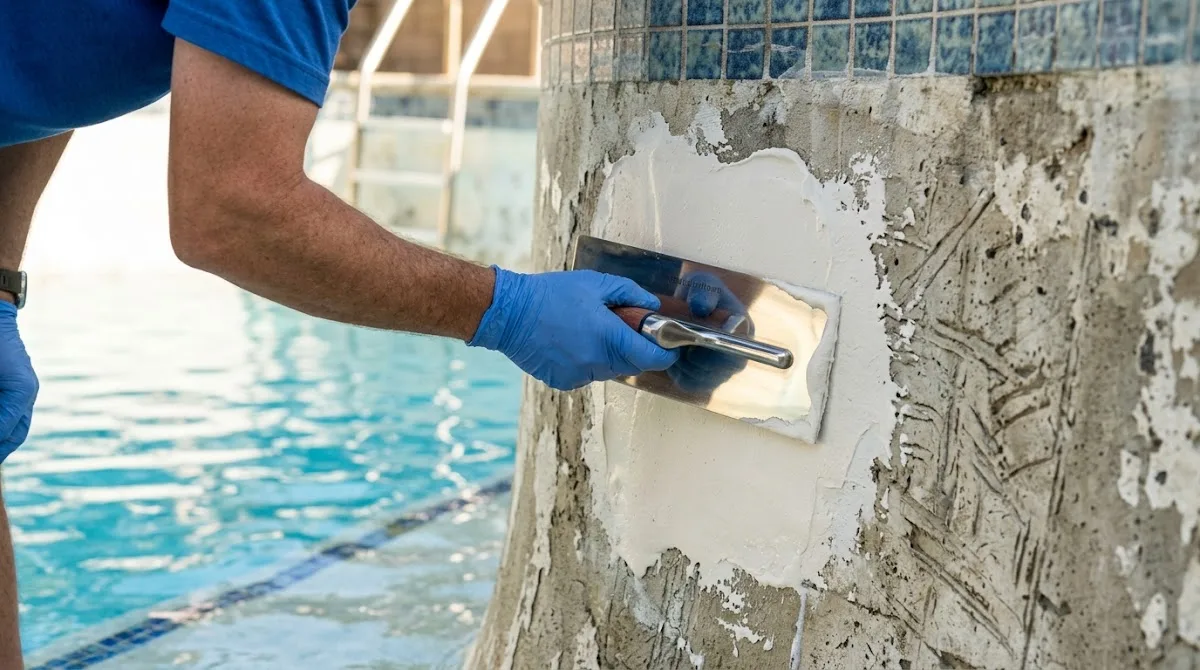
Method 2: Underwater Patching Techniques
An underwater patch is a temporary repair for small defects when draining is not practical. Scrub the area first to remove algae, grout dust, and debris.
Then apply the underwater material with pressure and shape the edges with a moist sponge or trowel. Never expect this to replace a full replaster on an inground pool with major delamination.
Maintaining Your Pool to Prevent Future Damage
Brush weekly. Vacuum quickly. Dirt left sitting on the surface can turn into a stain fast.
Also, pre-dilute acid before adding it. Never dump it straight into one spot. Salt should not be added for 30 days after a pool is replastered, and crystals should never sit on new plaster.
For long-term performance, maintenance helps. But better materials help more. A dense micro-ceramic seal can reduce etch damage, limit absorption, and help your pool stay cleaner longer so you can spend more time to swim and less time to fix plaster.
Frequently Asked Questions About How To Repair Swimming Pool Plaster
Can you repair pool plaster?
Yes. Small cracks, blemishes, and minor patch areas can often be repaired.
How much does it cost to replaster a 15000 gallon pool?
Most full replaster jobs start around $10,000.
What causes pool plaster to flake off?
Usually spalling, poor finishing, shell movement, or bad water balance.
Can you plaster over old pool plaster?
Sometimes, but surface prep and bond quality are critical.
What is the best underwater pool plaster repair?
A specialized pool patch made for underwater use is best for temporary fixes.
Will new plaster stick to old plaster?
Yes, if the old surface is solid, clean, and properly prepared with bonder.