
Pool Resurfacing: The Only Guide You Need (Step-by-Step)
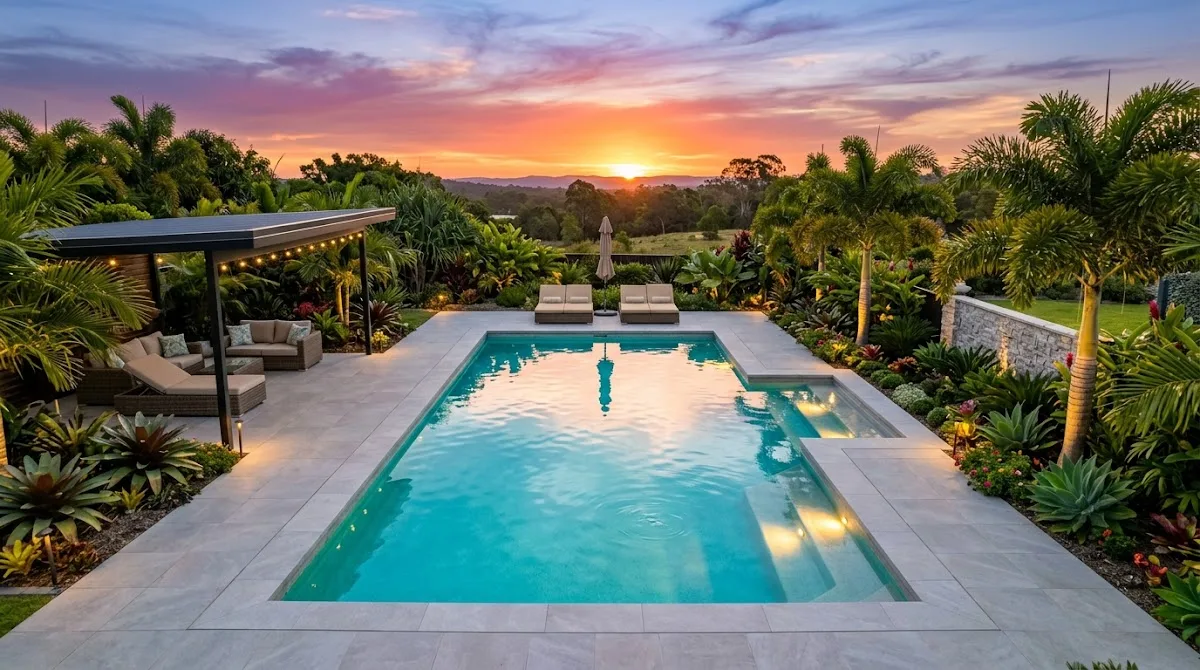
Your pool can look clean and still be wearing out underneath. That is what makes surface damage expensive. It hides in plain sight until leaks, stains, and sharp texture force your hand.
Here’s the good news: once you know what to look for, pool resurfacing becomes far less confusing and much easier to plan.
Understanding Why Your Swimming Pool Requires Maintenance
A swimming pool is a water-holding structure finished with a protective surface. That surface is what stands between your pool shell and years of chemicals, weather, and use.
Most pool construction in the U.S. falls into three categories: in-ground concrete made with shotcrete or gunite, fiberglass drop-in shells, and vinyl liner systems. Each type of pool ages differently, but none stay untouched by time.
Think about what your pool faces every day. Sun. Heat. Rain. Freeze-thaw cycles in colder regions. Chlorine. Salt. Swimmers. Cleaning tools. All of it slowly wears down the surface of your pool.
Chemical imbalance is one of the biggest causes of damage. When pH, alkalinity, or sanitizer levels stay off for too long, plaster can etch, fiberglass coatings can dull, and a finish can become brittle. Poor water chemistry does not always look dramatic at first, but it shortens the lifespan of your pool.
Environmental wear matters too. UV rays fade color. Cold weather can force moisture into tiny pores, then expansion can widen a crack. A concrete pool may look solid from a distance while the top layer is slowly weakening.
That is why industry professionals often say to budget for expert pool resurfacing about every 10 years, with adjustments for climate, usage, and surface material. Some pools need attention sooner. Some pool last longer with excellent care. But every current pool eventually reaches the point where repair is not enough and you need to resurface.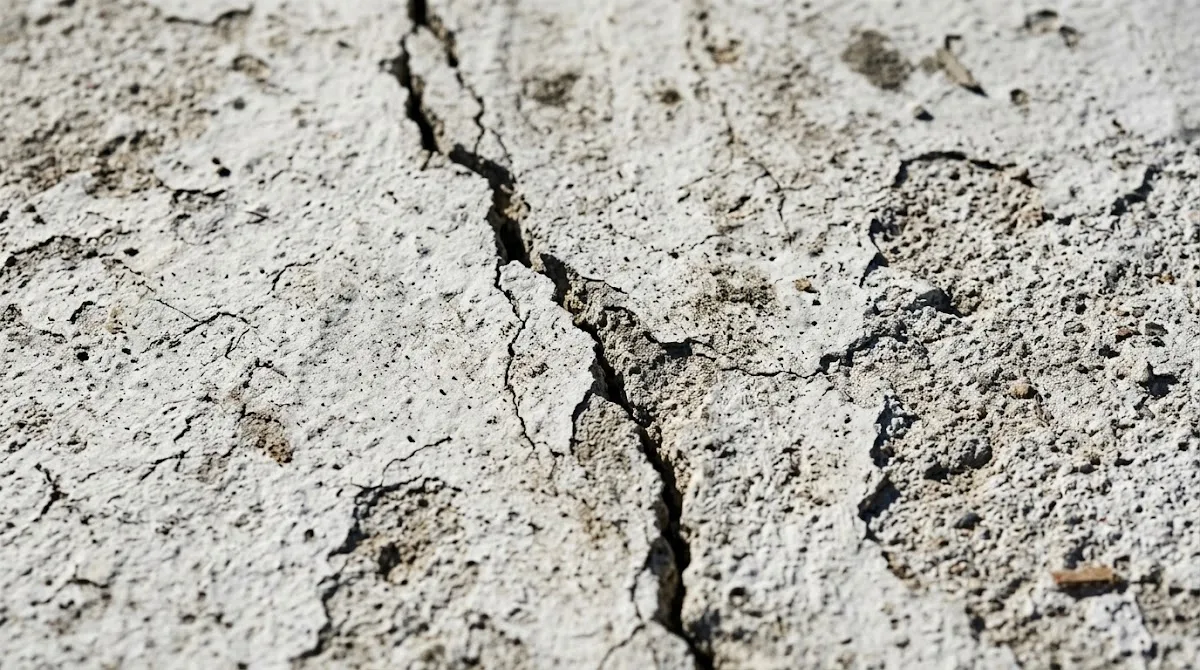
If you want a broader look at finishes, materials, and design paths, explore these resurfacing options. It helps to know what is available before the time to resurface arrives.
9 Warning Signs Your Pool Needs Resurfacing
Here is the part that saves money.
The earlier you catch damage, the easier it is to repair, plan, and avoid deeper structural trouble. These are the common signs and signs a pool needs resurfacing before things escalate.
1. Peeling or Flaking
If the coating starts to peel or flake, the protective layer is breaking down. This is common with older painted pool surfaces and aging plaster finishes.
2. Check Cracking or Structural Cracks
A hairline crack may be cosmetic. A wider crack can threaten watertight performance. Either way, repeated cracking deserves inspection before you resurface a pool.
3. Rough, Gritty Texture
A worn finish should not scrape feet or snag swimsuits. If the texture feels abrasive, the surface may be eroding.
4. Discoloration and Stubborn Stains
A deep stain from iron, copper, or calcium can settle into the pool surface. If brushing and treatment fail, the issue may be inside the finish, not on top of it.
5. Loose or Exposed Aggregate
With aggregate finishes, exposed stone should feel intentional. When pebble or quartz particles loosen, the bond is failing and the finish is wearing out.
6. Worn Fibers in Fiberglass
On fiberglass pools, visible fibers mean the gel coat is thinning. That is a strong sign that resurfacing a fiberglass pool or recoating should be on your schedule.
7. Chalky Residue in Water
If plaster starts breaking down, you may see a chalky residue in pool water or cloudiness that keeps returning. That often points to surface wear.
8. Paint Breakdown
Epoxy and acrylic coatings do not last forever. If paint starts to blister, peel, or fade unevenly, your pool needs resurfacing.
9. Unexplained Water Loss
Leaks can come from plumbing, fittings, or the shell itself. But if you are losing water and cannot find the cause, a failing finish or crack may be part of the problem.
These are the signs your pool needs attention fast. More specifically, they are the signs your pool needs resurfacing when routine cleaning no longer solves the issue. If the surface of your pool is rough, stained, cracking, or leaking, do not wait too long.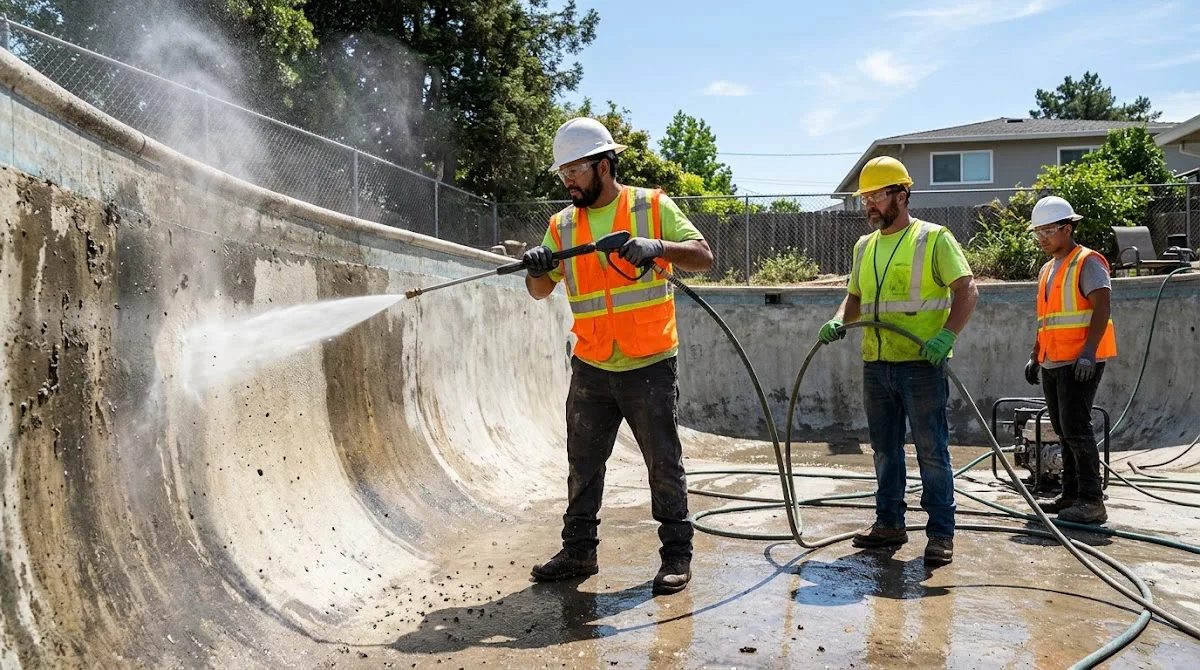
The Complete Pool Resurfacing Process (Step-by-Step)
Pool resurfacing is the removal and replacement of a worn interior finish so the pool can regain a watertight, durable, and attractive surface.
Simple in theory. Demanding in practice.
The pool resurfacing process must follow preparation, application, and curing standards closely. Miss one step and even a beautiful new surface can fail early. In many regions, fall is a smart time to schedule the work because cooler temperatures help the finish cure more evenly.
8 Essential Steps to Resurface a Pool
Step 1: Drain and Prep
The crew starts by draining the pool with submersible pumps. Draining the pool also means securing equipment and locking out systems for safety.
Step 2: Surface Preparation
This is where pool involves removing old coatings, weak plaster, scale, and contaminants. Depending on the pool finish, contractors may chip out material, sandblast, or hydro blast to create a clean bond coat.
Step 3: Tile and Masonry
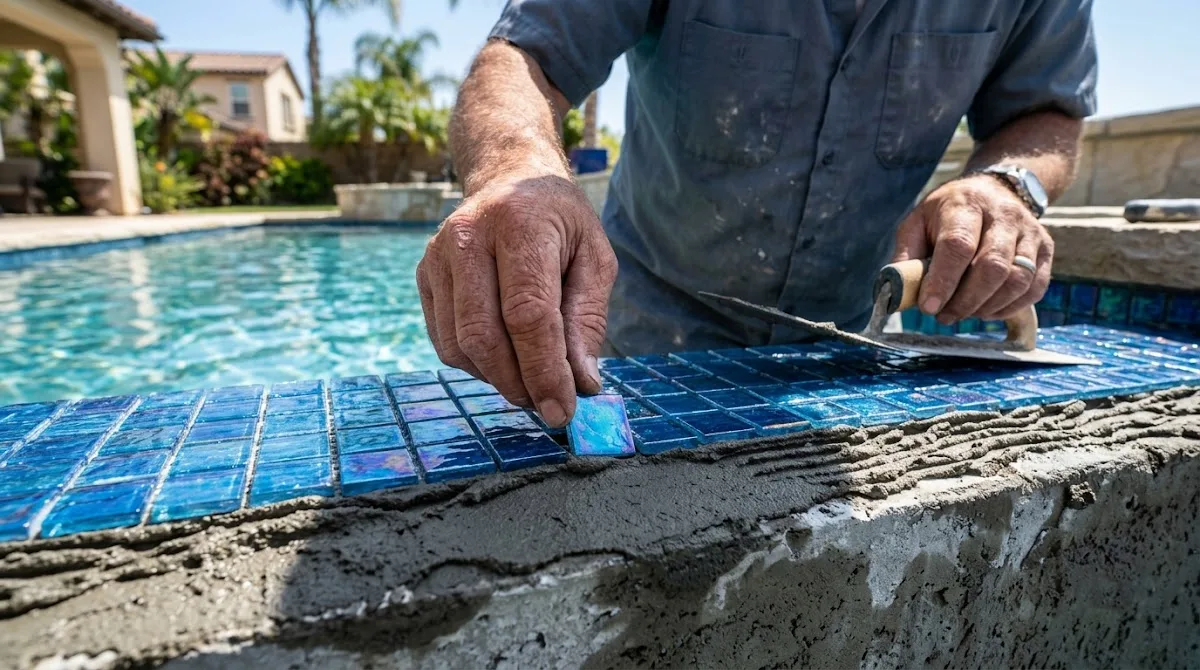
Waterline tile, coping, and stone details are often handled now. Tile work can take 1 to 3 days depending on layout, cuts, and repairs in the pool area.
Step 4: Plumbing and Seal
Before any new finish goes on, crews inspect fittings, penetrations, and plumbing connections. They seal vulnerable areas to protect the pool shell and reduce the risk of hidden leaks.
Step 5: Material Installation
Now the visible transformation begins. The chosen pool resurfacing material is sprayed or hand-troweled with care for thickness, consistency, and appearance. This stage usually takes 1 to 2 days.
Step 6: Exposure or Acid Wash
Some finishes need post-application exposure. A pebble or quartz finish may receive an acid wash to remove excess cement and reveal color and texture.
Step 7: Cleanup and Refill
Debris is removed, startup steps are checked, and the pool is refilled carefully to the midpoint of the waterline tile. You do not want the fill process interrupted because a ring can form on the new finish.
Step 8: Initial Water Treatment and Curing
This is the stage many people underestimate. The first 7 days shape the life of your pool. Proper startup protects color, hardness, and bond strength. Bad chemistry during curing can stain, etch, or scale the surface almost immediately.
That is why resurfacing involves more than applying material. It includes close monitoring, brushing, and balanced chemistry from day one.
Industry Process Comparison
| Phase | Standard Applicator Process | Advanced/Custom Builder Process |
|---|---|---|
| Preparation | Strip existing surface, mix material | Drain, extensive sandblast/strip, seal plumbing |
| Application | Spray, hand trowel, expose finish | Install tile/masonry, apply pool finish, optional acid wash |
| Completion | Set and harden, pressure wash, detail | Clean up, refill, 7-day initial water treatment/curing |
How Long Does It Take to Resurface a Pool?
A standard pool resurfacing project usually takes 5 to 7 days to complete. Weather, pool size, detailing, and material choice can stretch that to 14 days.
Tile and stone work alone may take 1 to 3 days. Applying plaster or another finish often takes 1 to 2 days. If you are asking about the total days to complete, the honest answer depends on the size of the pool, site access, and curing conditions.
Choosing the Right Pool Resurfacing Material
 Material choice affects appearance, maintenance, comfort, and longevity. It also affects the cost of resurfacing and how often you may need future repair.
So what should you choose?
Start with how the pool is built. A concrete pool can take cementitious and aggregate finishes. Fiberglass needs compatible coatings. A vinyl pool does not get resurfaced in the same way because the liner is replaced instead.
Cementitious and Aggregate Options
Plaster is the traditional choice. It is smooth, familiar, and often the most cost effective up front. White plaster and colored plaster can look great, but plaster is porous and can be more prone to algae, etching, and stain problems. In many cases, plaster may need maintenance or another pool replastering cycle earlier than premium finishes.
Aggregate systems blend cement with quartz, glass, or pebble. These finishes offer stronger wear resistance, a richer look, and more visual depth. If you are comparing plaster or pebble, think about comfort, budget, and expected service life.
Tile is the premium route. Full tile interiors are durable, beautiful, and easier to clean than many exposed finishes. They also come with a higher material and labor cost. Still, a well-installed pool tile interior can last a very long time.
Next-Generation Micro-Ceramic Waterproofing (SKIN2.0)
This is where modern finishing starts to separate itself.
For high-end residential and commercial pool remodeling, advanced micro-ceramic systems are replacing standard plaster in many specifications. SKIN2.0 is a three-part micro-ceramic waterproofing and luxury finish system designed for long-term performance and refined aesthetics.
Look for ASTM, NSF, and Miami-Dade NOA certified systems when durability matters. Those certifications signal tested performance under harsh conditions. SKIN2.0 also adds antimicrobial, antibacterial, and antiviral properties, which can help reduce maintenance pressure and support a cleaner environment.
If you want product details, performance specs, or application guidance, see the micro-ceramic system.
Special Considerations for Fiberglass Pools
Fiberglass is different. You do not use cement-based plaster on fiberglass pools because the shell needs compatible coatings that bond correctly and flex with the structure.
Common options include:
- Gel coat, which is smooth, non-porous, and algae resistant
- Epoxy coatings, which create a durable, stain-resistant layer
- Acrylic paint, which is affordable but shorter lived
Fiberglass pools can age well, but worn gel coat, fading, and visible fibers are warning signs. Resurfacing a fiberglass pool requires the right prep and coating system. For fiberglass pools, product compatibility matters more than price.
Vinyl systems are simpler here. A vinyl liner is replaced, not refinished like plaster, pebble, or fiberglass shells.
Pool Finish Lifespan Expectations
| Pool Resurfacing Material | Expected Lifespan | Key Characteristics |
|---|---|---|
| Acrylic Paint | 2 - 3 years | Water-based, affordable, frequent maintenance |
| Epoxy Paint | 7 - 10 years | Durable bond, stain/chemical resistant |
| White Plaster | 5 - 15 years | Classic, porous, requires acid washing |
| Gel Coat (Fiberglass) | 10 - 20 years | Smooth, non-porous, algae resistant |
| Aggregate (Quartz/Pebble) | 15 - 20+ years | Highly durable, textured, chemical resistant |
| Premium Tile | 25+ years | Luxurious, highly customizable, premium cost |
| Micro-Ceramic (SKIN2.0) | Long-term | Antimicrobial, ASTM/NSF certified, ultra-durable |
If you are evaluating pool resurfacing cost against performance, look beyond the first invoice. The cheapest bid may not give your pool owners the best value over time. More durable systems often lower maintenance, extend service life, and protect the life of your pool better.
For a deeper cost breakdown by finish, labor, and square feet, review our guide to resurfacing cost.
DIY Vs. Professional Pool Resurfacing Cost and Safety
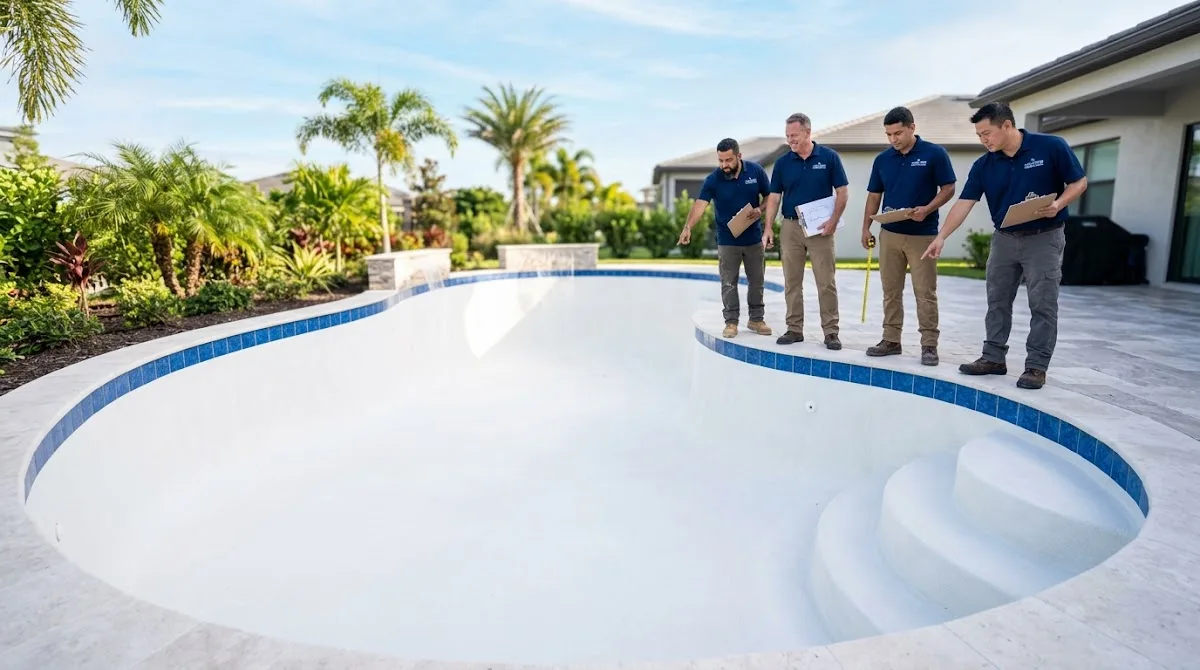 Let’s be direct.
DIY vs professional pool resurfacing is not a small gap in difficulty. It is a huge one.
To resurface your pool correctly, crews need heavy prep equipment, material knowledge, timing, and startup control. Surface prep alone may involve chipping hammers, sandblasting, hydro blasting, bond coats, and moisture checks. A mistake at this stage can ruin adhesion before the pool is even filled.
Then there is plumbing. Professionals inspect fittings and penetrations before the new finish is installed. Miss a hidden issue and you may seal a leak beneath a fresh surface.
Curing is another reason many jobs fail. The first week matters more than most people expect. Improper startup can stain a finish, weaken plaster, and shorten the lifespan of your pool fast.
That is why many pool owners hire certified applicators for swimming pool resurfacing. You get trained installation, better repair sequencing, stronger quality control, and access to warranty-backed systems.
And yes, the upfront cost can be higher. But if you are trying to keep their pool in service longer, protect the pool shell, and avoid paying twice, professional work is usually the smarter investment.
Conclusion
Pool resurfacing protects more than appearance. It restores comfort, helps prevent leaks, supports easier maintenance, and extends the life of your pool. If you know about pool resurfacing, watch for early damage, choose the right finish, and use certified professionals, your new pool interior will perform better and your pool service demands will stay lower.
Frequently Asked Questions About Pool Resurfacing
How much does it cost to reface a pool?
The cost varies by finish, repair needs, and pool size. Material and prep work drive most of the total.
Can I resurface my pool myself?
It is possible, but risky. Most jobs need specialized equipment, prep skill, and strict curing control.
What is included in pool resurfacing?
It usually includes draining, surface prep, repair, sealing, finish application, cleanup, refill, and startup treatment.
What is the cheapest way to resurface a pool?
Paint is often the lowest upfront option, but it usually has the shortest longevity.
What time of year is best to resurface a pool?
Fall is often ideal because milder temperatures support curing and scheduling.
What is the cheapest way to resurface a pool?
A basic coating may cost less at first, but the best long-term choice depends on durability and maintenance.