
What Is Swimming Pool Plaster? Types & Lifespan (Explained)
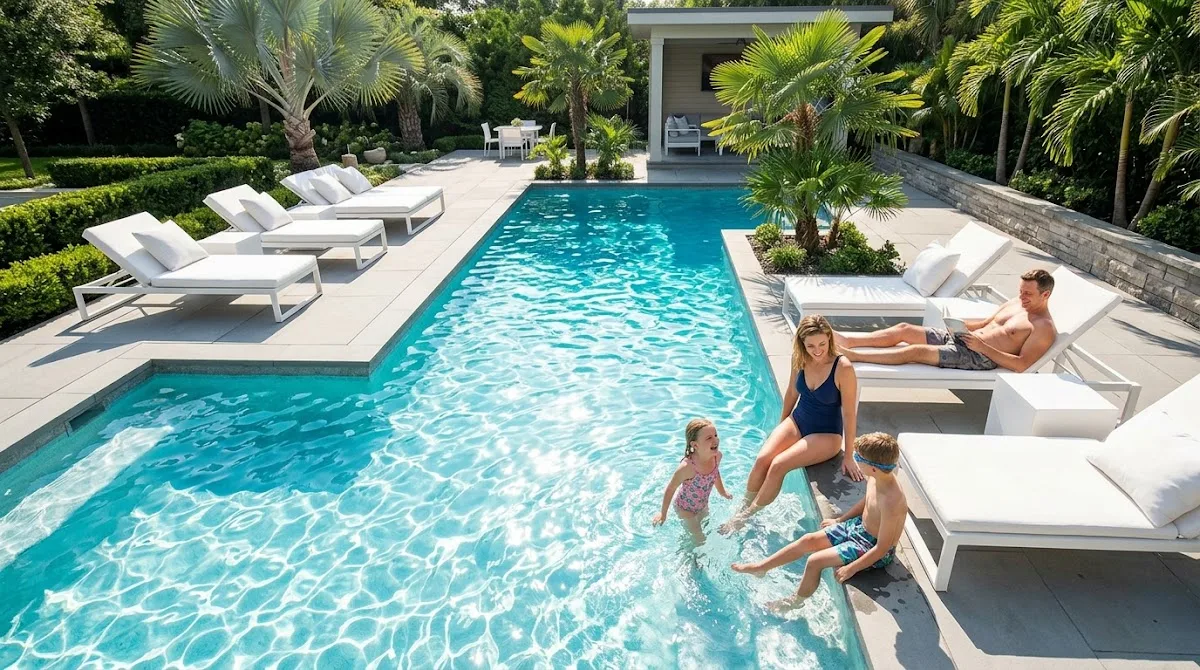
Your pool’s finish does more than create a pretty water color. It affects comfort, maintenance, durability, and repair costs.
Let’s walk through the basics, compare the most common surfaces, and make sense of what you’re really paying for.
Understanding the Basics of a Plastered Pool
The Vital Role of Pool Plaster in a Pool Surface
Pool plaster is a cement-based interior finish applied over a concrete pool shell. In simple terms, pool plaster is a protective and aesthetic layer that seals the structure and gives the pool its final look and feel.
That sounds simple. But this layer does a lot.
A properly finished plastered pool needs to do three jobs at once:
- Keep water from reaching the porous shell beneath
- Create a comfortable, attractive pool surface
- Stand up to chemicals, brushing, sun, and changing temperatures
Think about it this way.
Without a sound plaster layer, the concrete shell is exposed to moisture movement and surface wear. Over time, that can lead to staining, rough spots, algae hold, cracks, and expensive repair work. Good plaster also helps inhibit algae colonization because a less porous finish gives it fewer places to anchor.
Traditional pool plaster is made from a mixture of white Portland cement and marble dust or silica sand. In many systems, white cement is blended with finely ground marble to produce the classic smooth finish people associate with a swimming pool. That standard recipe has been used for decades because it is economical and familiar.
Still, not all plaster performs the same.
The material, the substrate prep, the water balance, and the crew’s workmanship all affect the result. Even the best pool finish can fail early if it is installed poorly or maintained with aggressive water.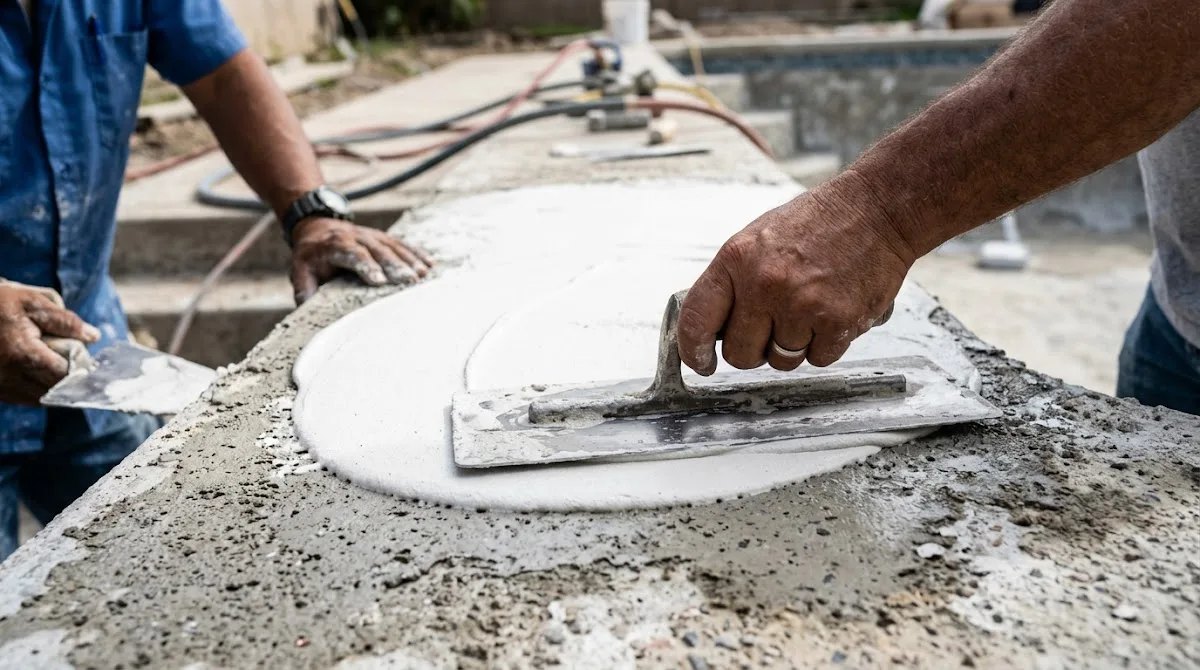
Here are the key functions of a pool surface barrier:
- Waterproofing: A quality finish prevents water from seeping into porous shotcrete or gunite
- Aesthetics: It shapes the look to your pool, from bright blue to deep grey, and affects the water’s hue
- Durability: It determines how well the surface of the pool resists etching, scaling, and stains
If you’re comparing finishes for a resurfacing option, this is the big idea to keep in mind: the finish is not just cosmetic. It is part of the system that protects the vessel.
7 Popular Types of Pool Plaster Finishes
1. Traditional White Pool Plaster (Marcite)
White plaster has been around longer than any other common pool finish. Standard white plaster is the oldest and most economical finish still widely used in pool construction.
It is usually a simple mixture of cement and crushed marble. More specifically, plaster is made from a mixture of white Portland cement and marble aggregate, then hand-troweled across the pool shell.
The appeal is easy to understand:
- Clean, classic appearance
- Bright, light-blue water color
- Lower upfront cost than premium finishes
But there’s a tradeoff.
Traditional white plaster is softer than newer materials. It can etch under poor water chemistry, develop scale, and show mottling or discoloration. If the pool’s water is corrosive, the plaster surface can lose calcium and become rough faster than expected.
2. Colored Pool Plaster
Colored plaster starts with a base similar to marcite, then adds mineral-based pigment or dye to shift the final water color. Blue, black, and grey are common because they create deeper reflections and a more dramatic style.
For many pool owners, this is the easiest way to enhance appearance without moving into exposed aggregate or premium systems.
Still, colored finishes can be tricky. Pigment variation, harsh sanitizer exposure, and uneven curing may lead to streaking, bleaching, or a visible defect. Darker finishes often show these changes more clearly. That does not mean they are bad. It means the installation and startup matter even more.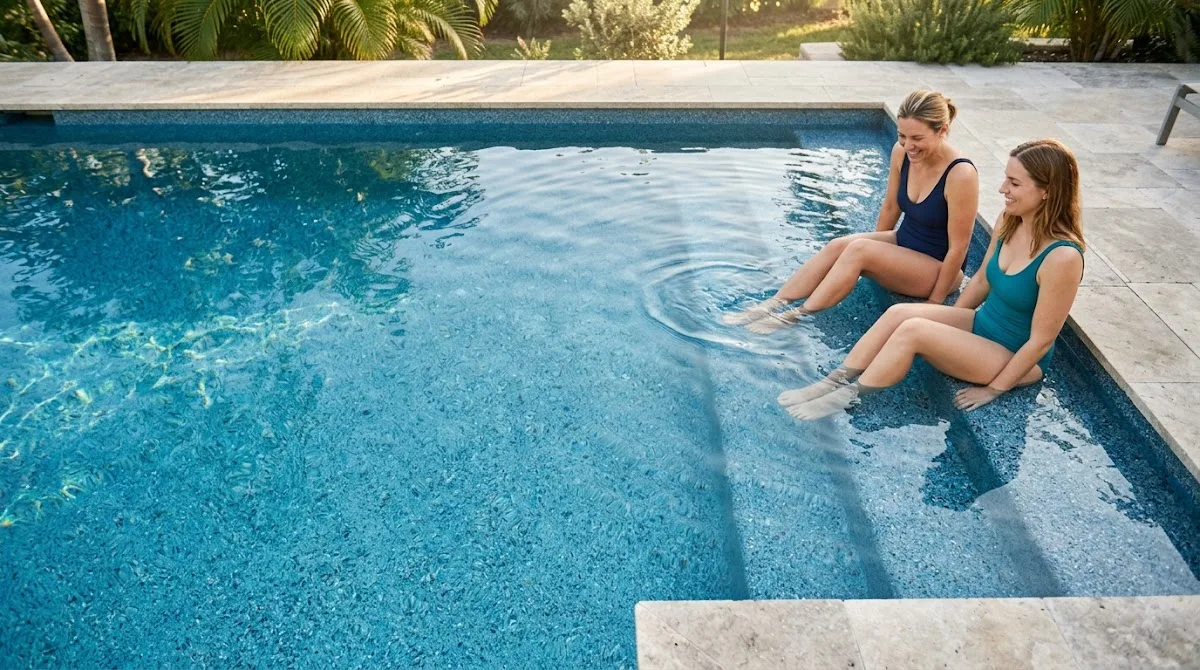
3. Exposed Aggregate Pool Surface
Aggregate plaster blends cement with decorative materials like pebbles, glass beads, or quartz crystals. After the finish is applied plaster-side first, the top cream layer is washed away to expose the aggregate.
The result is a textured, more forgiving surface that hides minor visual flaws better than flat plaster.
This category covers several styles, but they share a few strengths:
- Better traction
- Stronger visual depth
- Improved resistance to visible wear
If you’re exploring pool resurfacing, exposed aggregate is often where the conversation shifts from basic repair to long-term upgrade.
4. Quartz Plaster: A Durable Pool Upgrade
Quartz plaster is a finish made with polymer-modified cement and ceramic-coated quartz aggregate. Because quartz is harder than marble, it offers better resistance to etching and wear than traditional marcite.
That extra hardness matters.
A quartz finish can deliver more sparkle, more consistency, and longer service life. It also tends to feel smoother than larger exposed pebble products, which makes it comfortable under bare feet.
You’ll also hear terms like crushed quartz and quartz aggregate. Both point to the same core benefit: a stronger mineral in the finish matrix. For many projects, quartz plaster is a popular choice because it balances appearance, comfort, and durability.
5. Pebble Finishes
Pebble finishes use natural river stone for a highly durable interior pool finish. In practical use, this surface holds up well against chemical attack, temperature swings, and long-term wear.
There are two common styles:
- Standard Pebble: Larger stone, more natural texture, slightly rougher feel
- Mini Pebble: Smaller pebble, tighter finish, softer underfoot
Pebble is often chosen when longevity matters more than a perfectly smooth wall. It can also help prevent stains from standing out because the variegated surface masks visual change better than flat white plaster.
6. Glass Bead Pool Plaster
Glass bead finishes sit at the premium end of traditional plaster systems. They blend smooth, rounded beads into the finish to create a reflective, almost luminous water effect.
In sunlight, the visual result is striking. The water can appear brighter, deeper, and more dimensional.
Beyond looks, glass bead systems are also known for strong wear resistance. In many cases, they can last 20 years or more with proper care, which puts them among the longest-lasting traditional plaster types.
7. The Evolution: 3-Part Micro-Ceramic Systems (SKIN2.0)
Some finishes are not just another type of plaster. They are a full rethinking of how an interior waterproof finish should perform.
SKIN2.0 is a proprietary three-part micro-ceramic system designed for swimming pool and SPA interiors, as well as general construction. It is built to be waterproof, refined, and highly resistant to the porosity issues that affect standard cement finishes.
Here’s where it stands out:
- ASTM, NSF, and Miami-Dade NOA certified
- Antimicrobial, antibacterial, and antiviral
- Designed for elite durability and low porosity
- Suitable for modern pool and SPA environments
- Made for projects where high-quality waterproofing and luxury finish matter equally
Because the micro-ceramic matrix is far less absorbent than old-school plaster, it helps reduce the common failure patterns seen in softer cement-based surfaces. For a deeper look at the waterproofing side, see pool waterproofing.
What Is the Expected Lifespan of Your Pool Finish?
Pool Plaster Lifespan Comparison
Lifespan depends on material, installation quality, climate, and maintenance. According to industry experts, aggressive water and poor care shorten service life fast, while advanced finishes resist breakdown much longer.
Here’s the quick comparison:
| Pool Surface Type | Estimated Lifespan | Primary Cause of Eventual Failure |
|---|---|---|
| Traditional White Plaster | 5 to 10 Years | Chemical etching, structural cracking |
| Colored Plaster | 5 to 10 Years | Pigment bleaching, mottling, scaling |
| Quartz Plaster | 10 to 15 Years | Long-term aggregate erosion |
| Pebble Finishes | 15 to 20+ Years | Calcium buildup, localized delamination |
| Glass Bead Finishes | 20+ Years | Minor bead loss over decades |
| Micro-Ceramic (SKIN2.0) | Lifetime Potential | Highly resistant to traditional failures |
That “lifetime potential” line gets attention, and for good reason. Traditional finishes are still vulnerable to porosity, etching, and breakdown. A dense micro-ceramic system is designed to avoid those weak points.
If you’re deciding whether to resurface or fully replace an aging interior, this guide on replastering differences can help clarify the next step.
Key Factors Affecting Lifespan
Three things shape longevity more than anything else.
1. Water chemistry
Low calcium hardness, unstable pH, and aggressive sanitizer conditions can slowly dissolve a cement finish. When that happens, the pool’s plaster becomes rough and worn.
2. Maintenance frequency
Regular brushing and cleaning matter. They help prevent algae, scale, and stain buildup, especially on more porous plaster types.
3. Climate variations
In colder parts of the country, freeze-thaw cycles can create micro-fractures in standard cement materials. A more durable, stain-resistant finish handles that stress better.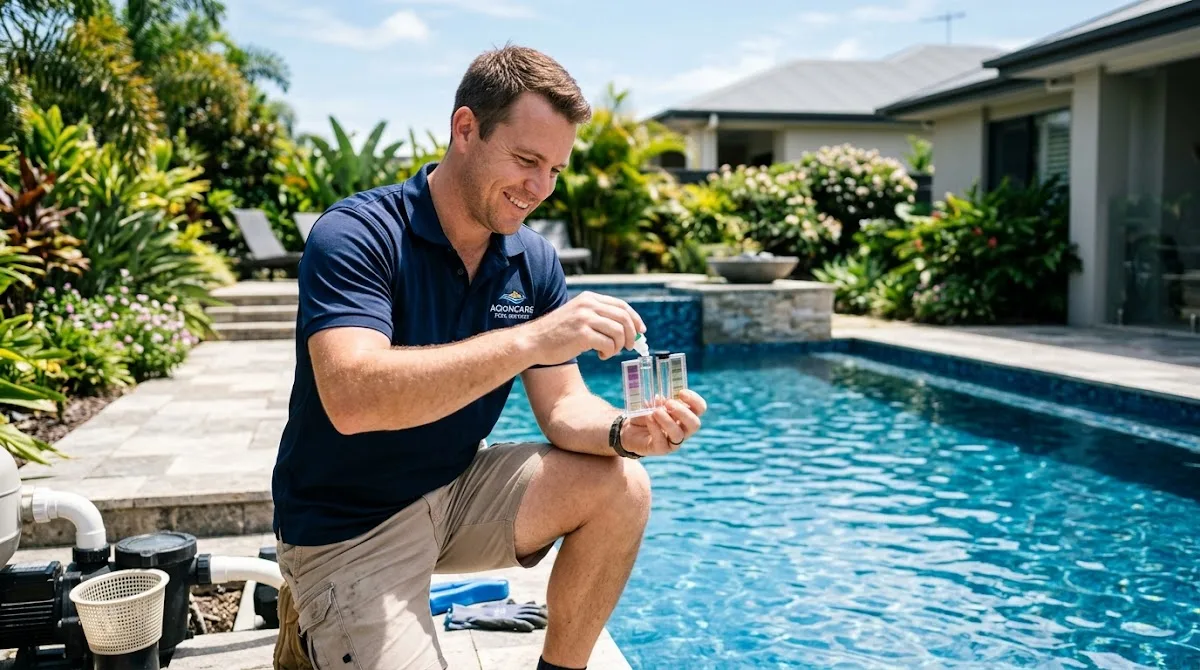
The Essentials of Pool Plaster Application
Professional Plaster Application Techniques
A good material can still fail if the plaster application is rushed.
That’s the part many people miss.
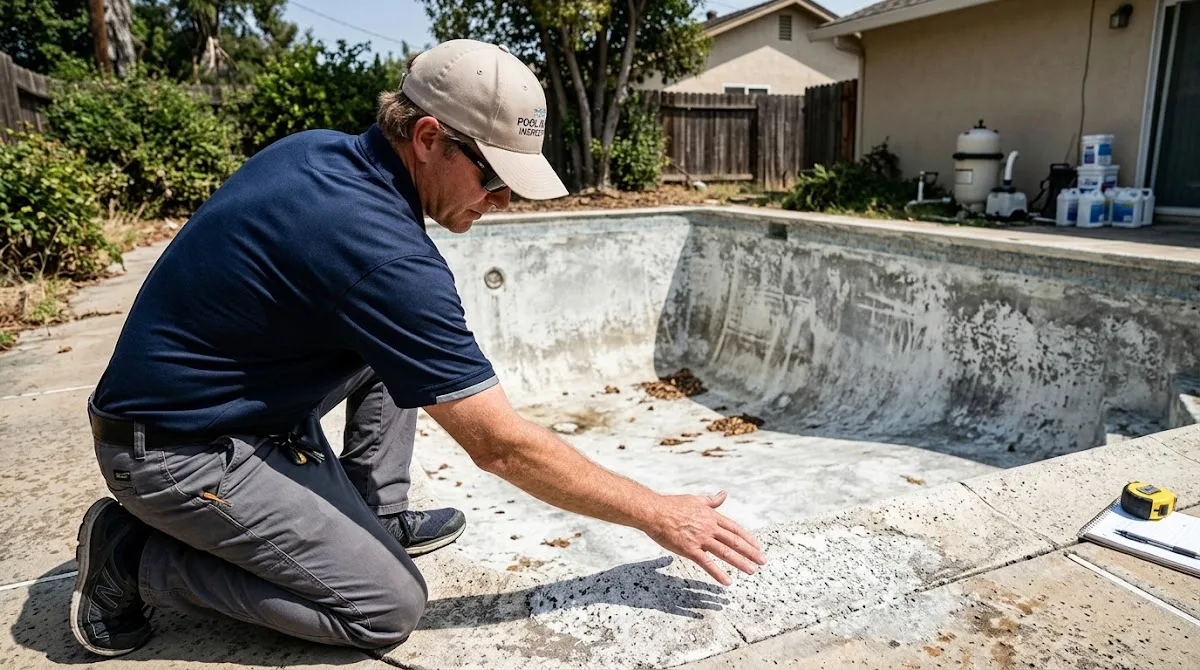
For a lasting result, the concrete or gunite shell must be cleaned, prepped, and ready to accept the new finish. In many jobs, that includes chipping weak material, acid washing, and applying a bond coat so the new pool plaster adheres properly to the substrate.
Then comes the skilled part. The crew has a short working window to mix, pump, trowel, and finish the material before it sets.
Critical steps usually include:
- Surface prep: Remove old plaster, clean the shell, and apply bonding material
- Troweling: Hand-trowel to a uniform thickness, often around 3/8 to 1/2 inch
- Exposure: For quartz and pebble systems, wash or treat the top layer to reveal the finish
- Curing: Fill immediately, then manage hydration during the first 28 days
If the finish is properly applied, the result looks cleaner, cures more evenly, and lasts longer. Poor prep or weak technique can lead to bond failure, mottling, cracks, and early wear.
Maintaining Your Plastered Pool for Maximum Longevity
Water Chemistry and Maintenance Best Practices
The NPC is clear on this: balanced water is the single biggest factor in protecting a plaster finish.
That’s not marketing talk. It’s chemistry.
The Langelier Saturation Index, often called LSI, helps show whether pool water is corrosive or scale-forming. If the water is too aggressive, it pulls minerals from the finish. If it is too scale-heavy, it leaves deposits that dull the surface and create roughness.
Target ranges commonly used for a plaster pool include:
- pH: 7.2 to 7.6
- Carbonate alkalinity: 80 to 120 ppm
- Calcium hardness: 200 to 400 ppm
For pool owners, this means regular testing is not optional. It is part of protecting the finish investment.
More advanced systems can help here too. A denser, non-porous micro-ceramic finish can reduce the labor needed to keep the surface cleaner and healthier. That matters in a new pool, but it matters even more during renovation when you are trying to avoid repeating the same problems that damaged the old surface.
Conclusion
Pool plaster is more than a finish coat. It protects the shell, shapes the water color, and affects maintenance for years. Traditional plaster, quartz, pebble, glass bead, and micro-ceramic systems all offer different strengths. If you want better longevity, focus on material quality, expert application, and balanced water from day one.
Frequently Asked Questions About What Is Swimming Pool Plaster
Can you DIY pool plaster?
It is possible, but not recommended. Pool plaster is time-sensitive and mistakes are costly.
How much does it cost to replaster a 15000 gallon pool?
Costs vary by region, finish, and prep work. Most projects depend more on surface condition than gallons alone.
What does pool plaster look like?
It usually looks like a smooth cement-based interior finish in white or different colors, with water color changing by material and shade.
How long does swimming pool plaster last?
Standard plaster often lasts 5 to 10 years. Premium finishes can last much longer.
What can I substitute for plaster?
Quartz, aggregate, pebble, glass bead, and micro-ceramic finishes are common alternatives.
What does vinegar do to a swimming pool?
Vinegar is acidic. In the wrong amount, it can affect pH and is not a substitute for proper pool care.