
Gunite vs Fiberglass Pool: Real Cost & Maintenance (Data)
A new pool looks simple on paper. Then the bids arrive, timelines stretch, and maintenance questions start piling up.
This guide breaks down real numbers, hidden labor, and where long-term ownership costs usually go for a gunite pool and a fiberglass pool.
Understanding the Initial Investment for Your Swimming Pool
A fiberglass pool is a factory-made shell installed into an excavated site. A gunite pool is a reinforced concrete shell formed and sprayed on-site, then finished with plaster or another surface finish.
Right away, here’s the surprise. The upfront difference is often smaller than people expect.
A fiberglass pool usually costs about $45,000 to $100,000, depending on size, access, region, and extras like tanning ledges, a spa, or a waterfall. Some fiberglass swimming pools push higher in premium markets, but that range covers many projects.
A gunite pool usually starts around $60,000 and can move beyond $120,000 for basic installs. Add tile, custom depth changes, complex engineering, a raised bond beam, or luxury features, and the number climbs fast.
So yes, fiberglass vs gunite is partly about budget. But only partly.
Think about it this way. If both pool types land in a similar range at the start, the better comparison is not just quote vs quote. It is ownership vs ownership.
That matters because a homeowner rarely lives with the bid sheet. You live with the maintenance schedule, the service calls, and how the pool was built to perform in your soil, climate, and water conditions.
The 10-Year Real Cost of a Gunite Pool vs. Fiberglass Pool
This is where the gap gets wider.
A standard gunite pool often costs more to maintain year after year because the porous surface affects water chemistry, brushing needs, and surface aging. Fiberglass pools tend to need fewer chemicals and less labor.
Here is the side-by-side view:
| Category | Gunite/Concrete Pool | Fiberglass Pool |
|---|---|---|
| Initial Cost | $60,000 - $120,000+ | $45,000 - $100,000 |
| Annual Maintenance Cost | $1,800 - $2,500 | $800 - $1,200 |
| 10-Year Maintenance Cost | $20,000+ | ~$5,750 |
| 10-Year Total Ownership | $99,500 - $147,500 | $63,000 - $112,000 |
Those numbers explain why gunite vs fiberglass keeps coming up in planning meetings.
A fiberglass pool is often easier to maintain over ten years. A gunite pool may deliver more customization options, but long-term maintenance can erase any comfort people felt about the original quote.
And there’s another layer. Traditional concrete shells often need more professional intervention to keep water balanced, surfaces clean, and visible wear under control. If you want a deeper look at how advanced finishes change that equation, read about microplaster waterproofing.
Installation Timelines for Concrete Pools and Fiberglass Swimming Pools
Time changes the buying decision more than many expect.
A gunite pool installation process is slower because gunite pools are built in stages. Excavation comes first. Then rebar placement, plumbing, the sprayed shell, cure time, finish work, decking, and startup. Because gunite pools are built on-site, weather conditions can slow everything down.
In many markets, a gunite pool can take 3 to 6 months. Some take months to complete even without major surprises.
A fiberglass pool moves much faster. Pool manufacturers pre-fabricate the shell in a controlled plant, then transport it to the site. These pools are manufactured off-site, arrive ready to be installed, and can often be finished in 2 to 3 weeks. In busy seasons, 3 to 6 weeks is more realistic.
That speed matters. Less backyard disruption. Less scheduling drift. Less stress.
It also changes cash flow for contractors and property owners. A shell made in a plant avoids much of the on-site uncertainty that comes with a mixture of cement, labor sequencing, and cure windows.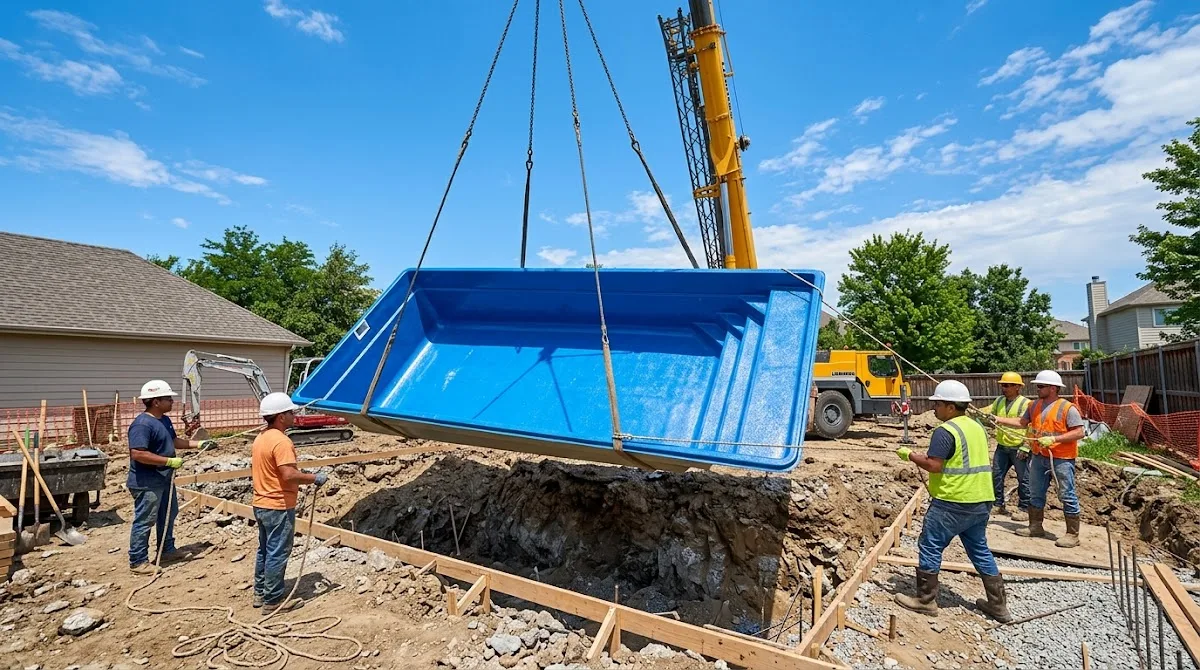
Weekly Maintenance Time and Chemical Usage Differences
Maintenance is where daily reality shows up.
The Hidden Labor of Traditional Gunite
A gunite pool usually needs 4 to 5 hours of weekly care. The rough surface and porous surface hold dirt more easily, which means more brushing and more attention to balance.
Standard concrete alkalinity also pushes pH upward. Because of this, gunite pools require more acid additions and more routine chemistry correction. That extra effort is not dramatic in one week. Over years, it adds up.
Also, algae has an easier time attaching to textured cement-based finishes. So the brushing schedule matters more than many new owners expect.
If resurfacing is already on your radar, this guide to gunite resurfacing is worth reading.
The Low-Maintenance Appeal of Fiberglass
A fiberglass pool usually needs about 1 hour per week, sometimes less. Skimming, vacuuming, and testing are still part of the routine, but the non-porous gel coat finish does a lot of the heavy lifting.
That smooth shell resists buildup better, often uses fewer chemicals, and supports lower maintenance overall. For many families, that is the real selling point. Not just lower bills, but less work.
Compared to a gunite pool, fiberglass pools come with a simpler weekly rhythm. You spend less time brushing and correcting chemistry, and more time using the water.
Resurfacing, Durability, and Surface Disadvantage Factors
Surface feel is not a minor detail. It affects comfort, service life, and repair costs.
Managing the Disadvantage of Abrasive Surfaces
Standard plaster and pebble finishes can feel abrasive. That roughness can snag suits, bother pets, and contribute to “pool toe.” The medical literature on pool toe shows how rough contact surfaces can irritate skin.
A fiberglass pool solves that with a smoother feel. The gel coat finish is pleasant underfoot, and the shell is non-porous.
Still, there is a modern answer for concrete. Some builders now upgrade the concrete pool interior with a proprietary micro-ceramic coating instead of relying only on traditional plaster. Done well, it creates a low-maintenance, antimicrobial, antibacterial, and antiviral surface finish that reduces roughness and helps match any aesthetic.
That matters if you want the ability to customize without accepting the usual rough surface tradeoff.
Long-Term Durability and Structural Integrity
Durability is not just about strength. It is also about movement.
A gunite pool is rigid. It is strong, but when soil shifts, concrete cracks can happen. Those cracks may lead to stain issues, calcium nodules, leaks, or expensive repair work. The lifespan of the pool depends heavily on structure, drainage, and finish protection.
A fiberglass pool has more flexibility. Modern manufacturing techniques use layered composites, barrier coats, and support structures that help the shell flex with minor ground movement.
In other words, fiberglass and gunite solve structural stress in different ways. One relies on mass and reinforcement. The other uses engineered flexibility.
Saltwater Compatibility and Future-Proofing Concrete Shells
Salt changes the maintenance conversation fast.
The Impact of Salt on Standard Finishes
A fiberglass pool is generally very compatible with a salt system. The surface resists corrosion and surface damage well.
Standard gunite is a different story. Salt can wear on the cement finish, contribute to stain risks, and create conditions where steel components become vulnerable if waterproofing is weak. Undissolved salt left sitting on standard plaster can mark the surface quickly.
This is one reason many potential buyers ask about fiberglass vs concrete in salt-heavy markets.
Resurfacing Intervals and Advanced Waterproofing
Traditional gunite often needs acid washing every 3 to 5 years, usually around $500 to $800 each time. Most also need to resurface every 7 to 15 years, and costs can range from $8,000 to $20,000 or more.
That’s the old cycle. Here’s the shift.
When a concrete pool is sealed with a high-performance waterproof micro-ceramic system, the shell gets meaningful protection from salt, moisture intrusion, and surface wear. For many projects, that changes the long-term maintenance path in a big way. You can explore that approach on the pool waterproofing page.
For a pool owner who wants a custom shell but lower maintenance, this is where the conversation gets interesting.
Ultimate Customization: What Gunite Pools Allow vs. Fiberglass Limits
This is where gunite pools make their strongest case.
Gunite pools allow almost unlimited customization. Builders can shape a unique pool around a tight lot, dramatic view, or design concept. Vanishing edges, freeform lagoons, deep ends, integrated spa layouts, sun shelves, waterfall walls, and complex tile details are all possible.
That freedom exists because gunite pools are built on-site with rebar and sprayed material, then finished with plaster, pebble, or upgraded coatings. If you want a ledge in a very specific spot, a custom deep section, or details that feel like a private oasis, gunite pools allow it.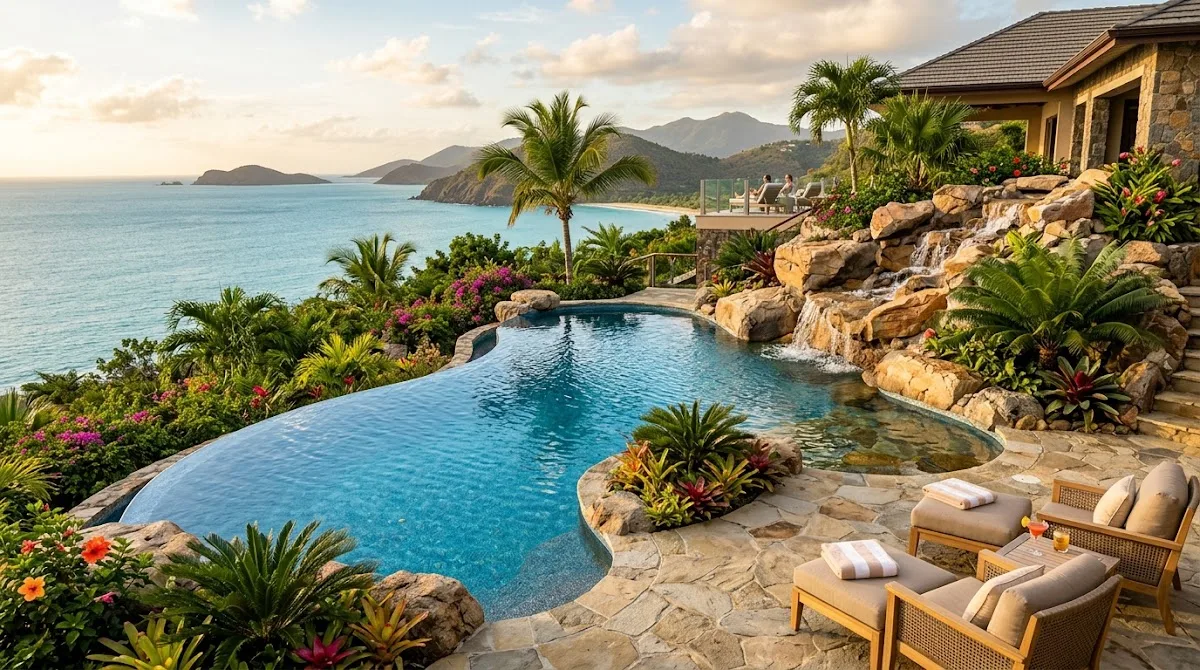
A fiberglass pool has limits. Fiberglass pools come in predetermined molds, and road transport usually caps width near 16 feet and length near 40 feet. The shell made in the plant is what arrives, so customization is more about colors and accessory packages than shape.
That does not make fiberglass pools a bad fit. It just means the best fit depends on priorities.
If speed, lower maintenance, and simpler upkeep matter most, choosing a fiberglass pool often makes sense. If the goal is a one-off design with maximum customization, gunite and fiberglass pool comparisons usually tilt toward concrete.
Warranties and Choosing a Fiberglass Pool or Custom Gunite
Warranty language matters more than brochure language.
A fiberglass pool often comes with a lifetime structural warranty from pool manufacturers. Coverage varies, but many address leaks tied to material or workmanship failure in the shell.
A gunite pool usually does not come with a manufacturer warranty in the same way. Instead, protection often depends on the builder’s workmanship terms, which may cover structural defects for 1 to 2 years.
That difference shapes resale confidence too. When a pool was built with a premium finish and waterproofing system, it can reduce future uncertainty, especially in harsh climate zones.
So, choosing a fiberglass pool comes down to this. Do you value speed, predictable maintenance, and a smoother path to low maintenance ownership?
Or do you want a gunite pool with the ability to customize every inch, then solve the classic downside with better waterproofing and a more advanced interior finish?
That is the real pool vs question.
Conclusion
A fiberglass pool usually wins on speed, lower maintenance, and ten-year cost. A gunite pool wins on design freedom and high-end customization. The smart choice depends on whether you value fast installation or unlimited creativity. If you want custom concrete without the old surface problems, advanced waterproof micro-ceramic systems can close the gap.
Frequently Asked Questions About Gunite Vs Fiberglass Pool
What are the disadvantages of a gunite pool?
Higher upfront cost, more weekly care, resurfacing needs, and a greater chance of surface wear over time.
How much is a 20x40 gunite pool?
Many projects land above the standard range, often from $80,000 to $120,000+, depending on features and region.
What is the healthiest type of swimming pool?
The healthiest type of pool is one with stable water chemistry, a smooth clean surface, and strong sanitation.
What is the downside of fiberglass pools?
The main disadvantage is limited shape and size flexibility compared with custom concrete designs.
How much does a 15x30 gunite pool cost?
A basic 15x30 gunite pool often starts around $60,000, then rises with finish choices and site complexity.
What is the healthiest kind of pool?
A low-maintenance pool with balanced chemistry, fewer places for buildup, and a smooth interior is often the easiest to keep healthy.