
Epoxy Pool Deck Resurfacing: Pros & Cons (Full Guide)

If your existing pool deck looks tired, a full replacement is not your only path. Many projects can be updated with a new coating instead of a messy tear-out.
Below, you’ll see the real pros and cons, the resurfacing process, costs, and when other resurfacing options may be a better fit.
What Is Pool Deck Resurfacing Using Epoxy Resin?
Epoxy is a thermosetting polymer created by blending epoxy resin with hardeners. In simple terms, epoxy pool deck resurfacing is a method used to repair, refinish, or enhance an old deck without removing the entire slab.
Think about it this way. Instead of replacing the whole surface, installers apply a seamless coating over the top of the existing surface. That new layer can hide stains, aging, minor wear and tear, faded color, and outdated finishes.
It can also bond to materials such as concrete and wood. On many jobs, especially around outdoor concrete, that strong adhesion is one reason people consider it.
Still, not all pool decks behave the same. Sun, moisture, movement in the slab, and heavy foot traffic all affect performance. If you want a broader overview before you choose, this guide to deck resurfacing helps frame the bigger picture.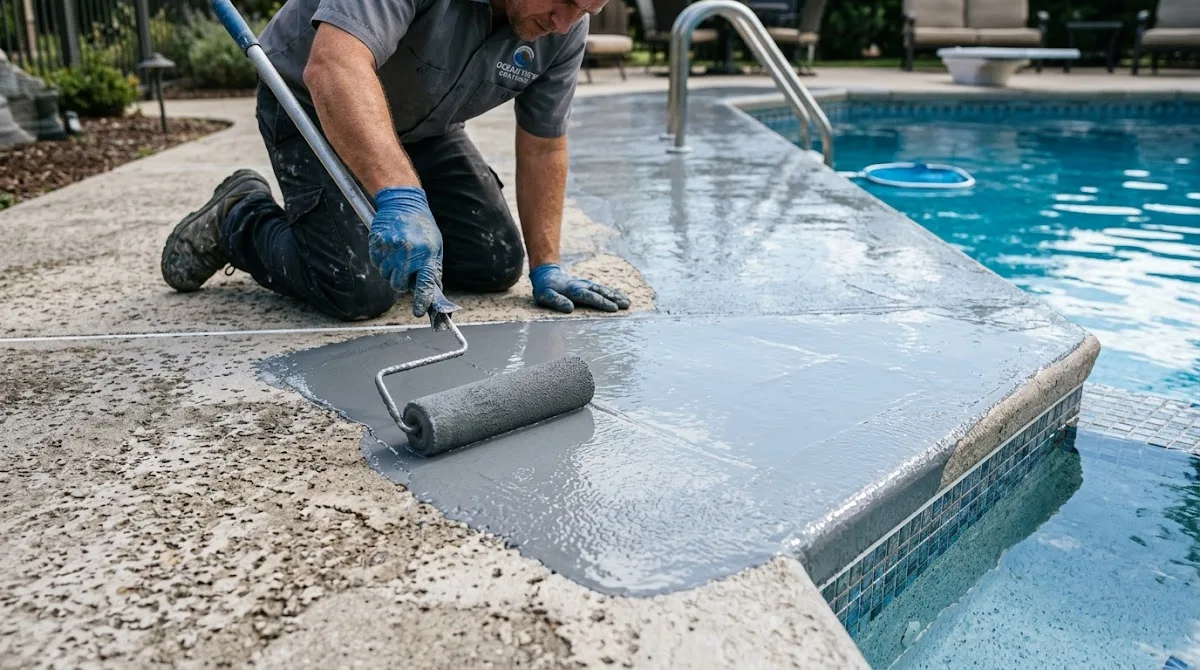
5 Pros of an Epoxy Coating for Pool Decks
1. High Durability and Longevity
When installed well, an epoxy coating creates a hard shell over pool decks. It offers solid durability and can withstand rain, snow, and routine use better than plain concrete.
That matters in the common pool environment, where bare surfaces often chip, stain, or crack over time. A high-quality epoxy system can be long-lasting and hold up under heavy use.
Still, the word durable needs context. Outdoor movement and moisture can test even a strong coating, especially on large pool decks with expansion stress.
2. Aesthetic Versatility and Customization
This is where epoxy gets attention. It comes in a wide range of colors, metallic effects, and flake blends, so it is highly customizable.
Some installers use stamping or decorative techniques to mimic stone, tile, or marble. That can enhance the appearance of your pool and elevate an ordinary outdoor space without paying for natural stone.
If a homeowner wants a fresh new look or a personalized look, the design flexibility is a clear plus. It can also improve the look of their pool area quickly.
3. Low Day-to-Day Maintenance
A cured epoxy surface is smooth and non-porous. Because of that, it tends to resist staining from water, dirt and debris, and some pool chemicals.
For daily care, pool decks finished this way are fairly easy to clean. Usually, a sweep, mild soap, and water are enough to keep the deck looking presentable.
That sounds ideal, and in many homes it is. But low-maintenance does not always mean low lifetime upkeep, which we’ll get to in the cons.
4. Seamless Waterproofing Protection
Water is relentless. On older concrete pool decks, moisture can seep into tiny openings and slowly weaken the layer of concrete below.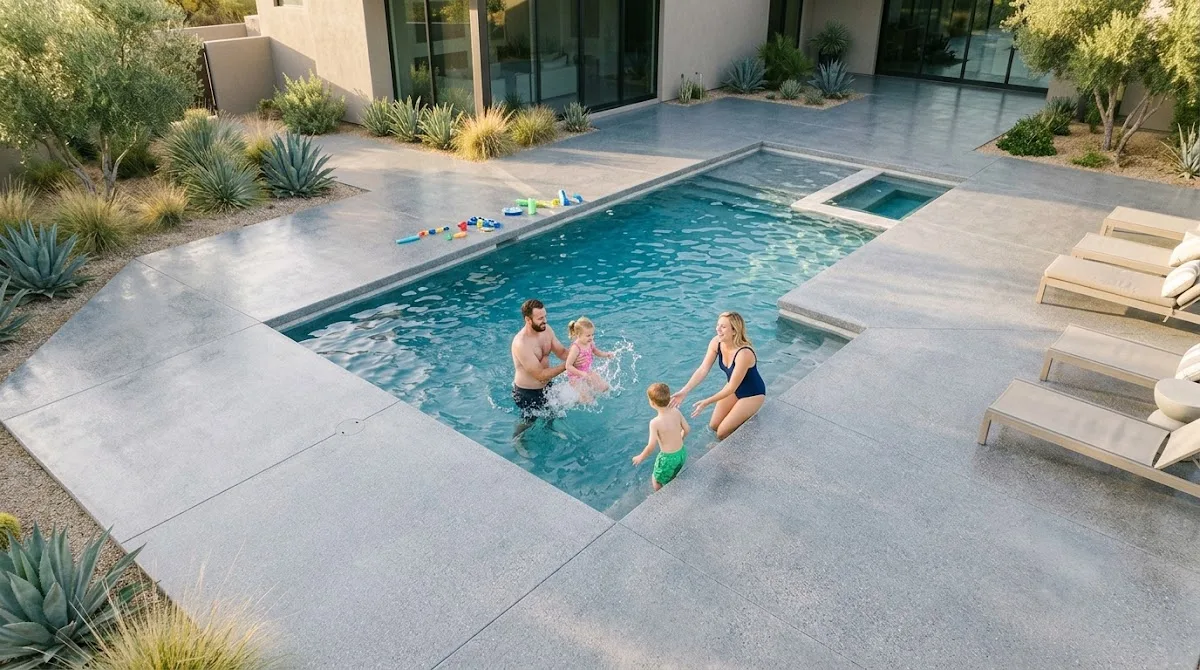
A seamless coating helps protect your pool deck by reducing water intrusion. In the right conditions, it acts as an overlay that shields the substrate and helps prevent early breakdown.
For some projects, that waterproofing benefit is the main selling point. It can enhance service life and support a more professional finish around the pool area.
5. Cost-Effective Alternative to Full Replacement
This is often the deciding factor. Epoxy resurfacing typically costs about $3 to $12 per square foot, making it a cost-effective option for homeowners who want to resurface instead of demolish.
A full replacement can be far more expensive once labor, hauling, and new materials are added. If you’re comparing budgets, this pool deck cost guide can help you assess the condition of your numbers before work starts.
5 Cons of Using a Pool Deck Epoxy
1. Extreme UV Sensitivity and Weathering
Here’s the big drawback. Standard epoxy has poor UV resistance, and long exposure to sunlight can cause it to yellow, dull, or fade.
That means many outdoor pool decks need added topcoats with UV-resistant properties. Without them, the glossy finish that looks great at first may lose its appeal faster than expected.
For a sunny climate, that matters a lot. If your priority is UV stability, epoxy is rarely the best choice for pool deck resurfacing.
2. High Slipperiness When Wet
A sleek finish looks sharp, but there’s a tradeoff. Many epoxy surfaces become slippery when wet, which can raise the risk of slips and falls around pool decks.
You can add silica, rubber, or other non-slip media to improve slip resistance. That helps make the pool deck safe, but it may also change the feel underfoot and make cleaning a little less simple.
This is one area where you should prioritize safety over shine. Around water, safety and comfort always come first.
3. Hidden Long-Term Maintenance Costs
Epoxy is often sold as simple to own. The truth is more mixed.
Outdoor wear and tear from chairs, grills, and furniture can scratch or chip the surface. Spot repairs are hard to blend, so a damaged section may push you toward re-coating larger areas of pool decks to keep the finish uniform.
Over time, sealing and touch-ups can add to the real cost. So while the upfront bid may look attractive, the long game can be less forgiving.
4. Environmental and Structural Vulnerability
Outdoor slabs move. In hot weather they expand, in cold weather they contract, and in freeze-thaw zones that movement can trigger a new crack or reopen an old one.
Moisture is another issue. If surface preparation is poor and water gets trapped beneath the coating, bubbling, peeling, and delamination can follow.
That risk rises in places with high humidity or harsh environmental conditions. This is why an experienced installer will engineer the prep around the site, not just roll out material and hope for the best.
5. Lack of Advanced Hygienic Certifications
Traditional epoxy is not known for built-in antimicrobial, antibacterial, or antiviral performance. It also usually lacks the advanced testing and approvals now expected on some premium projects.
For projects where hygiene, waterproofing, and code confidence matter, modern systems can offer more. Some micro-ceramic waterproofing solutions carry ASTM, NSF, and Miami-Dade NOA credentials while also improving chemical resistance against chlorine exposure and everyday cleaning.
If that matters for your application, explore waterproofing systems before you commit.
The 5-Step Process to Resurface Your Pool Deck
Step 1: Surface Preparation
This is the part many people underestimate. Surface preparation is the foundation of adhesion.
The installer cleans, strips old pool deck paint, etches the slab, and repairs each crack, void, or weak area. Before any coating goes down, they need to assess the condition of the existing pool deck carefully.
Step 2: Applying the Primer
Next comes the primer. This base coat helps the epoxy bond tightly to the substrate and improves adhesion across the deck.
On concrete pool decks, that step is critical. Skip it or rush it, and the whole resurfacing process can fail early.
Step 3: Mixing and Application
The material is then mixed from resin and hardener and applied by roller or trowel. At this stage, installers may broadcast flakes, sand, or other customization options into the wet coating.
This is also where texture can be built in for a slip-resistant finish. The right blend depends on the job, the foot traffic, and the needs and preferences of the space.
Step 4: Curing Time
Now comes the waiting. Curing time usually runs from 24 to 72 hours, though some systems take longer to fully cure.
Rain, temperature swings, and moisture can ruin the result. Good timing matters because one weather shift can affect the finish before it has time to fully cure.
Step 5: Sealing for Extra Protection
A clear topcoat is often added at the end. This extra coating helps defend against UV, chlorine, water, and wear from daily use on pool decks.
It can also help keep the surface deck looking cleaner and easier to maintain.
Comparing Resurfacing Options: Epoxy vs. Alternatives
Evaluating Alternative Pool Deck Coatings
Epoxy is not the only choice for pool decks. Polyaspartic coatings cure faster and handle sun better. Coolcrete and similar cement-based overlay systems offer a cooler feel and better natural traction.
Then there are micro-ceramic systems. These advanced finishes are often the smarter choice for pool deck but also for waterproofing-focused builds that need exceptional durability, hygiene, and certification support.
Material Comparison Data
| Feature | Epoxy | Polyaspartic Coatings | Coolcrete | Concrete | Wood | Stone |
|---|---|---|---|---|---|---|
| Durability | High | High | High | High | Medium | High |
| UV Resistance | Low (yellows/fades) | High | High | High | Medium | High |
| Slip Resistance | Low (can be slippery) | Moderate | High | Moderate | High | Moderate |
| Maintenance | High | Low | Low | Low | High | Low |
| Cost | Moderate ($3-12/sq ft) | Higher | Higher | Moderate | Moderate | High |
| Cool-to-Touch | No | Yes | Yes | No | No | No |
Choosing the Right Solution for Your Project
Choosing the right finish starts with selecting the right priorities. Do you need fast visual improvement, or do you need a system built for waterproofing, long-term hygiene, and demanding exposure?
For many pool owners, epoxy is a fair short-term choice for pool surfaces when budget leads the conversation. But for pool decks exposed to sun, water, and constant use, the pros and cons become clearer over time.
If you want pool deck coatings that do more than look good, ask about performance first. Ask how the system will withstand exposure to sunlight, pool chemicals, movement in the slab, and daily traffic.
That is where advanced systems stand apart. A multi-part micro-ceramic finish can resurface your pool deck while delivering a long-lasting barrier, better hygiene, and certifications that matter when quality is not optional.
Conclusion
Epoxy can resurface worn pool decks at a lower upfront cost and deliver strong visual impact. But sun, moisture, slip risk, and maintenance can limit its value outdoors. If you are choosing between finishes, focus on durability, waterproofing, safety, and long-term upkeep, not just first-day appearance. That choice usually pays off later.
Frequently Asked Questions About Epoxy Pool Deck Resurfacing
Is epoxy coating good for pool decks?
It can work, but many pool decks need more slip control and better outdoor weather performance.
How much does it cost to epoxy a pool deck?
Most jobs fall between $3 and $12 per square foot.
What is the cheapest way to resurface a pool deck?
A basic coating or simple overlay is often cheaper than full replacement.
What is 20 times stronger than epoxy?
That claim depends on the product. Performance varies by formula, substrate, and installation.
How much does it cost to epoxy a pool deck?
Typical pricing is moderate, but prep work can raise the final total.
What are the disadvantages of using epoxy?
Main issues include UV damage, slippery when wet surfaces, repair difficulty, and maintenance.