
Pool Deck Resurfacing Cost by Material (& How to Save)
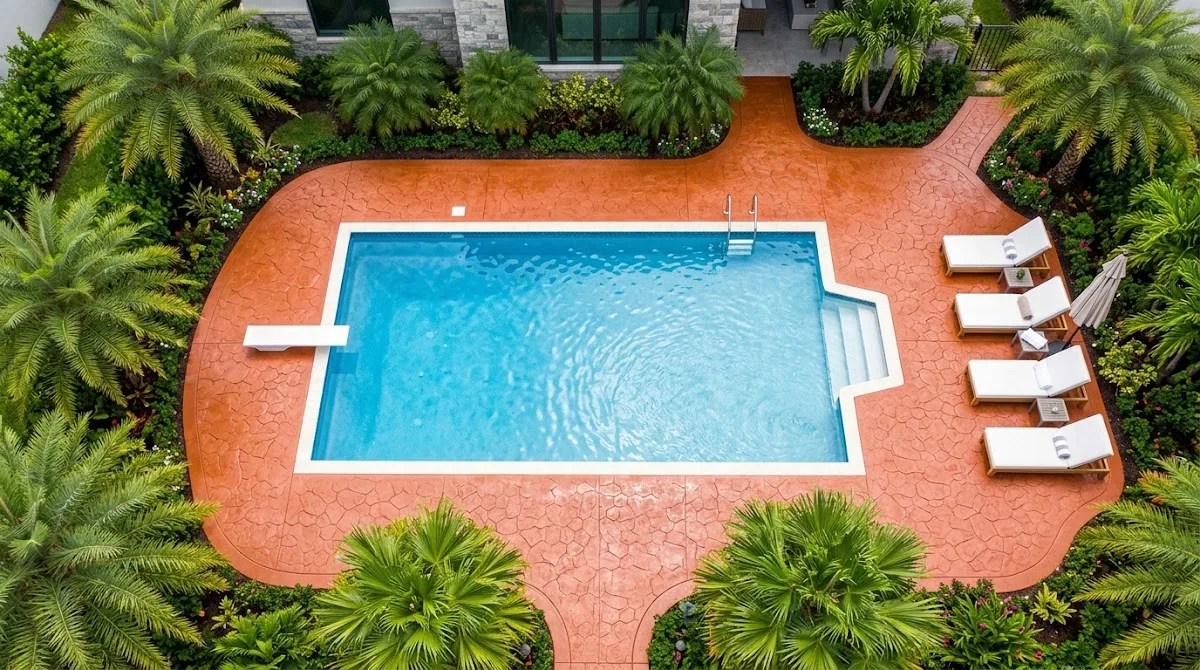
If your deck has a rough finish, a spreading crack, or patchy color, you are not stuck with a full rebuild. In many cases, a fresh surface can bring it back fast.
Below, you will see material prices, lifespan ranges, and how to choose a finish that fits your climate, budget, and style.
Reviving Your Backyard Oasis: Why Resurface Instead of Replace?
Let’s start with the question most people ask first: should you replace the slab or just resurface it?
Often, the answer is simple. If the base is sound, to resurface is usually the smarter move. It is a cost-effective solution that can transform your pool deck without ripping out the whole structure.
Think about the numbers. Choosing to resurface instead of a full replacement can save homeowners roughly 40% to 60%. That gap gets bigger when removal is difficult or access is tight around a pool.
A full replacement of a 900-square-foot concrete deck can run from $5,400 to $16,200 or more, plus another $2 to $6 per square foot for old slab removal. That means demolition alone can eat a big part of the budget before new work even starts.
And there is the time factor.
Most pool deck resurfacing jobs wrap in 2 to 4 days. A full replacement takes longer, creates more mess, and often leaves the pool area off-limits for an extended stretch. For many homeowners across warm and seasonal markets, that matters just as much as price.
There is also resale value. A clean, modern finish can improve curb appeal and boost resale value by up to 15%. If your goal is to revive a backyard oasis, resurfacing really can deliver a strong return.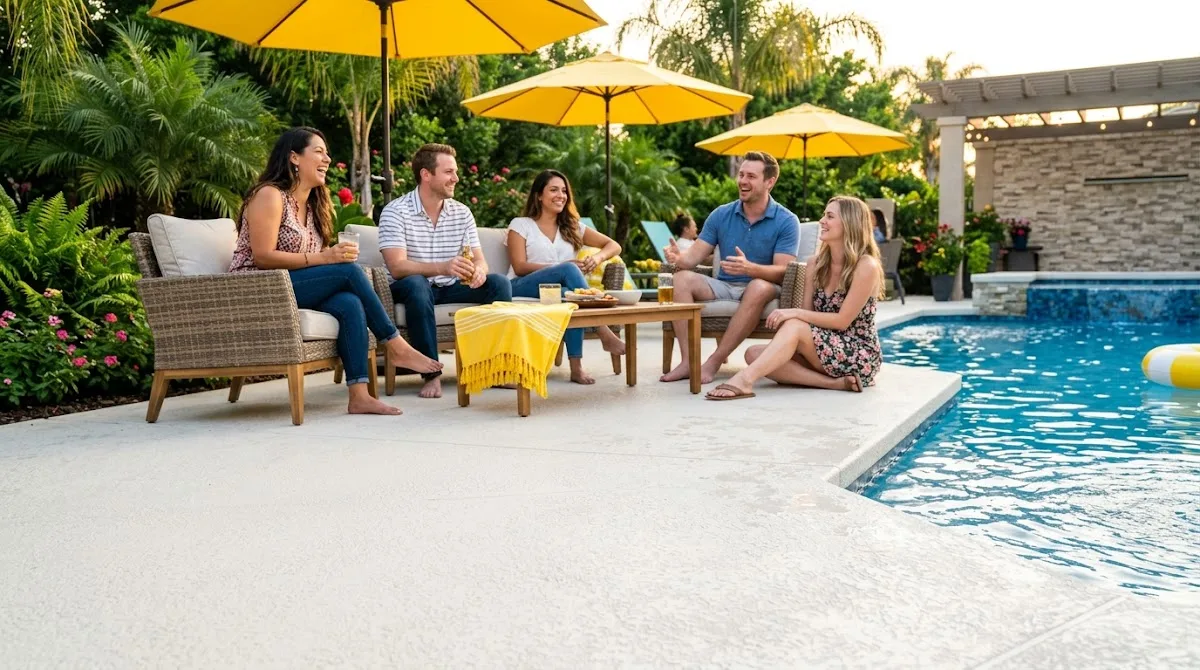
If you want a broader look at pricing, see our guide to deck costs.
Pool Deck Resurfacing Cost by Material Type
Material choice is the main factor behind pool deck resurfacing cost. Nationally, the costs vary widely, from about $3 to $12 per square foot, though premium systems can go beyond that.
Regional conditions matter too. In hotter markets, costs vary because surfaces need better heat control, UV stability, and slip-resistance. Florida is a good example, where pricing often lands between $5 and $14 per square foot because sun damage and intense weather put more pressure on materials.
Here is a simple comparison:
| Resurfacing Method | Average Cost (per sq. ft.) | Lifespan (Years) | Best For |
|---|---|---|---|
| Concrete Overlay | $3 – $6 | 10 – 15 | Covering cracks or faded decks |
| Cool Deck Finish | $6 – $12 | 10 – 15 | Heat reduction and comfortable barefoot walking |
| Rubberized Coatings | $8 – $14 | 10 – 20 | Enhancing slip-resistant areas |
| Stamped Concrete | $8 – $15 | 15 – 25 | High-end decorative finishes mimicking natural stone |
| Pavers / Natural Stone | $10 – $40 | 20+ | Luxury upgrades and easy spot-repairs |
A concrete overlay is a thin layer of concrete or polymer-modified material placed over existing concrete. It is one of the most common ways to resurface worn-out pool decks because it covers minor cracks, faded color, and surface roughness at a budget-friendly price.
Cool deck finishes are popular in hot states because the coating reflects heat and stays more comfortable under bare feet. Rubberized systems add a softer, non-slip surface, which can be helpful where heavy foot traffic is common.
Then there is stamped concrete. A stamp pattern can mimic the look of stone, tile, or even wood while keeping the base slab in place. A stamped concrete patio look can be especially attractive for outdoor living spaces that connect the pool, patio, and lounge areas.
At the top end, paver and natural stone systems are pricier, but they offer excellent spot repair options and a luxury finish.
If you are comparing layouts and textures, our design ideas guide can help.
Choosing the Right Coating for Your Existing Pool Deck
Selecting the right finish is not just about color. It is about heat, traction, moisture control, and how the deck will handle foot traffic, pool chemicals, and weather.
A coating is a protective finish applied over a prepared surface to improve performance and appearance. The best one for your existing pool deck will vary depending on climate, slab condition, and the look you want.
Standard and Mid-Range Options
Cool decking is a practical middle-ground choice. Acrylic-based systems can lower surface temperature, improve slip-resistance, and freshen faded pool decks without the cost of a full replacement.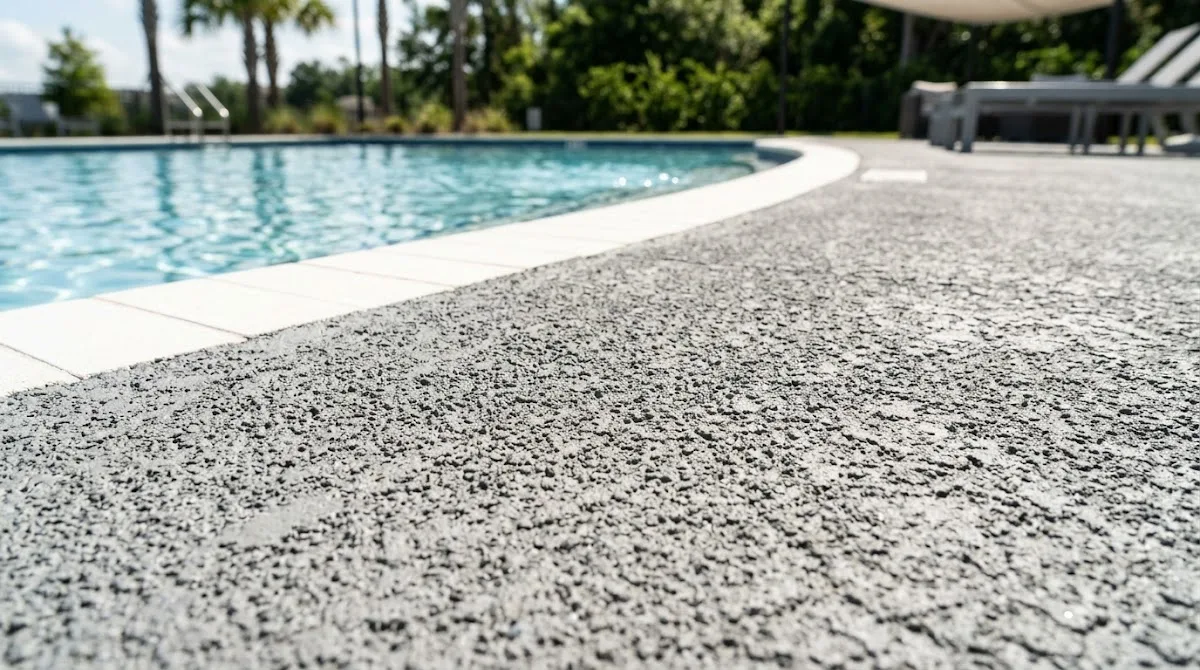
Rubber surfaces are another option. They cushion steps, create a slip-resistant finish, and work well in family settings. That said, irregular shapes and custom edging can push labor rates higher.
Concrete overlays also fit this tier. They allow contractors to place new material as concrete over the existing slab, then add texture, stain, or a spray deck finish. If minor cracks need to be addressed, this route can be efficient.
Premium Micro-Ceramic and High-Performance Systems
Here is where the conversation changes.
For a longer-lasting, high-end finish, modern micro-ceramic systems go far beyond standard concrete resurfacing. A proprietary three-part micro-ceramic waterproofing and finishing system can resurface pool decks with a luxury look while also adding serious protection.
That matters because decks live with moisture, heat, pool chemicals, and wear and tear due to constant exposure. In demanding environments, better waterproofing and a denser finish can improve durability and reduce future repair cycles.
Premium systems also bring hygiene into the picture. Some advanced finishes offer antimicrobial, antibacterial, and antiviral properties, which support a cleaner surface around a pool and improve the appearance of your pool area at the same time.
Certification matters too. ASTM, NSF, and Miami-Dade NOA approvals point to tested performance. For contractors and owners who value commitment to quality, that level of verification helps make informed choices.
For more on impervious luxury finishes, explore microplaster surfaces.
Key Factors Influencing Resurfacing Costs
Let’s get specific. The main factors influencing price are scope, condition, region, and finish level.
Project Scope and Customization
Basic pool deck repair, patching, and refinishing often lands between $3,000 and $6,000. Mid-range work with cool deck finishes, texture, and color usually falls between $6,000 and $12,000. Premium work with stamped concrete, custom stamp details, and luxury systems can reach $12,000 to $20,000 or more.
Labor and materials involved shape these numbers. General labor and materials often run $4 to $10 per square foot, though specialist crews applying advanced systems may charge $50 to $90 per hour in high-demand areas.
Customization pushes the total higher. Extra colors, saw cuts, borders, detailed stamp work, and complex curves all raise the overall cost.
Deck Condition and Geography
Surface preparation is not optional. Grinding, cleaning, pressure washing, and leveling create the bond that makes a new layer last.
If the slab has a crack, minor cracks, or a stain problem, prep is usually straightforward. But large cracks, severe cracks, and underlying issues can change the job. Those conditions may need deeper repair before anyone should resurface.
Climate changes everything too. Hot regions need UV-stable finishes. Wet regions need strong waterproofing. Freeze-thaw areas need flexible systems that handle movement without turning every crack into a major failure.
In short, costs vary by region because material demands vary.
Smart Strategies for Resurfacing Your Pool Deck on a Budget
Want to save you money without cutting corners? Start with the finish, not just the quote.
A few smart moves can lower costs:
- Simplify the design. Basic broom textures, exposed aggregate, and rock salt finishes are often more budget-friendly than detailed decorative patterns.
- Use a seamless stamp instead of an intricate pattern. A seamless stamp needs less layout work and can still look polished.
- Keep the shape of the existing deck. Changing forms, adding curves, or expanding the footprint quickly increases labor and materials.
- Invest in a longer-lasting surface. Better systems may cost more upfront, but they can help homeowners avoid repeat repair bills.
That last point matters most. Cheap finishes often fail early. Then you pay twice.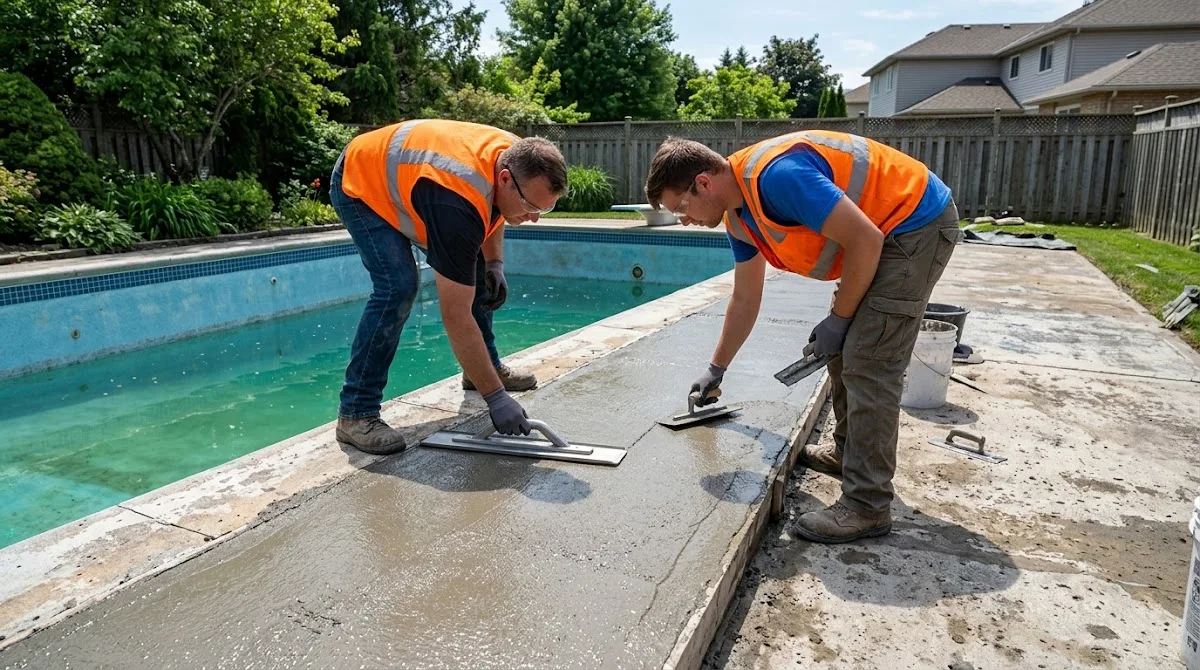
DIY vs. Professional Installation for Pool Decks
DIY projects sound tempting. For small above-ground setups, they can make sense.
But inground concrete pool deck resurfacing is different. It involves adhesion, moisture control, crack treatment, curing times, and sometimes code requirements. One mistake in prep can shorten the life of the whole resurfacing project.
A homeowner can patch a small crack or clean a stain. Professional crews should handle resurfacing your pool deck when the goal is a uniform, low-maintenance finish that will hold up under heavy foot traffic.
This is especially true with epoxy or epoxy flooring products, waterproof systems, and specialized coatings. If you are deciding whether to resurface or pour new concrete, a pro can inspect the slab and tell you if the existing concrete is solid enough.
Here is the practical takeaway: if the deck has widespread wear, multiple cracks, or a failing surface, professional pool deck resurfacing is usually the safer investment.
Conclusion
Pool decks do not always need replacement to look new again. The right material, good prep, and a qualified installer can resurface a tired deck for far less than a full replacement. If you compare options carefully, focus on performance, and plan for climate, you can transform your pool deck with confident decisions.
Frequently Asked Questions About Pool Deck Resurfacing Cost
How much does it cost to resurface a pool deck?
Most jobs fall between $3 and $12 per square foot, but premium finishes can go higher.
How long does pool deck resurfacing last?
Most finishes last 10 to 25 years, depending on material choice, prep, and maintenance.
How much would a 20x20 composite deck cost?
A 20x20 deck is 400 square feet. At 10 per square foot, that starts around $4,000, though composite prices often run higher.
Can you resurface a pool deck?
Yes. If the slab is stable, contractors can resurface many pool decks instead of doing a full replacement.
How long does pool deck resurfacing last?
With proper installation, many systems last a decade or more before major repair is needed.
How much does a 200 ft deck cost?
For 200 square feet, costs vary widely, but many resurfacing jobs start around a few thousand dollars depending on finish and prep.