
11 Pool Deck Resurfacing Ideas: Modern Looks (on a Budget)
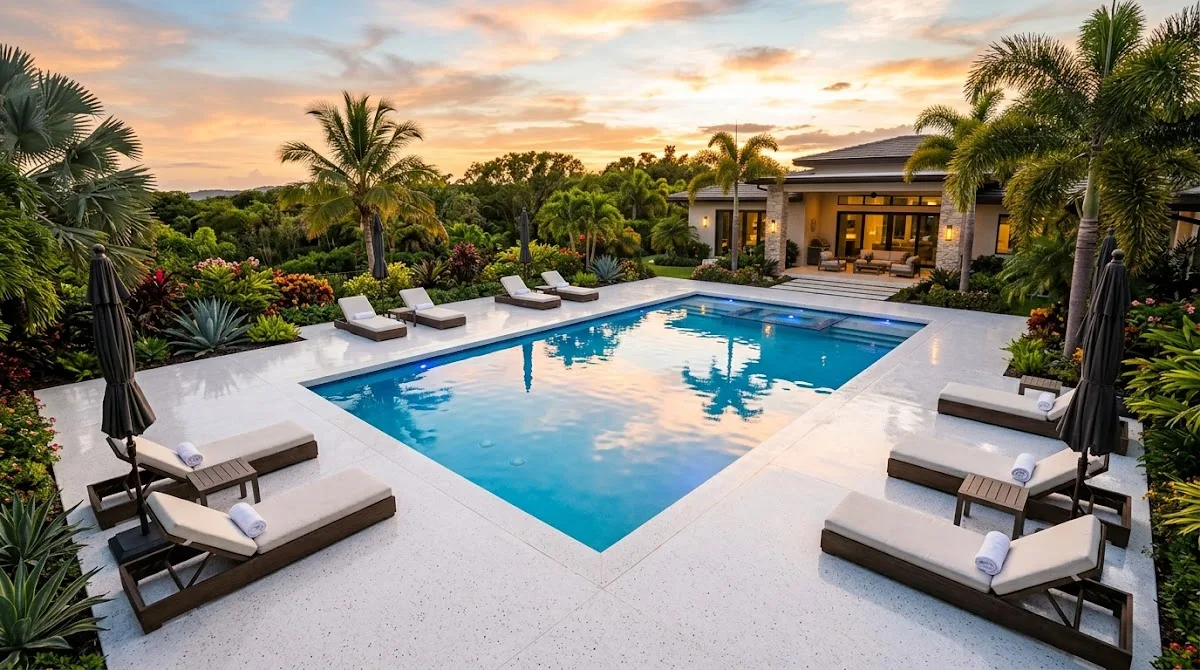
You do not always need a full tear-out to change the look of pool decks. In many cases, the slab below is still sound, which means a new finish can do most of the heavy lifting.
Below, you will find practical pool deck resurfacing ideas, material pros and cons, and design moves that make pool decks feel cleaner, cooler, and more modern.
The Economics of Upgrading Pool Decks: Resurfacing vs. Replacement
Here’s the part many people miss.
Upgrading pool decks does not always mean demolition. If the base is stable, pool deck resurfacing can restore the look and function of an older surface for far less than a full replacement. That matters when budgets are tight and downtime needs to stay short.
Pool deck resurfacing is a process that adds a new layer, finish, or coating over an existing pool deck. The goal is to improve appearance, safety, and service life without replacing the whole concrete slab.
Think about it this way. A new pour solves severe structural failure. But many pool decks only need repair, a fresh texture, and a modern finish. In those cases, resurfacing is the better idea.
| Project Type | Average Cost (Per Square Foot) | Primary Benefit |
|---|---|---|
| Pool Deck Resurfacing | $3.00 – $5.00 | Cost-effective, uses the existing slab, faster installation |
| New Concrete Pour | $6.00 – $10.00 | Needed mainly for major structural failure |
If budget is a major factor, this cost gap matters. For a deeper look at resurfacing costs, it helps to compare labor, prep, and finish choices before you lock in a resurfacing project.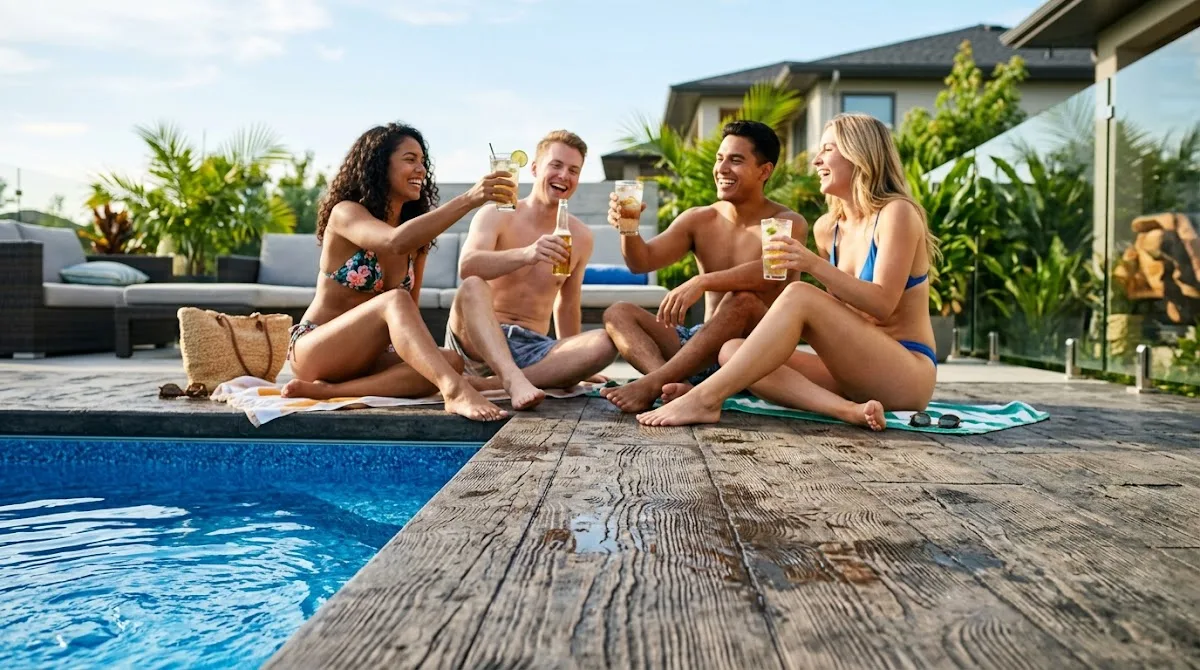
Another advantage is speed. Many pool deck resurfacing jobs can move faster than replacement because there is less demolition, less hauling, and less disruption to the patio and poolside layout.
Top 11 Pool Deck Resurfacing Ideas for a Stunning Transformation
1. Terrazzo Tiles: A Timeless Resurfacing Material
Terrazzo is a resurfacing material made from marble, quartz, or glass fragments set into a cement base. It gives pool decks a refined, mosaic look that feels classic and current at the same time.
It also works well over a concrete overlay when the substrate is sound. The visual depth is striking, and the added texture can improve slip performance depending on the finish.
You can customize terrazzo with subtle neutrals or brighter tones. That makes it a great option for pool deck design that wants elegance without noise.
A premium example like Dolce Vita Terrazzo, Torrone IV, 24x24-inch Petit Slab, Honed, averages $30.96 per square foot.
2. Travertine Pavers: Warmth for Your Concrete Pool Deck
Travertine paver systems remain one of the most reliable choices for pool decks. They bring soft, earthy color, natural cooling, and a welcoming texture under bare feet.
For a concrete pool deck that feels too plain, travertine adds warmth fast.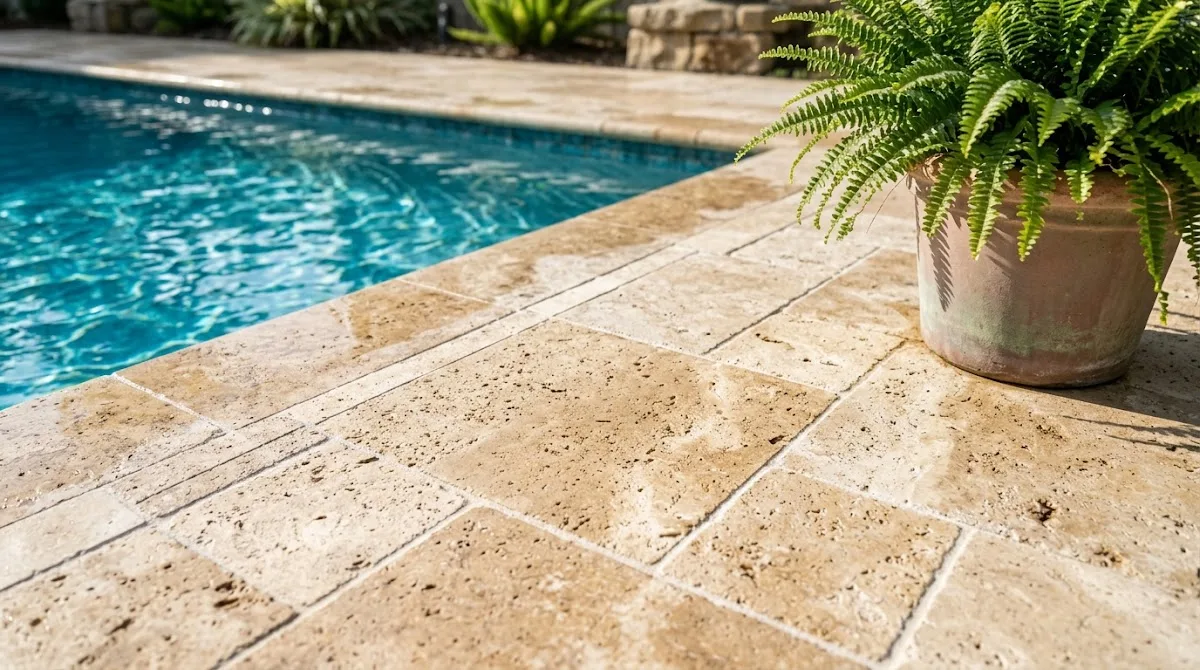 It is also a popular choice for pool remodels because it blends with both modern and traditional architecture.
Pattern matters here. A paver layout in running bond, French pattern, or large-format grid can elevate the whole pool area without making it feel busy.
3. Cement Tiles: Bold Textures and Artistic Flair
If your goal is impact, cement tile can deliver it. These surfaces bring colors and intricate patterns that instantly create a visually rich outdoor setting.
This is not the quiet option. It is for spaces that want personality, flair, and clear design intent. Used well, cement tile can transform simple pool decks into something more architectural.
Premium examples can be expensive. Colorwerks Alegria, 4x8-inch Mason, Cobalt Cloche, Gloss, can average $145.95 per square foot.
4. Glass Tiles: Adding Shimmer to Pool Decks
Glass tile catches sunlight in a way few decking materials can. It creates a visually appealing shimmer that changes through the day and gives pool decks a polished, almost resort-like finish.
That said, use it carefully. Glass tile is better for accents, waterline borders, risers, or feature walls than for the main walking surface around a pool. Some finishes can become slippery when wet.
Used as a highlight, though, it can elevate poolside zones without overpowering the full layout.
5. Natural Stone: Authentic Pool Deck Resurfacing Options
Natural stone is a broad category, but the appeal is simple. No two pieces are exactly alike, so pool decks gain character without trying too hard.
Slate and premium travertine are common choices. Both handle weather conditions well, and both bring texture that helps with traction. That mix of authenticity and function is why natural stone continues to be one of the best pool deck resurfacing material choices for upscale work.
It also pairs well with wood accents, lawns, and minimalist patio furniture. If you want pool decks that feel grounded instead of overdesigned, natural stone is hard to beat.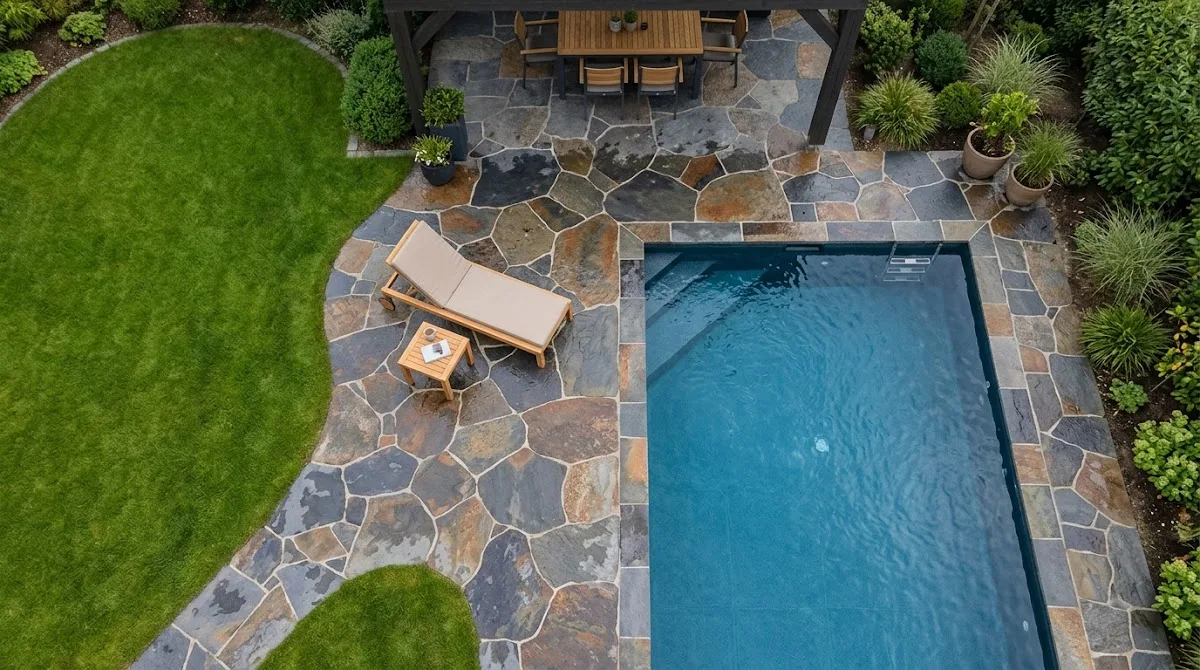
6. Brick Pavers: Traditional Texture and Rustic Charm
Brick paver layouts bring rustic charm, but they are not locked into old-fashioned design. With the right bond pattern and border, they can look sharp and current.
Their rough surface helps with slip control, and they tend to handle heavy foot traffic well. That makes them practical for active pool decks with lots of movement between the water, patio, and grilling areas.
Installation matters. Leveling, edge restraint, and base prep affect how well paver systems withstand movement over time.
7. Ceramic Tiles: Versatile Pool Deck Resurfacing Materials
Ceramic and porcelain tile offer real versatility. They can fit a sleek modern look, a Mediterranean setting, or something more understated.
Matte finishes are the smart move for pool decks because they improve slip resistance. They are also easy to clean, which helps where sunscreen, leaves, and pool chemicals build up.
For many layouts, ceramic is the material for pool spaces that need easy care, reliable durability, and broad design freedom. It also works well in commercial settings where regular maintenance needs to stay simple.
8. Spray-Textured Finishes: The Classic Knockdown Coating
A spray-textured coating is a seamless finish applied over concrete to create a soft, knockdown texture. It has become a popular solution because it feels cooler, looks clean, and covers minor surface flaws well.
For older pool decks, this kind of coating can refinish the look without adding visual clutter. You can score patterns into it, shift the color, or keep it minimal for a cleaner modern read.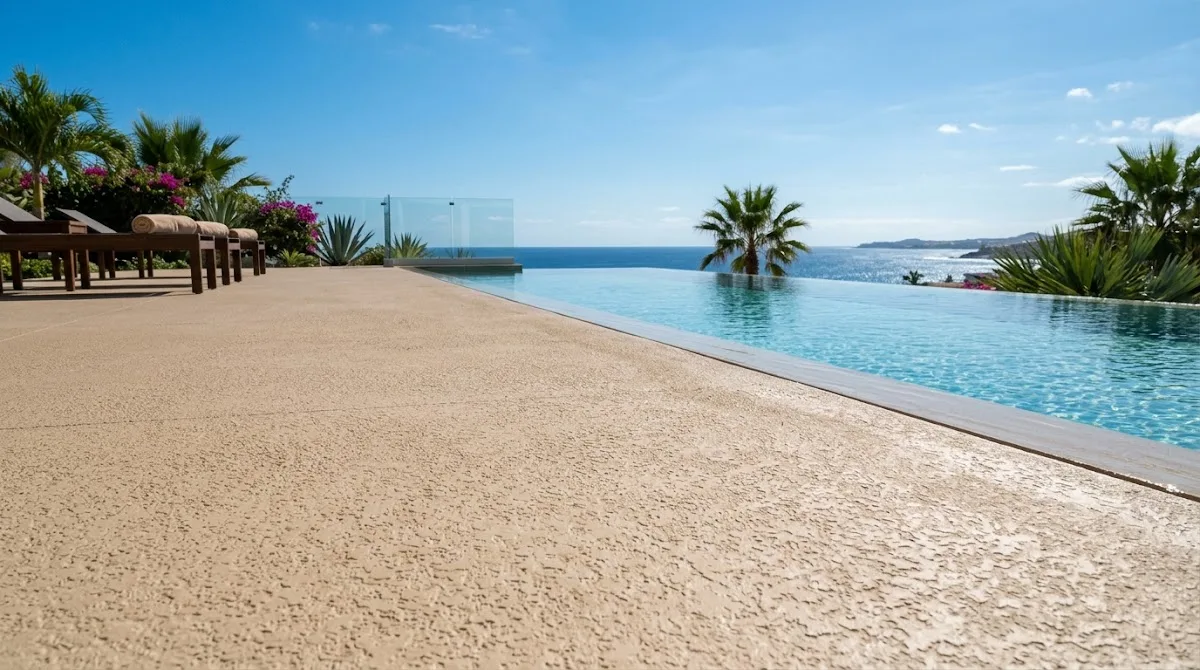
If you are comparing acrylics and resin-based systems, this guide to epoxy resurfacing can help clarify where each coating fits.
9. Exposed Aggregate Concrete: A Budget-Friendly Sandy Beach Vibe
Exposed aggregate concrete has become a popular finish again, and it is easy to see why. It exposes small stone or pebble pieces at the top layer, creating texture that feels natural and understated.
For pool decks on a tighter budget, it is a cost-effective choice with solid durability. It can also help prevent slips and falls because the surface remains grippy even when wet.
If you want pool decks that feel relaxed and beachy instead of formal, this is a great option. The sandy look reads casual, but not cheap.
10. Stamped Concrete Overlays: Mimicking High-End Stone
Stamped concrete uses molds pressed into a fresh concrete overlay to mimic stone, brick, or wood plank patterns. It is one of the most flexible pool deck resurfacing options when you want the look of expensive materials without the same cost.
A good installer can create a finish that can withstand sun, splash-out, and everyday use while keeping the pattern subtle. Seamless Roman slate is a common favorite because it avoids obvious repetition.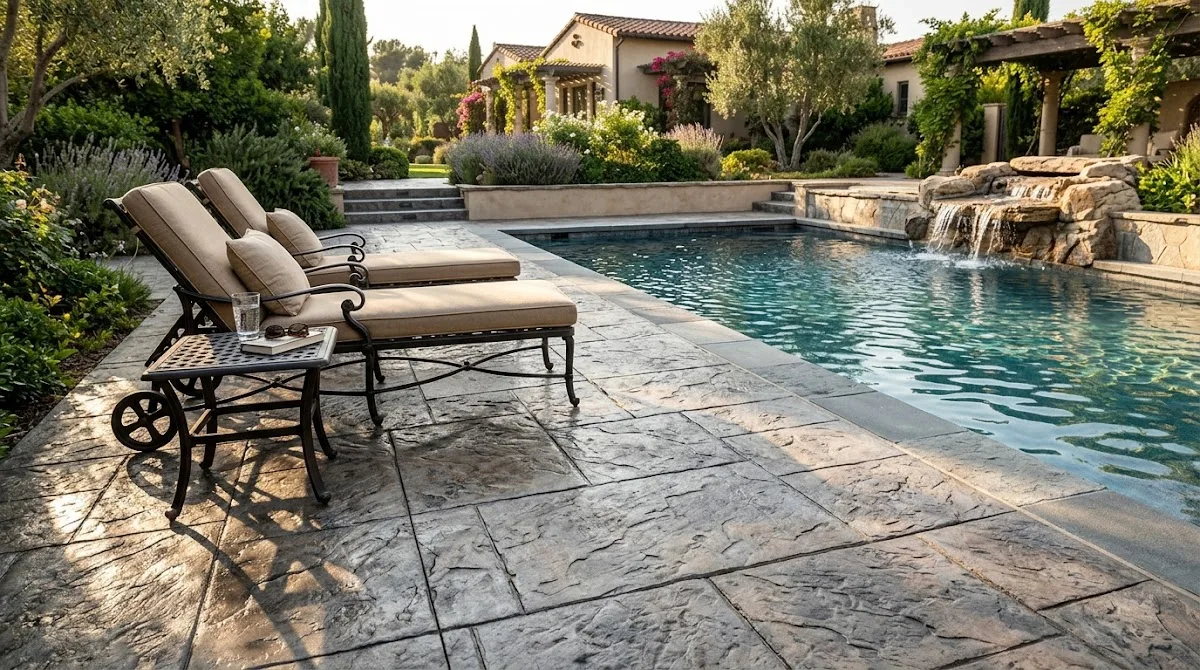
Stamped concrete also gives you room to customize color and pattern. That level of control is useful when the existing pool and home exterior already set the tone.
11. Advanced Cool Deck Coatings and Micro-Ceramic Finishes
Here’s where things get more interesting.
Standard concrete can get hotter than most people expect. Specialized cool deck systems are designed to keep the surface cooler, with some coatings reducing heat buildup by up to 38%.
A micro-ceramic finish is a three-part waterproofing and finishing system that creates a thin, durable, decorative surface. For pool decks, it offers a clean look, strong adhesion, and useful performance benefits beyond aesthetics.
This category matters because contractors increasingly want more than color alone. They want a coating with durability and resistance to sun, moisture, stains, and pool chemicals. They also want a slip-resistant finish that feels good underfoot and lasts.
Advanced micro-ceramic systems can also bring hygiene benefits. Premium systems with ASTM, NSF, and Miami-Dade NOA certifications may include antimicrobial, antibacterial, and antiviral properties. For projects where cleanliness matters, that is a meaningful upgrade.
Another plus is speed. Many systems install in just a few days if crews prepare the surface correctly. If you want to explore microplaster finishes, this is where high-end performance meets clean, minimal design.
Selecting the Best Pool Deck Resurfacing Material for Your Space
Choosing the best pool deck resurfacing material starts with honesty. You need to inspect the slab first, not just the color chart.
Look for cracks, hollow spots, drainage issues, and old coatings that may fail under a new coating. If the concrete surface is unstable, even the best finish will not save the resurfacing project.
Preparation is where good work begins. Proper surface preparation may include thoroughly cleaning, grinding, strip work, and repair of weak areas. Some systems need crews to grind the surface to remove residue or old coatings. Others need a concrete sealer removed so the new layer bonds correctly.
In simple terms, prepare the surface means making it clean, sound, and ready to accept the next layer. Skip that, and the whole pool deck resurfacing project is at risk.
Then focus on the three issues that matter most.
Prioritizing Durability, Safety, and Hygiene
First, slip matters. Pool decks get wet. Matte ceramic, brushed finishes, exposed aggregate, and many paver systems offer the non-slip texture needed to keep movement safer.
Second, heat matters. Light colors, natural stone, and cool-surface coating systems help keep pool decks more comfortable. If a dark deck gets too hot by noon, style stops mattering.
Third, think beyond looks. For many pool decks, advanced protection is now part of the conversation. Antimicrobial and antibacterial surfaces offer peace of mind for the homeowner and can support long-lasting performance in harsh weather conditions.
Modern Design Elements to Elevate Your Concrete Pool Deck
The best pool decks usually feel simple, not plain.
Large pavers to resurface your pool can break up broad surfaces and make the space feel more intentional. Add grass strips between each paver, and the whole setting becomes softer and more contemporary.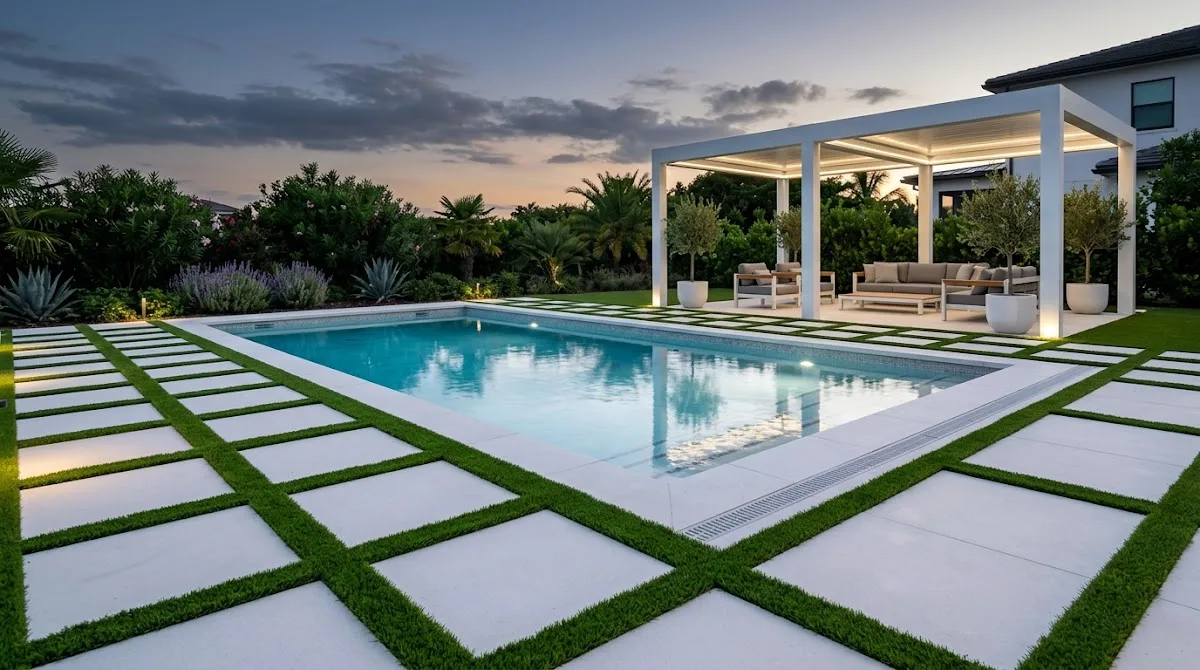
Matching indoor and outdoor finishes is another smart move. When the interior floor and the concrete pool deck share tone and scale, the transition feels seamless. Big glass doors help, but the finish itself does most of the work.
Minimalism works well here. Avoid too much pattern. A cleaner texture, restrained palette, and clear zoning often create better results than a busy stamped field.
Lighting helps too. Use low step lights, subtle path lighting, and furniture placement to shape pool decks into zones for dining, lounging, and circulation. That is how you create a visually calm backyard oasis without overbuilding it.
Also, remember upkeep. Even long-lasting decking materials need regular maintenance to maintain its appearance. Cleaning, resealing when required, and checking joints or grout lines can reduce wear and tear over time.
Conclusion
Pool deck resurfacing gives you a practical way to update pool decks without paying for a full replacement. From paver layouts and tile finishes to stamped concrete and advanced micro-ceramic coating systems, the right choice balances budget, texture, durability, and style.
When you focus on safety, heat control, and clean design, pool decks can look high-end without overspending.
Frequently Asked Questions About Pool Deck Resurfacing Ideas
What is the cheapest way to resurface a pool deck?
Spray-textured coating and exposed aggregate are often the most budget-friendly choices for pool decks.
What is the best material to resurface a pool deck?
The best choice depends on your climate, budget, and style, but travertine, paver systems, and micro-ceramic coating are strong options.
What is the average cost of pool deck resurfacing?
Most pool deck resurfacing falls around $3.00 to $5.00 per square foot.
Can you resurface a pool deck yourself?
Small cosmetic coating jobs are possible, but best results usually come from trained installers.
What is the average cost of pool deck resurfacing?
A typical pool deck resurfacing project costs about $3.00 to $5.00 per square foot, depending on prep and finish.
What is a cowboy pool?
A cowboy pool is a small, stock-tank-style pool used as a compact backyard soaking or cooling option.