
Pool Deck Resurfacing: Best Methods Ranked (w/ Costs)
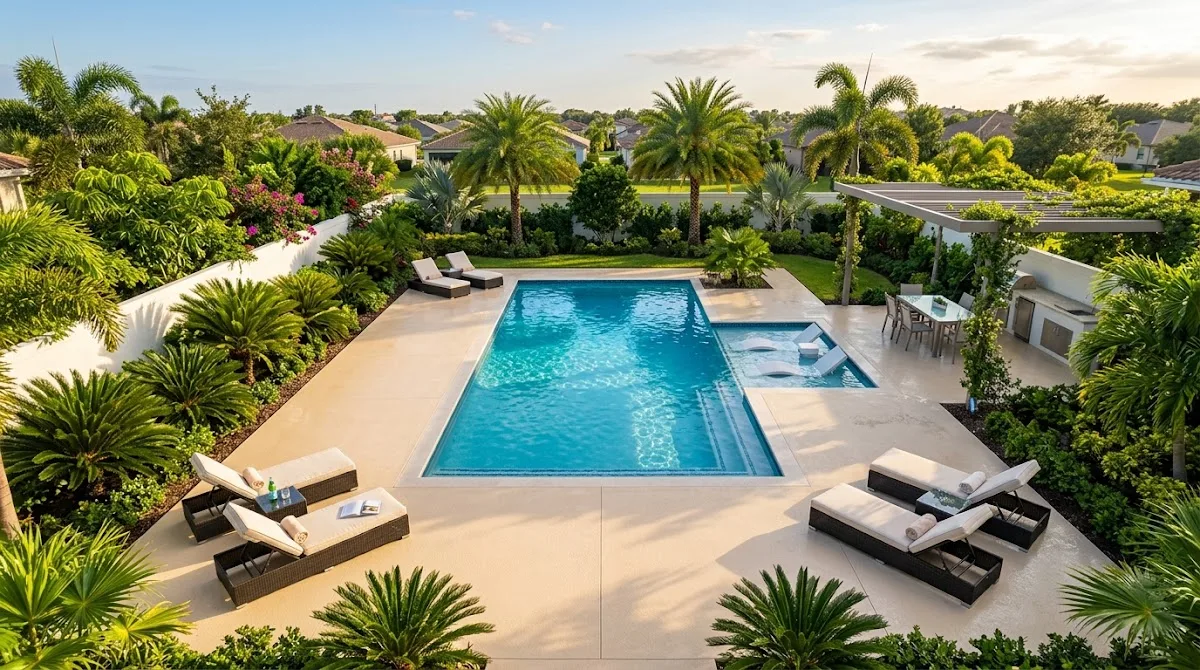
A tired deck changes how the whole pool feels. What should look clean and inviting can start to feel dated, rough, faded, or worse, slippery in the wrong spots.
Below, you’ll find the smartest ways to resurface pool decks, what each option costs, and which systems hold up best.
Why It Makes Sense to Resurface a Pool Deck Instead of Rebuilding
Pool deck resurfacing is a process that renews an existing deck without tearing everything out. In many cases, that means better looks, safer walking conditions, and a longer service life at a fraction of the cost of rebuilding from scratch.
Think about what full demolition really involves. You remove the old deck, haul debris away, prep the base again, pour a new slab, wait for cure time, and then finish the surface. That is slow, messy, and expensive.
Resurfacing offers a simpler path.
If your deck is structurally sound, you can often resurface your pool deck directly over the old substrate. That cuts labor, shortens downtime, and avoids the disruption of full demolition and replacement. For a homeowner, that means less mess. For larger pool decks, it means less lost use.
It also solves the right problem.
Most pool decks do not fail because the whole structure is beyond saving. They fail because the top layer suffers wear and tear from sun, water, and foot traffic. The surface fades. A crack opens. The texture wears down. The deck starts looking older than it is.
That is where pool deck resurfacing projects make sense. You keep the bones of the deck and upgrade the finish.
It works for residential settings, busy hospitality spaces, and even a commercial pool deck where daily use is rough on materials. New systems can resurface old concrete, improve safety, and transform your pool without starting over.
Crucial Factors When Choosing a Pool Deck Resurfacing Material
Not every resurfacing material performs the same way. Some look good at first but need constant repair. Others cost more up front but deliver much better durability.
Here is what matters most.
Heat resistance
A deck that gets too hot is miserable around a pool. Lighter tones usually perform better because they reflect more sun. That matters if you want a cool pool deck that stays comfortable in harsh weather conditions.
Concrete-based systems often trap less heat than some dense stone finishes. Also, color choices matter. Soft neutrals and lighter blends usually beat dark gray concrete in direct sun.
Moisture resistance
Water is relentless. Add pool chemicals, and weak surfaces break down faster. Porous pool decks let moisture sink in, which can lead to stain issues, mold, mildew, and surface failure.
A non-porous coating or waterproof overlay helps stop that cycle. If you want more detail on why waterproofing matters so much, see microplaster and waterproofing.
Slip resistance
This one is simple. Pool decks must help prevent slips and falls. If the finish becomes slippery when wet, it creates risk fast.
Texture matters here. A good deck finish needs enough grip for wet bare feet without feeling harsh. That balance is one reason some systems rank far above stamped concrete or smooth tile.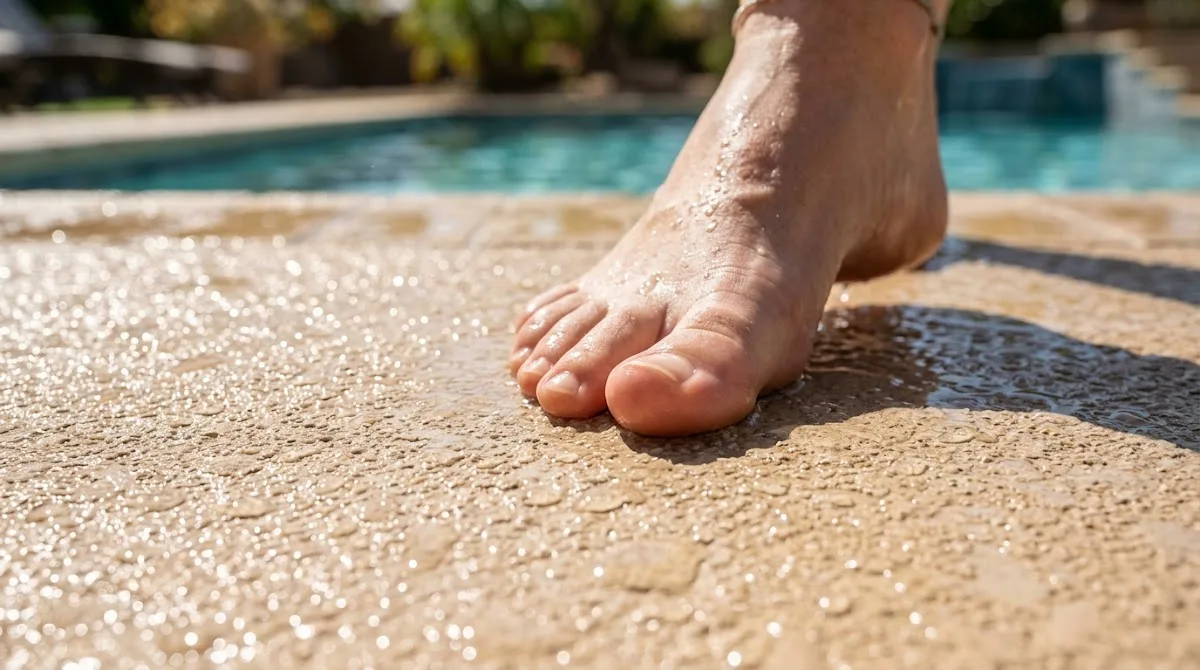
7 Best Pool Deck Resurfacing Options Ranked
Here’s the short version. The best systems combine waterproofing, grip, low maintenance, and strong aesthetics. The worst ones may look nice on day one, but they ask for more sealer, more upkeep, and more repair later.
1. Micro-Ceramic Luxury Finishing Systems (The Ultimate Coating)
This is the top choice.
A micro-ceramic luxury finishing system is a proprietary three-part waterproofing and finishing coating designed for high-end surfaces. It creates a seamless, non-porous barrier over the deck, which is exactly what pool decks need.
Why does it rank first?
Because it solves several problems at once. It waterproofs. It improves texture. It supports customization through elegant finishes and color options. And it avoids grout joints or weak seams that trap moisture.
SKIN2.0 stands out here because the system is ASTM, NSF, and Miami-Dade NOA certified. Those certifications matter. They signal that the finish is built to handle heat, humidity, UV exposure, and movement in the substrate.
There’s more.
It also has antimicrobial, antibacterial, and antiviral properties, which is valuable for any swimming pool environment where hygiene matters. For a pool owner who wants a refined, durable, easy-to-clean deck, that is a compelling mix.
This type of pool deck resurfacing material also helps maintain its appearance over time. The seamless finish resists moisture intrusion better than many common pool deck resurfacing systems.
2. PVC Membrane Deck Systems
PVC membrane systems are tough, waterproof, and proven in demanding environments.
These systems use reinforced PVC sheets that are heat-welded into a bonded deck surface. The result is a durable, non-slip finish that can withstand heavy foot traffic in aquatic centers and hospitality settings.
They also resist fading, tearing, and chemical exposure well. In many cases, they come with a material warranty around five years for defects, discoloration, or loss of texture.
The tradeoff is appearance. Some owners prefer a more natural or decorative look than membrane systems offer. Still, for waterproof performance, they rank high.
3. Concrete Pavers for Pool Decks
Pavers remain a popular choice for pool renovations because they are modular, durable, and easy to replace.
A paver deck handles shifting better than a solid concrete slab because the joints allow movement. That reduces the chance that one crack ruins the whole look. If one unit gets damaged, you repair only that section instead of replacing a large area.
They also offer a variety of colors, patterns, and texture options. Polymer sand between pavers helps resist weed growth and improves stability.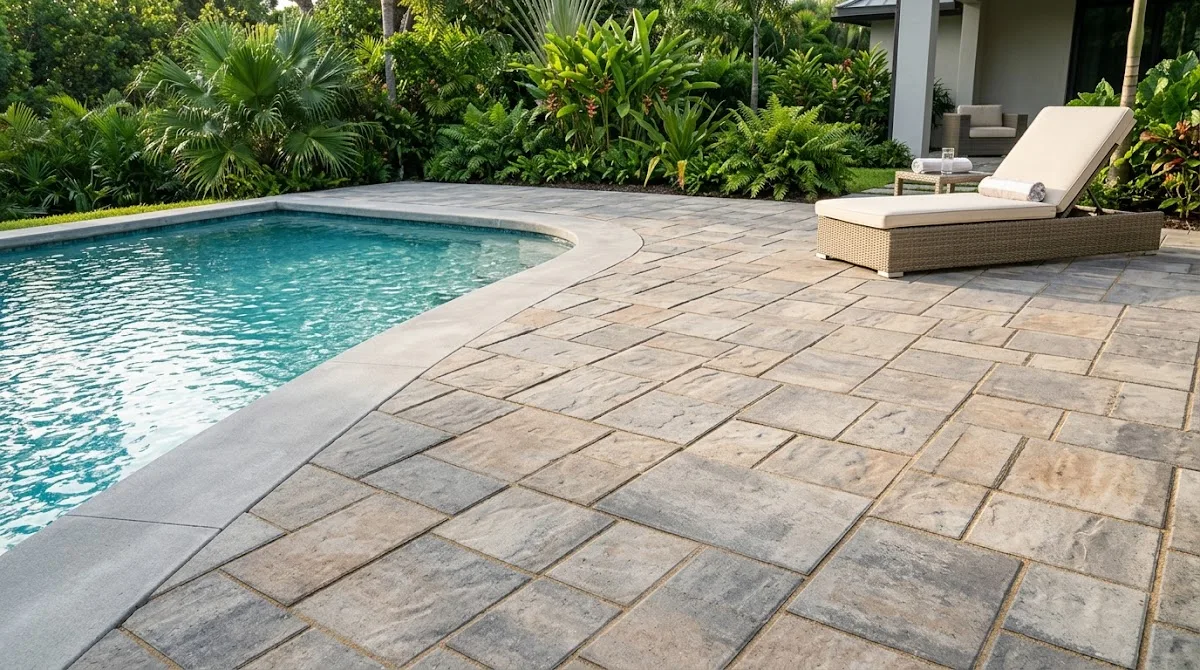
Still, pool decks built with pavers need attention in freeze-thaw climates. Joint maintenance matters, and settling can affect the deck over time.
4. Polymer-Modified Concrete Overlays
A concrete overlay is a resurfacing layer applied over a sound deck. It is often installed at about 1/4 inch to 3/8 inch thick, so it changes the look without raising the deck height too much.
This is one of the most flexible pool deck resurfacing options because the overlay can mimic stone, brick, wood, or decorative concrete. Some premium systems are strong enough to handle serious pressure and daily use.
But here is the catch.
The slab under the overlay must be stable. If the base is moving, the concrete overlay may crack too. It also needs a sealer every couple of years to protect against moisture and stain damage.
When done right, though, concrete resurfacing with an overlay can last 10 to 15 years.
5. Spray-On or Cool Deck Coatings
If budget is the main concern, this coating category deserves a look.
Spray and roll-on systems can resurface a tired deck quickly. They add fresh color, a bit of texture, and often improve heat performance, especially in lighter shades. That is why they are a popular choice for pool upgrades in hot climates.
They are also one of the more cost-effective ways to refresh pool decks.
Still, these systems are thinner and usually less durable than a membrane or micro-ceramic coating. On busy pool decks, they may need more frequent resealing and resurfacing work. Some DIY users also confuse these products with epoxy, but epoxy is usually not the best fit for exterior wet deck areas.
6. Traditional Tile for a Concrete Pool
Tile can create a sharp, upscale finish on a concrete pool deck, especially when the goal is a polished visual style.
Ceramic, porcelain, glass, and stone tile all resist sun and water fairly well. But the deck must have a slip-resistant finish or deep texture. Otherwise, the surface can become slippery fast.
The bigger issue is grout.
Grout joints can hold moisture, support mildew, and make the deck harder to clean and maintain. That extra maintenance pushes tile lower in the rankings for pool decks, even though it can look impressive.
7. Stamped Concrete Pool Deck Systems
Stamped concrete is attractive in photos. In real pool settings, it often drops to the bottom of the list.
Stamped concrete is made by pouring a fresh concrete surface and imprinting it with patterns that mimic stone, brick, or wood. It offers many colors and patterns, and the decorative effect can be strong.
But it has real drawbacks.
First, stamped concrete can be slick when wet. Second, patching a crack rarely blends well. Third, it does not bond cleanly over failing surfaces, so delamination is a risk. If you need to resurface later, matching the old deck is difficult.
Preparing the Pool Deck Surface for a Resurfacing Project
Proper surface preparation is the part people try to skip. It is also the part that decides whether the new surface lasts.
Before any resurfacing process begins, professionals should inspect the deck carefully. They need to check moisture, soundness, old coatings, soft spots, and every visible crack.
Then the prep begins.
You may need to grind away failing layers, remove old coatings, patch spalls, and clean the concrete surface so the new coating or overlay bonds correctly. If paint or incompatible sealer stays in place, the resurfacing material may fail early.
One of the best prep methods is dustless blasting. This system uses water and abrasive media to reduce silica dust by about 90 percent compared with dry grinding. It also creates the right profile on the existing pool deck surface without the runoff of heavy washing.
In other words, prepare the surface well or expect problems later.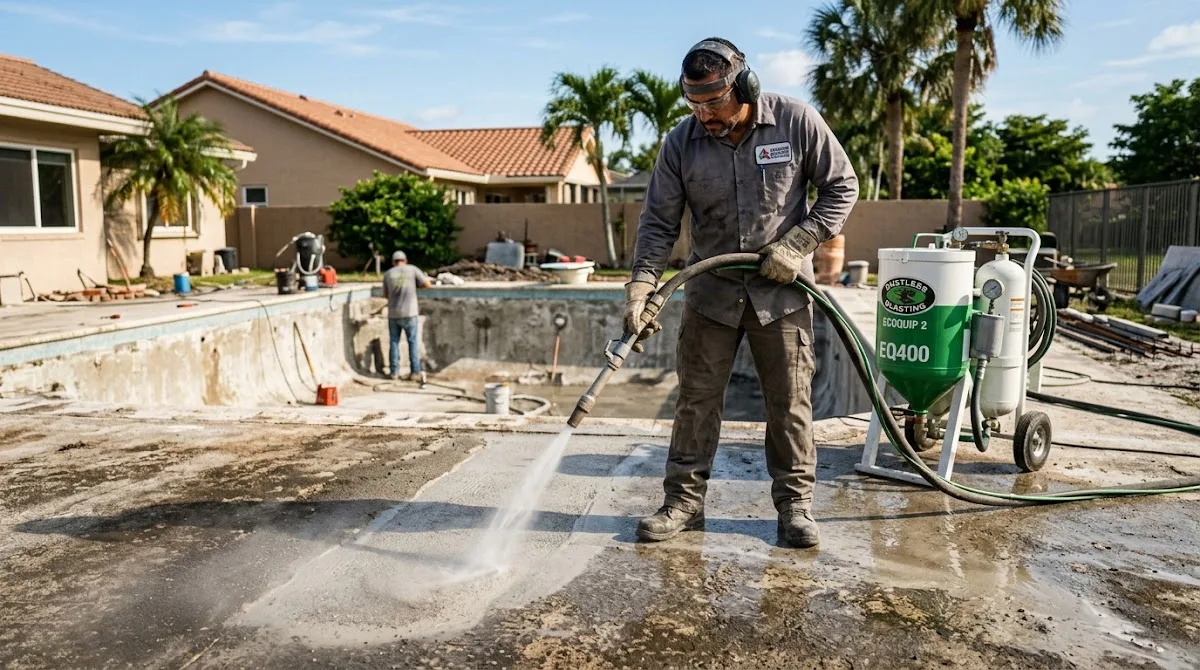
Surface Compatibility Guide for Every Resurfacing Material
Not every deck can be resurfaced on day one. Some pool decks need structural correction first.
If the deck is sinking, lifting, or uneven, cosmetic work should wait. The slab may need stabilization before any resurfacing pool work begins.
Here’s a quick guide:
| Existing Surface | Can Be Resurfaced? | Special Preparation Notes |
|---|---|---|
| Poured Concrete | Yes | Best candidate for all resurfacing systems |
| Stamped Concrete | Yes | Must strip existing sealer first |
| Exposed Aggregate | Yes | Fill large voids or grind down sharp areas |
| Knockdown/Kool Deck | Yes | Flatten high spots before applying new coating |
| Painted Concrete | Often | Must remove all paint and profile the substrate |
| Sinking/Uneven Decks | Not yet | Must structurally stabilize before resurfacing |
If you want design inspiration after checking surface fit, browse these resurfacing ideas.
Cost and Lifespan Breakdown of Pool Deck Resurfacing Options
Pool deck resurfacing cost depends on deck size, prep needs, local labor, and material selection. If the deck has major cracks or needs extra repair, the price goes up.
Here is a practical snapshot:
| Material Type | Estimated Cost Range (per sq ft) | Average Lifespan |
|---|---|---|
| Spray-On / Cool Coating | $4 to $6 installed | 5 to 10 years |
| Concrete Overlay | $3 to $10 installed | 10 to 15 years |
| Stamped Concrete | $8 to $15 installed | 10 to 15 years |
| PVC Membrane Decking | $12 to $18 installed | 15 to 25 years |
| Concrete Pavers | $10 to $40+ fully installed | 15 to 25 years |
For a deeper look at pool deck resurfacing cost, labor, and what drives price per square foot, see this cost guide.
Achieving the Perfect Texture for a Safe Concrete Pool Deck
A safe deck needs grip. That sounds obvious, but many pool decks fail right here.
Texture is not just a style choice. It is a safety feature. A deck with the right texture helps bare feet hold steady around a pool, even when the surface is wet.
Some materials naturally do better than others.
Micro-ceramic systems can build non-slip performance into the finish itself. Custom broom finishes can do the same on a concrete pool deck. By contrast, smooth tile and stamped concrete often rely on a topical sealer or additive to stay safe.
That means more maintenance.
If your goal is to resurface a pool deck once and avoid constant touch-ups, pay close attention to texture from the start.
Conclusion
The best deck solution depends on the condition of your surface, your budget, and how long you want the finish to last. For most pool decks, resurfacing beats rebuilding on cost, speed, and disruption. Choose a system with waterproofing, strong texture, and real long-term durability, and your deck will work harder for years.
Frequently Asked Questions About Pool Deck Resurfacing
How much is it to resurface a pool deck?
Most projects fall between $3 and $18 per square foot, depending on prep, material, and deck condition.
What is the best way to resurface a pool deck?
The best approach is to use a waterproof, slip-resistant system over a properly prepared deck.
What is the best material to use for resurfacing a pool deck?
Micro-ceramic systems rank highest for waterproofing, hygiene, looks, and long-term performance.
What does “pool deck resurfacing” mean?
Pool deck resurfacing is a process that renews an existing deck by adding a new finish over the old surface.
What is the best product to resurface a pool deck?
A seamless micro-ceramic coating is one of the strongest choices for premium results.
How much does a 200 ft deck cost?
At typical installed rates, a 200-square-foot deck may cost about $600 to $3,600 or more.