
EPS Foam Water Absorption Rates Explained (EPS vs XPS)
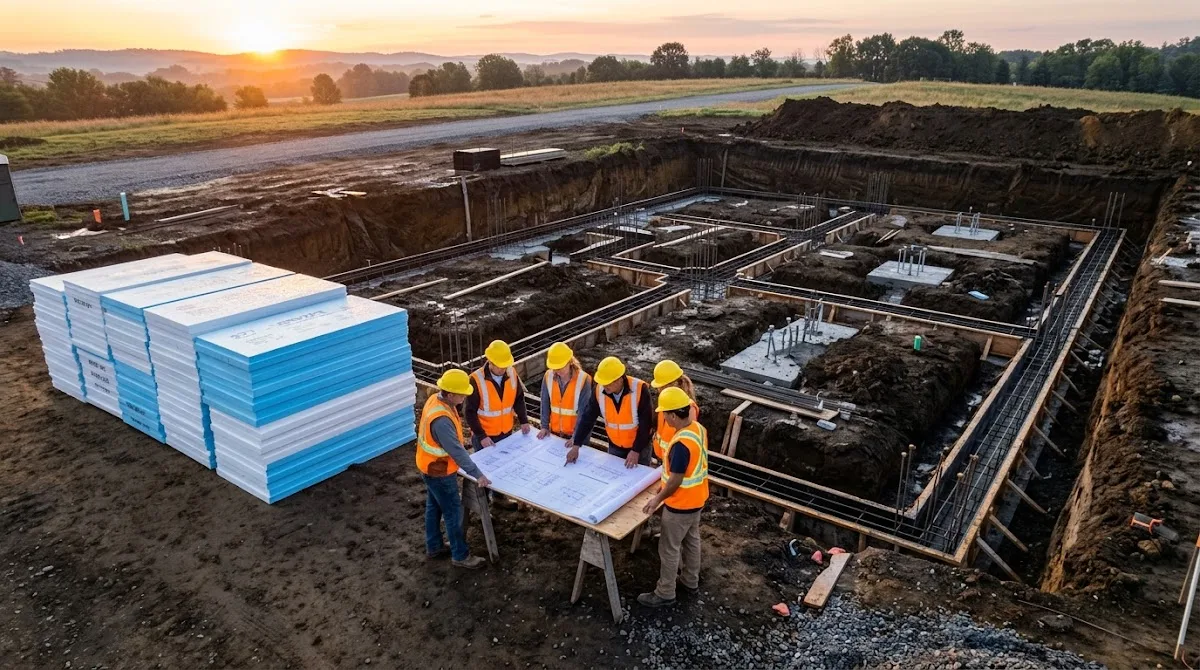
Choosing between EPS and XPS sounds simple until you start looking at test data. Then things get messy fast, because short lab tests do not always tell you how rigid foam will perform after long exposure.
Here’s the useful part. You’ll see how each board is made, how much moisture each can absorb, and why drainage, waterproof layers, and installation details matter just as much as the material itself.
Understanding Polystyrene Insulation: The Basics of EPS and XPS
Polystyrene is a plastic polymer used to insulate walls, roofs, foundations, and specialty structures. In construction, the two common forms are EPS and XPS.
EPS is a rigid insulation made by causing small bead particles of styrene to expand with a blowing agent, heat, molds, and steam. The beads then fuse together, creating expanded polystyrene with a closed-cell structure and tiny interstitial spaces between each bead.
That detail matters.
Those small gaps affect how EPS handles moisture over time. They also affect drying, capillary movement, and long-term thermal behavior in real-world applications.
XPS is a rigid insulation made when molten polystyrene is forced, or extruded, through a die with heat and blowing agents. This manufacturing process forms a dense, smooth sheet with a more uniform cell matrix and tightly packed composition.
In simple terms, EPS starts as individual bead units that expand and fuse. XPS is formed as one continuous board.
Their strength profiles are different too:
- EPS typically has a density of 15 to 35 kg/m³
- EPS compressive strength usually ranges from 10 to 30 psi
- XPS typically has a density of 28 to 45 kg/m³
- XPS compressive strength usually ranges from 25 to 60 psi, with specialty board options reaching 100 psi
So yes, XPS starts stronger. But strength alone does not decide long-term below-grade applications.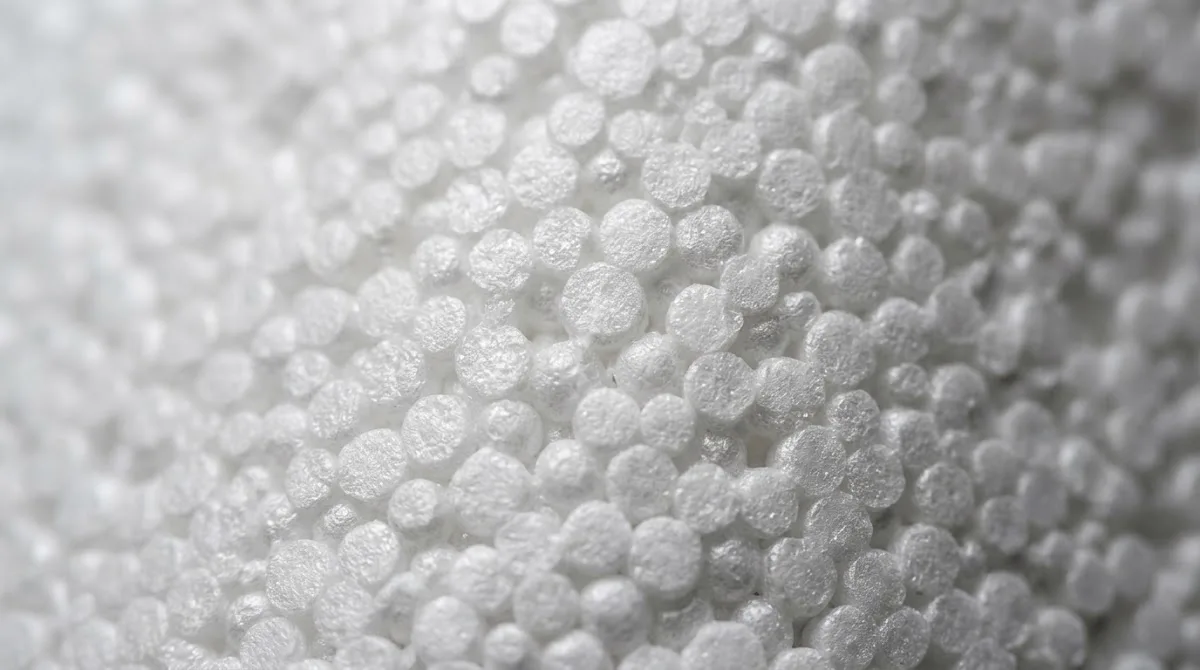
If you are working on foundations, retaining walls, or general construction applications, moisture behavior often matters just as much as maximum compressive numbers.
The Truth About Moisture: Lab Tests vs. Real-World Foam Performance
This is where the conversation gets interesting.
Most water absorption discussions start with ASTM C272 immersion testing. That test is useful, but it is still a lab test. It measures absorption under controlled conditions, usually over a short period, not years of soil pressure and repeated wetting.
In other words, a good lab result does not always ensure better long-term performance.
Standardized Lab Tests on How Materials Absorb Water
Water absorption is a measurement of how much liquid water a material takes in, usually reported by volume. In the common 24-hour immersion test, XPS shows a very low absorption rate of 0.3%.
EPS comes in higher at less than 2%.
At first glance, that seems like an easy win for XPS. But here’s the catch. EPS also has the ability to dry. After removal from the test, EPS can return to less than 0.3% moisture content within 24 hours.
That drying ability changes the story.
EPS does not just absorb water. It can also expel it. Because of its interstitial space, the amount of water retained after exposure may drop quickly once conditions allow drying.
Field Studies on Long-Term Exterior Exposures
Now let’s leave the lab.
A 15-year field study looked at EPS and XPS in severe exterior conditions. These were not clean indoor samples. They were in the ground, exposed to moisture continually over time.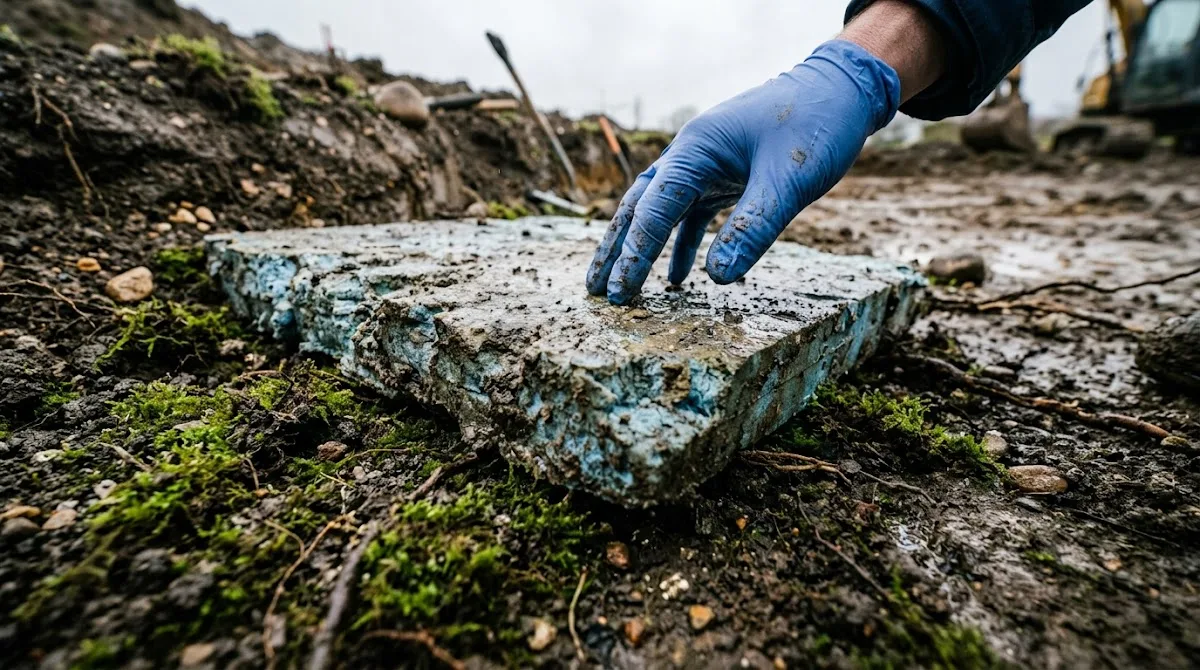
The findings were hard to ignore.
EPS showed only a 4.8% loss in R-value over 15 years. XPS showed an 18.9% loss. That is a major difference, especially where thermal performance needs to stay stable for the life of the assembly.
Why? EPS can more readily release trapped moisture. XPS may retain it longer.
Think about it this way. Initial moisture resistance is one thing. Long-term moisture accumulation is another.
That distinction matters in pool walls, ICF systems, and other below-grade builds where contact with water, wet soil, and hydrostatic pressure can affect performance over a long period.
R-Value Protection: How Much Water Does Each Material Absorb?
R-value is a measure of how well insulation resists heat transfer. When moisture gets into any insulation layer, thermal performance can drop.
EPS typically delivers a thermal conductivity of 0.032 to 0.040 W/mK and an R-value of 3.6 to 4.2 per inch. XPS typically delivers 0.026 to 0.036 W/mK and around 5.0 per inch at the start.
So far, so good.
But below-grade applications are rarely about initial numbers only. They are about what happens after the board is buried, exposed to moisture, and asked to insulate for years without failure.
According to available performance data, XPS can lose long-term thermal value when moisture is trapped inside. EPS also faces wet conditions, but its drying behavior can reduce the effect on long-term performance.
Freeze-thaw is another concern. When liquid freezes, it can expand and damage weaker materials. Independent testing shows EPS suffers zero loss in R-value or compressive strength after freeze-thaw cycling. XPS also shows strong resistance in these conditions because of its closed-cell structure.
So the question is not simply, “Will EPS absorb water?” The better question is, “How will the material behave after years of wet service?”
That is the real design question.
In assemblies where waterproof and drainage details work together, EPS can be a durable base material. In structures that need added moisture control, pairing insulation with a proper waterproofing system helps protect the shell, finish layer, and surrounding materials.
Comprehensive Comparison Table: EPS vs XPS Insulation Properties
Here is the side-by-side view.
| Property | EPS Foam | XPS Insulation |
|---|---|---|
| Manufacturing Method | Expanded beads fused with steam | Extruded with heat through a die |
| Cell Structure | Closed-cell with small interstitial spaces | Closed-cell, smooth continuous surface |
| 24-hr Immersion Water Absorption | <2% (dries to <0.3%) | 0.3% |
| Field Study R-Value Loss | 4.8% | 18.9% |
| Drying Capability | Can expel absorbed water | Does not expel water readily |
| R-Value per Inch | 3.6 - 4.2 | ~5.0 |
| Thermal Conductivity | 0.032 - 0.040 W/mK | 0.026 - 0.036 W/mK |
| Density | 15 - 35 kg/m³ | 28 - 45 kg/m³ |
| Compressive Strength | 10 - 30 psi | 25 - 60 psi (up to 100 psi) |
| Freeze-Thaw Resistance | No loss of R-value or strength | Superior performance |
| Below-Grade Suitability | Excellent, with drainage protection | Higher long-term R-value loss |
| Environmental Impact | No HFCs, recyclable | Contains HFCs (traditional) |
Application Context: When Do an Interior Barrier and Drainage Matter?
Material choice never happens in a vacuum.
Above grade, moisture may be less of a concern because cladding, a waterproof barrier, and interior controls help protect the insulation. Below grade, everything changes. Soil can stay wet. Pressure can build. A small installation mistake can hold moisture where you do not want it.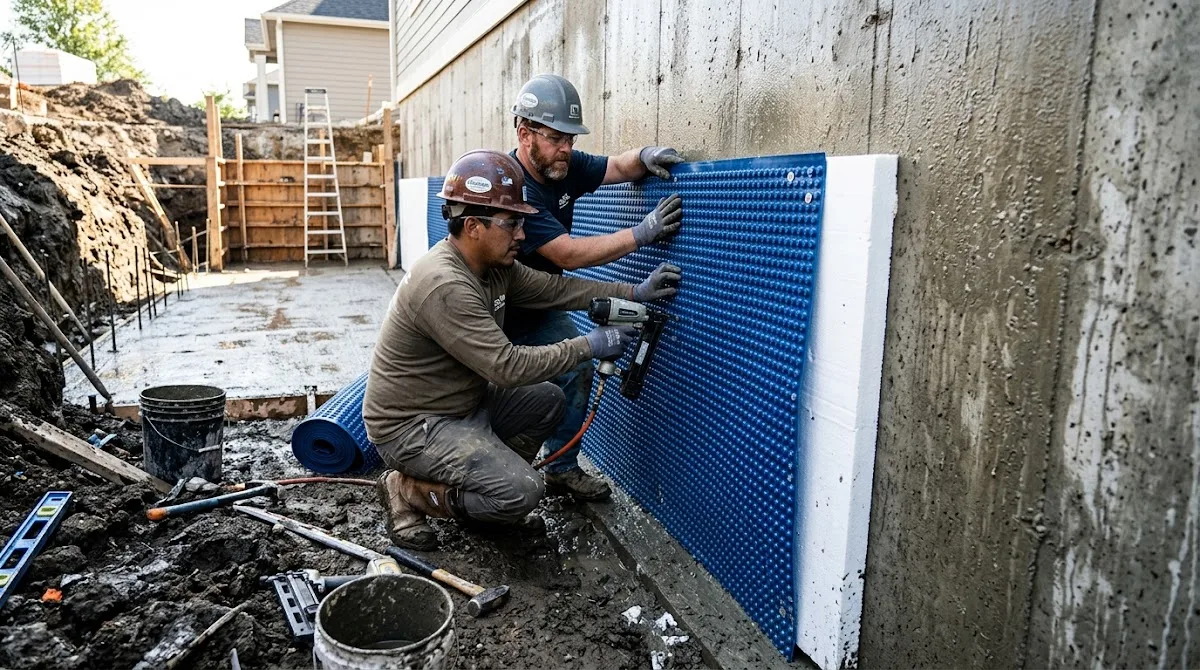
That is why EPS performs best when drainage is part of the design. A drain path, proper backfill, and smart detailing help reduce bulk water exposure and avoid static saturation.
EPS is lighter and easier to shape on-site. That makes it useful for curved walls, custom forms, and complex geometry. EPS also costs less in many projects, which matters to the builder watching both performance and budget.
XPS brings higher starting strength and a smooth board edge that can reduce thermal gaps. But it is harder to cut and, in severe wet service, may hold moisture longer than many people expect.
For pools and water-facing structures, the lesson is simple. Insulation alone is not the whole answer. Moisture control needs layers, detailing, and the right finishing system above the substrate.
Conclusion
EPS and XPS both resist water, but they do not manage long-term moisture the same way. EPS may absorb more in short testing, yet it can dry and preserve thermal performance better in field conditions. If your project faces wet soil, pressure, or complex geometry, choose materials and waterproof details as one system, not in isolation.
Frequently Asked Questions About EPS Foam Water Absorption
Will EPS foam absorb water?
Yes. EPS can absorb a small amount of water, but it can also dry out.
What happens if EPS gets wet?
It may take in moisture, then release it when drying conditions improve.
Does expansion foam absorb water?
Some foam products do. Water behavior depends on the material type and structure.
What happens if XPS foam gets wet?
XPS resists water well at first, but it may retain moisture longer over time.
What happens if EPS gets wet?
EPS can get damp without losing function right away, especially with drainage and protection.
What foam will not absorb water?
No foam is immune in every condition. The goal is low water absorption and good drying ability.