
Fiberglass Pool Resurfacing: Ultimate Guide (2026)
A smooth blue pool surface does more than look good. It protects the shell, supports clean water, and helps equipment run the way it should.
Here’s the practical part. We’ll break down fiberglass pool resurfacing in plain English so you can make smart decisions before minor damage turns expensive.
Understanding the Gelcoat Pool Surface and Why It Needs Resurfacing
The Unique Properties of a Fiberglass Pool
A fiberglass pool is a factory-made swimming pool built from molded fiberglass reinforced with resin. Its glossy outer skin is called the gelcoat. Gelcoat is a colored protective layer sprayed during manufacturing under tightly controlled conditions.
That factory control matters more than most people realize.
Unlike a concrete pool, a fiberglass pool has a seamless basin with no joints and no porous plaster layer. Compared with a vinyl pool, there is no vinyl liner to stretch, wrinkle, or replace every few years. The result is a slick pool surface that improves water flow, resists algae better, and often reduces chemical demand.
That’s the upside.
The catch is that gelcoat is hard to recreate outdoors. Temperature, humidity, catalyst mix, and cure time all have to line up. That is why field-applied gelcoat work can be tricky, and why many modern fiberglass finishes are moving beyond traditional methods.
Why Even the Best Swimming Pool Needs Resurfacing
Even a durable pool will age. UV exposure breaks down the top layer. Sanitizers and poor water chemistry slowly etch the coating. Over time, the finish can dull, chalk, blister, or crack.
And once that starts, the damage tends to spread.
Small flaws let moisture move behind the surface. A stain that seems cosmetic can hide deeper trouble. A rough patch can become a leak path. Left alone, the pool shell may deteriorate, pumps work harder, and the whole system takes on more strain than it should.
That’s why surfaces often need to be resurfaced long before the shell itself fails. If you want a deeper look at early warning issues, review these common gelcoat problems.
9 Signs Your Swimming Pool Needs Resurfacing
Visual Indicators of a Failing Pool Surface
Your pool usually gives you clues before major failure. You just have to know what to look for.
Sun, heavy use, chemical imbalance, and abrasive cleaning all leave marks. If your surface needs attention, these are the signs that show up first:
| Sign | Description |
|---|---|
| Chalking | White powder rubs off when touched; caused by UV and chemical breakdown. |
| Crazing | Fine, spreading cracks near steps and corners that allow water intrusion. |
| Color Changes | Bright blues fade to patchy white spots, signaling total gelcoat breakdown. |
| Blistering | Soft surface bubbles indicating trapped moisture; requires immediate attention. |
| Texture Changes | The pool floor and walls feel rough, making swimming uncomfortable. |
| Stubborn Stains | Algae and organic matter become impossible to clean due to surface porosity. |
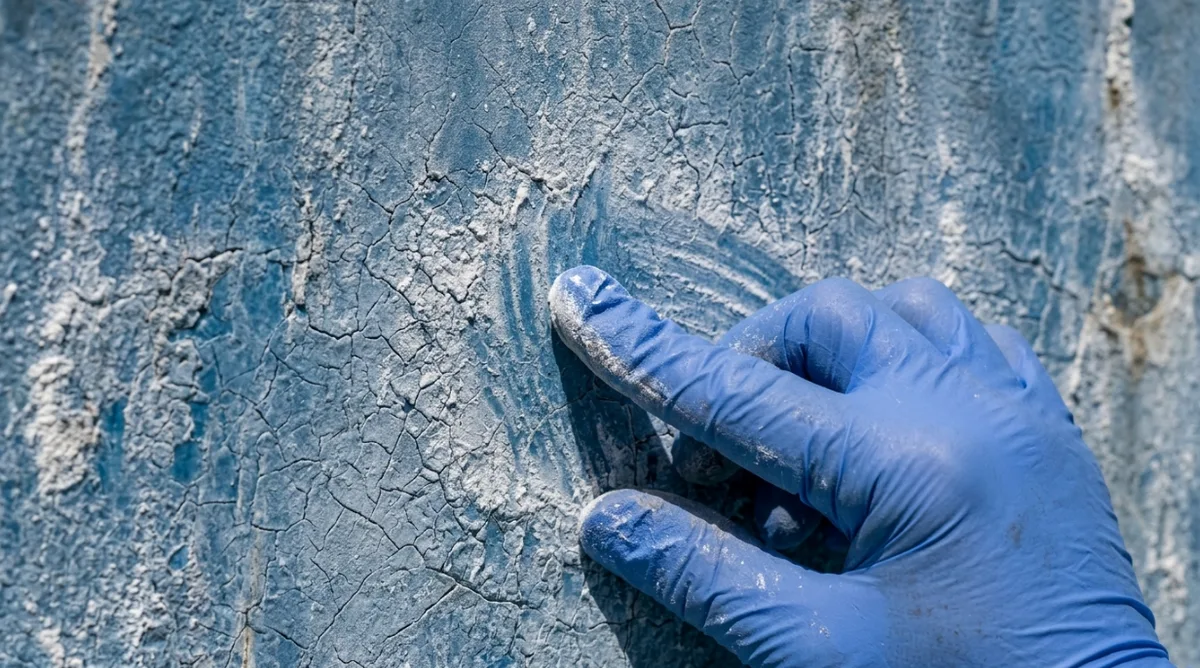
Chalking is often the first signal. If you rub the wall and get a white powder on your hand, the coating is breaking down. A blister or soft bubble is more urgent because trapped moisture can separate layers below the finish.
Performance Issues and Identifying a Pool Crack
Not every problem is visual. Sometimes the first clue is rising upkeep.
If chlorine demand spikes, algae keeps coming back, or your cleaner struggles to climb the walls, the surface may be failing. Roughness creates drag. Porosity lets bacteria settle in. Poor finish quality can throw off proper water chemistry and make keeping your pool clear much harder.
Here’s a simple way to think about damage severity:
| Damage Type | Description | Repair Approach |
|---|---|---|
| Surface Scratches | Thin lines isolated to the top gelcoat layer. | Minor repair possible. |
| Deep Gouges | Penetrates to the fiberglass, exposing gray/white marks. | Targeted repair. |
| Osmotic Blistering | Soft, water-filled bubbles beneath the surface. | Professional assessment needed. |
| Delamination | Hollow-sounding or separating gelcoat layers. | Professional consultation required. |
| Structural Cracks | Deep fissures pointing to potential foundation shifts. | Expert evaluation essential. |
A crack is a split in the material that can range from cosmetic to structural. Hairline marks may only affect the top coating. A deeper crack, especially one that changes width or leaks, needs fast evaluation.
The Complete Swimming Pool Resurfacing Process to Repair Damage
Professional Preparation to Resurface a Fiberglass Pool
 Swimming pool resurfacing starts with prep, not paint. This is where good jobs separate from short-lived ones.
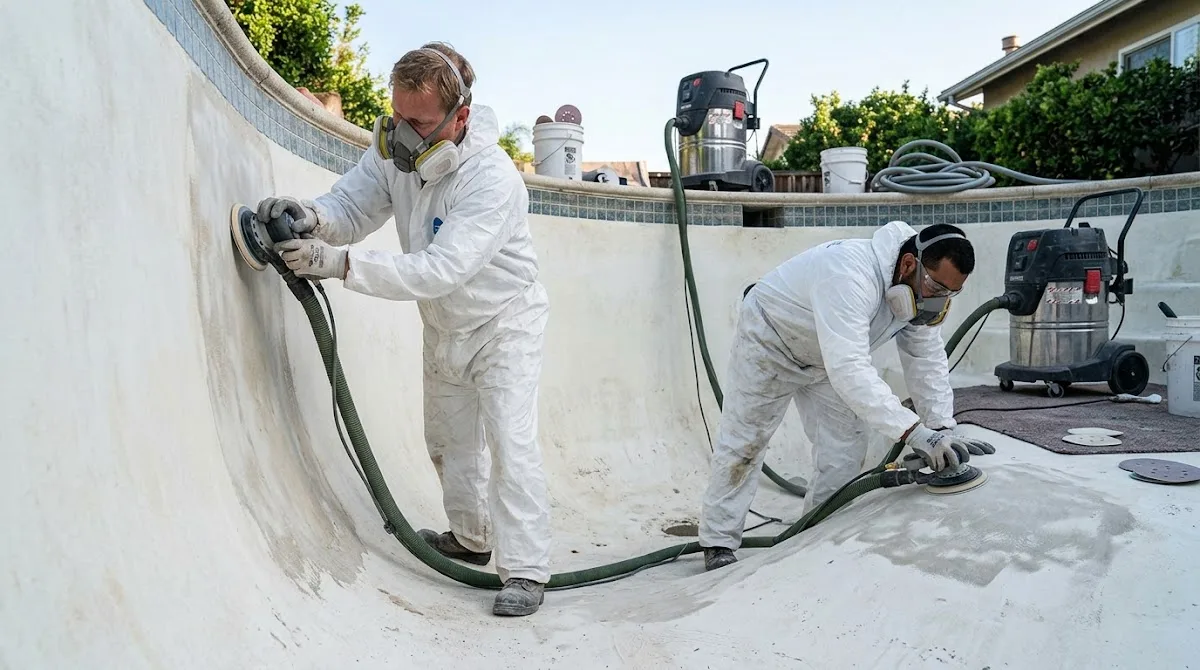
First, the crew drains the pool safely using submersible pumps and disconnects electrical components. Then comes surface prep. Many teams use a 14-step method that includes sanding with orbital sanders, often moving gradually to 220-grit, to remove failing coating and create profile for adhesion.
Next comes cleaning.
Technicians work in sections with solvents such as acetone or MEK to remove grease, wax, and residue. A tack cloth picks up fine dust. After that, primer is mixed at a strict 4:1 ratio and brushed in a crosshatch pattern. Cure time usually runs 24 to 48 hours before the next layer can install correctly.
If you plan to resurface a fiberglass pool, this stage determines whether the new coating bonds or peels.
Advanced Resurfacing Options and Premium Finishes
There are several resurfacing options on the market. Standard approaches include two-part epoxy and spray-applied gelcoat at about 15 to 20 mil thickness. These systems can work, but field conditions matter, and some finishes are more forgiving than others.
That’s where newer systems stand out.
A premium micro-ceramic waterproofing and luxury finish can restore your pool while adding a long-lasting barrier built for chemical, UV, and weather exposure. In high-demand environments, some certified systems are ASTM, NSF, and Miami-Dade NOA approved, antimicrobial, antibacterial, and antiviral. That combination supports durability, cleaner walls, and less dependence on harsh acid washing over time.
For many owners, that means fewer recurring surface headaches. For contractors who specialize in advanced installation, it also means a more durable result than basic replastering style thinking borrowed from concrete or fiberglass comparisons that do not fully fit fiberglass shells.
Analyzing the True Fiberglass Pool Resurfacing Cost
Evaluating DIY vs. Professional Pool Resurfacing Options
Let’s talk numbers.
The total pool resurfacing cost usually falls between $3,000 and $20,000. Pool size, damage depth, material choice, and labor all shape the final estimate. A standard professional job often lands between $5,000 and $15,000 and can extend service life by 15 to 30 years.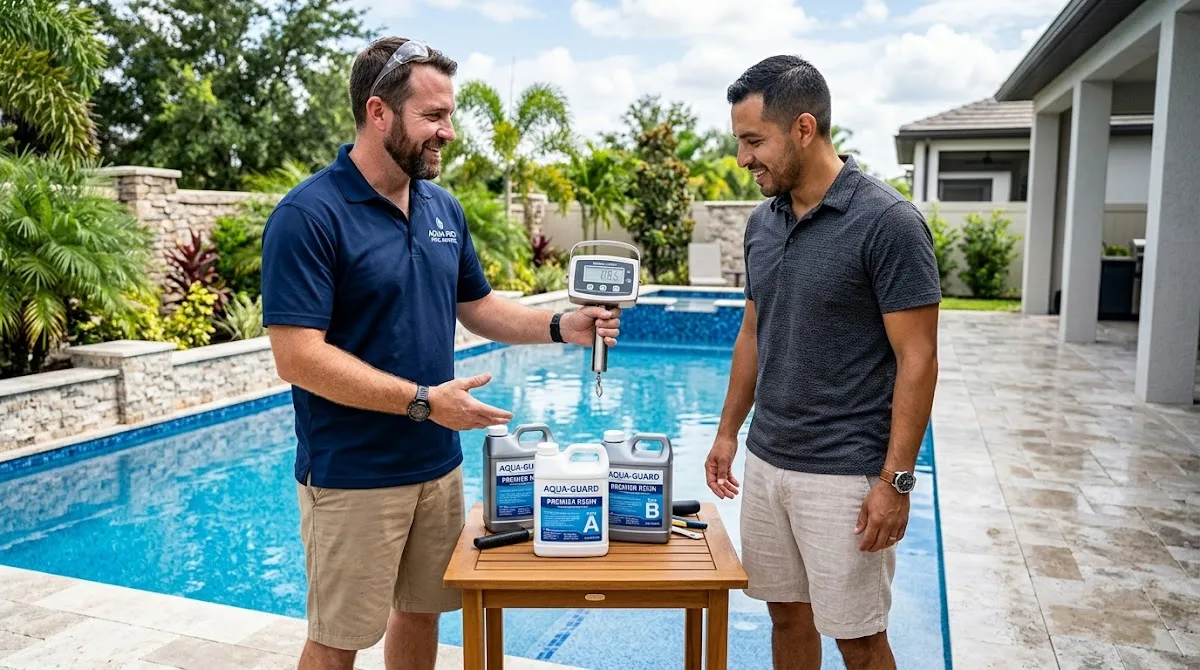
DIY looks cheaper on paper. Materials may cost $800 to $2,500. But fiberglass pool resurfacing cost is rarely just materials. You also need tools, protective gear, time, and the skill to manage cure windows. Miss the mix, prep, or weather timing, and the new finish can fail early with no warranty.
Here’s the tradeoff. A homeowner may save upfront, but the risk is higher. Most pro crews finish in 5 to 10 days. DIY work can stretch into weeks. Many systems also require refinishing discipline after application, including a full 28-day cure before heavy use or saltwater startup.
For a closer breakdown, see this guide to resurfacing cost.
| Material Type | Professional Grade | Standard Grade | Key Differences |
|---|---|---|---|
| Gelcoat Resin | Premium marine grade | Standard Polyester | Better UV and chemical resistance. |
| Primer | Marine Epoxy | General Purpose | Stronger bond and moisture resistance. |
| Catalyst | Professional MEKP | Standard MEKP | More consistent cure rates. |
| Filler Compound | Structural Polyester | Basic Body Filler | Better waterproof repair strength. |
Equipment Required for a Seamless Pool Surface
Professional Tools Needed to Repair the Shell
This work is equipment-heavy. You cannot refinish a fiberglass pool well with a random sander and a paint roller from the garage.
A contractor will usually bring:
- Orbital and detail sanders with variable speed
- HVLP equipment and compressor sized for even spray output
- Digital scales for exact catalyst ratios
- Respirators with organic vapor cartridges
- Safety glasses, gloves, and protective clothing
Why so much gear? Because the surface has to be clean, dry, and profiled with precision. Too smooth and the coating won’t bite. Too rough and the finish may show defects. Poor PPE is also a serious health risk when sanding fiberglass or handling resin and solvents.
If your pool water level has dropped and you suspect a leak, stop there first. Surface restoration will not fix movement in the shell or hidden structural issues. In those cases, repair comes before cosmetic work.
Conclusion
When it is time to resurface your pool, speed matters less than prep, material choice, and cure control. Watch for chalking, roughness, blister spots, stains, or a spreading crack. Whether you want to restore your pool for looks, hygiene, or longevity, the right system and the right installer make all the difference.
Frequently Asked Questions About Fiberglass Pool Resurfacing
How much does it cost to have a fiberglass pool resurfaced?
Most jobs fall between $3,000 and $20,000, depending on damage, coating, and labor.
Can a fiberglass pool be refinished?
Yes. A fiberglass pool can be refinished if the shell is sound.
What happens to a fiberglass pool after 25 years?
The finish may fade, stain, blister, or lose gloss, and older pools may need restoration.
How often do you have to resurface a fiberglass pool?
It varies, but many pools need to be resurfaced once the original coating wears down.
What time of year is best to resurface a pool?
Mild, dry weather is best because curing conditions are more stable.
What is the cheapest way to resurface a pool?
DIY epoxy is usually the cheapest option, but it may not offer the best long-term lifespan.