
Pool Slide Refinishing: DIY Steps That Last (w/ Products)
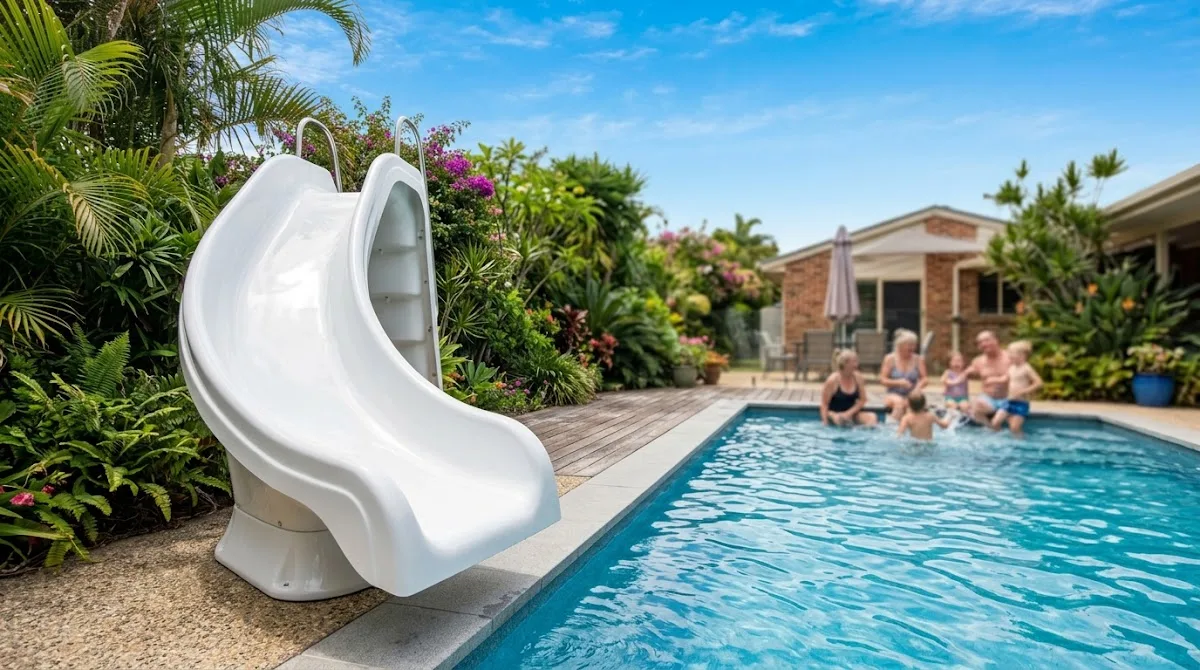
An older slide often has better bones than what you can buy today. The structure is still solid, but the outer layer has taken years of sun, water, and chemical abuse.
That’s the good news. If you prep it right and choose the right paint system, you can restore the look, improve the ride, and get long-term performance.
Why Pool Owners Should Restore Older Fiberglass Slides
Older fiberglass models are widely known for having better structural quality than many newer replacements. They were often built thicker, heavier, and stronger. That matters when you’re deciding whether to replace or restore.
Here’s the catch. Years of UV exposure, heat, and chemical contact slowly destroy the original gelcoat. The surface starts to chalk, turn yellow, and lose its protective layer. Once that happens, the ride gets rough and the shell becomes more vulnerable to every new crack.
A gelcoat is a protective outer layer applied over fiberglass. It gives the slide its smooth finish and acts as the first line of defense against moisture, sun, and wear.
Think about it this way. If the structure is still sound, replacement may be wasteful. A smart refinishing project can bring the slide back with less cost and less disruption.
The same logic applies across aquatic surfaces. Premium interiors and features perform best when they use tested systems built for harsh conditions. That’s why many facilities value certified materials such as ASTM, NSF, and Miami-Dade NOA rated systems for pool shells and wet environments. If you’re already thinking about broader upgrades, explore fiberglass finishes and related aquatic resurfacing options.
Step 1: Essential Prep to Clean and Repair Every Crack
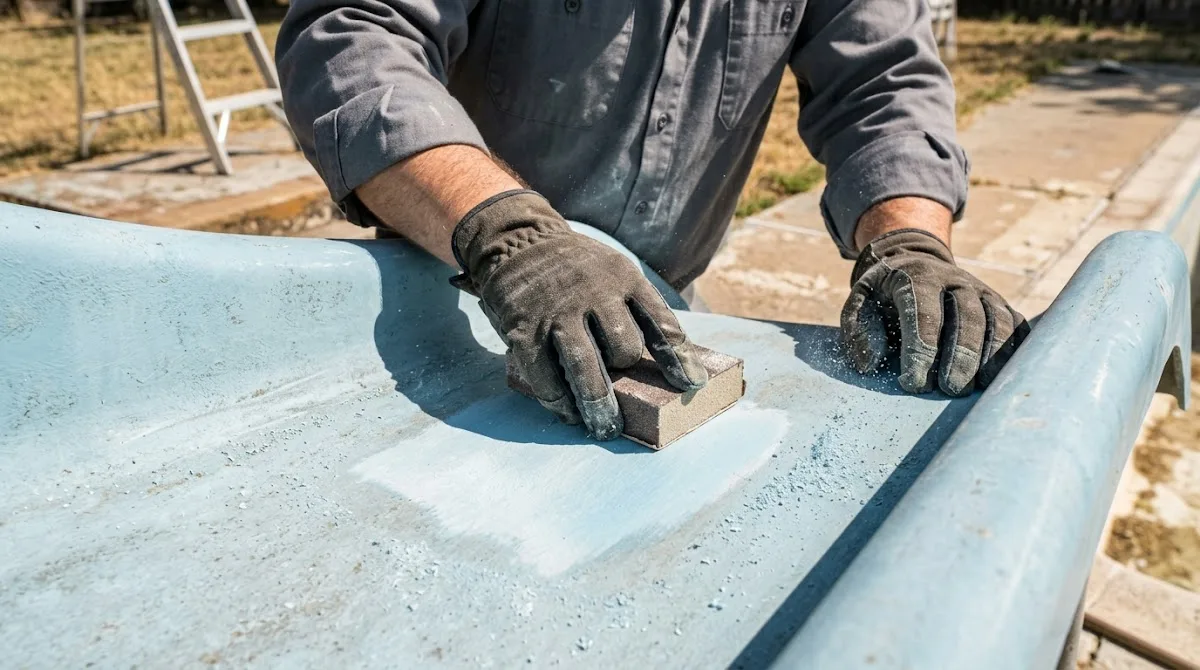 Most failures happen before the coating ever goes on. Not during application. During prep.
Start by making the slide completely clean. Remove chalked gelcoat, dirt, oils, sunscreen residue, mildew, and any loose material. Washing is not glamorous, but it is the step that decides whether the new coat bonds or starts to peel later.
If there is existing paint, inspect it closely. If it’s loose, flaking, or soft, remove it. If it’s tightly bonded, you still need to dull the surface so the next layer can grip.
Next, inspect every inch for damage. Look for abrasion, gouges, a hairline crack, open seams, or impact wear near curves and exit zones. If you skip this part, your final finish may look good for a month and then bubble or split where the base was weak.
For localized repair, many contractors use epoxy putty to fill damage. Epoxy putty is a moldable repair compound used to fill chips, voids, and small structural defects before coating. Use it to fill imperfections, then sand the area smooth once fully dry.
A few practical prep tips:
- Use pressure washing if the surface is heavily soiled.
- Sand enough to create tooth, but do not over-sand and thin the shell.
- Fix each crack before you paint.
- Check weather and temperature before coating day.
- Keep the surface dry and free of dust.
If the damage goes beyond cosmetics, review this guide on gelcoat repair before moving forward. It helps explain when a simple patch is enough and when deeper fiberglass repair is needed.
One more thing. Proper prep often allows a high-build coating to bond directly to the fiberglass without a primer. That saves time, but only if the prep is done right.
Step 2: Choosing the Best Pool Slide Paint and Coat System
This is where many DIY jobs go sideways. The wrong paint may look great for a short time, then fade, chalk, or peel after one hard summer.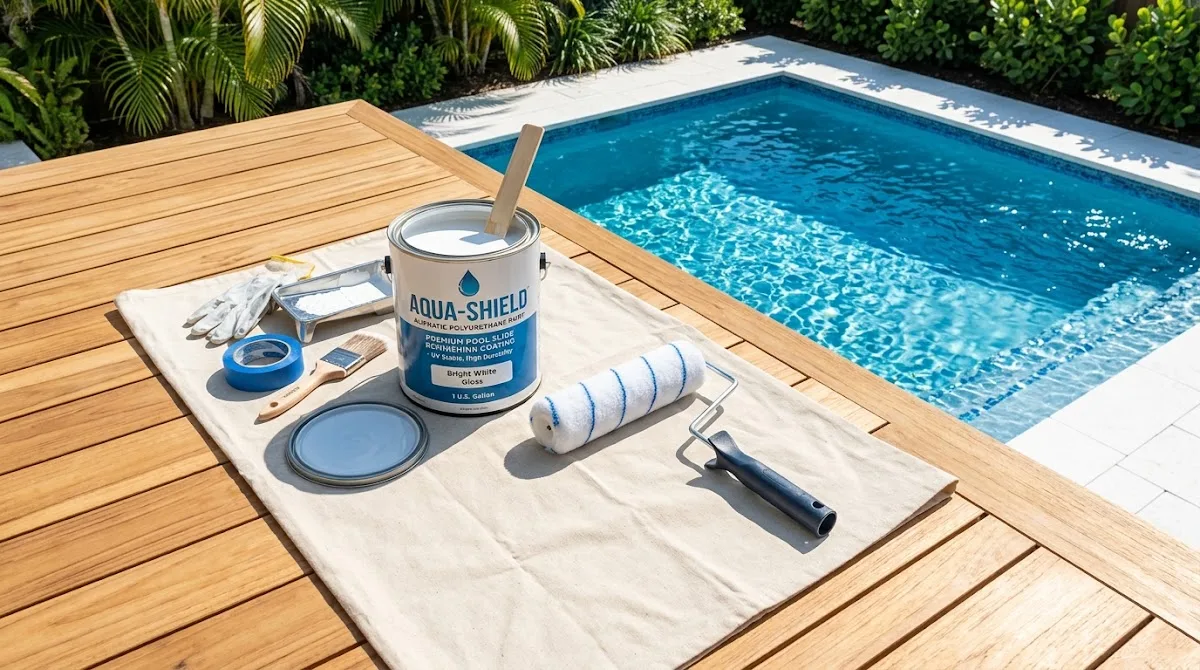
Standard epoxy options can work in some settings, but prolonged UV exposure is their weak spot. That’s why aliphatic polyurethane is often a better fit for a pool slide. It holds color better, stays tougher under sun, and stands up to chlorine and other pool chemicals.
Aliphatic polyurethane is a UV-stable coating chemistry designed for exterior durability, gloss retention, and chemical resistance.
You may also see people ask about pool paint products sold for other surfaces, or mention Ramuc and a Ramuc type EP epoxy. Those systems have their place, but not every epoxy or build epoxy formula is ideal for a curved, rider-contact slide that sits in full sun. A marine-type system or advanced polyurethane usually gives better long-term weather performance.
Here’s a simple comparison of two common refinishing approaches:
| Factor | Awlgrip Coatings | Slide Armor 2500 Color Coat |
|---|---|---|
| Primary Use | Professional refinishing service | DIY and professional application |
| Chemistry | Industrial marine-grade | Advanced aliphatic polyurethane |
| Primer Required | Not specified | No primer needed |
| Durability | Professional grade | 3x more durable than standard gelcoat |
| Target User | Professional contractors | Contractors and DIY enthusiasts |
Awlgrip is well known in marine and aerospace work. It is a professional coating system chosen for strong UV resistance, high gloss appearance, and long service life.
If you want an industrial-grade finish and have the right tool, technique, and experience, this route can work well. For broader resurfacing planning, this overview of fiberglass resurfacing is a useful next read.
Step 3: Applying the Paint for a Flawless Pool Slide
Now for the part everyone pictures first. The paint application.
A one-coat system saves labor and shortens downtime. In many cases, you can apply the material at 5 to 10 mils in one pass and get the coverage you need. That reduces complexity and lowers the risk of problems between coats.
You can spray or use a roller, depending on the product and conditions. A roller is slower but practical for many field jobs. Spraying may give a smoother finish, but only if you can control overspray, air movement, and temperature.
A few basics matter here:
- Follow the mixing window exactly
- Apply evenly to avoid sagging
- Watch for trapped air that can create a bubble
- Respect recoat times if a second coat is required
- Let the slide fully dry before use
Slip Reduction Technology is one of the smarter advances in this category. It creates a low-friction ride without making the surface slick in a dangerous way. That balance is hard to get right, which is why product choice matters so much.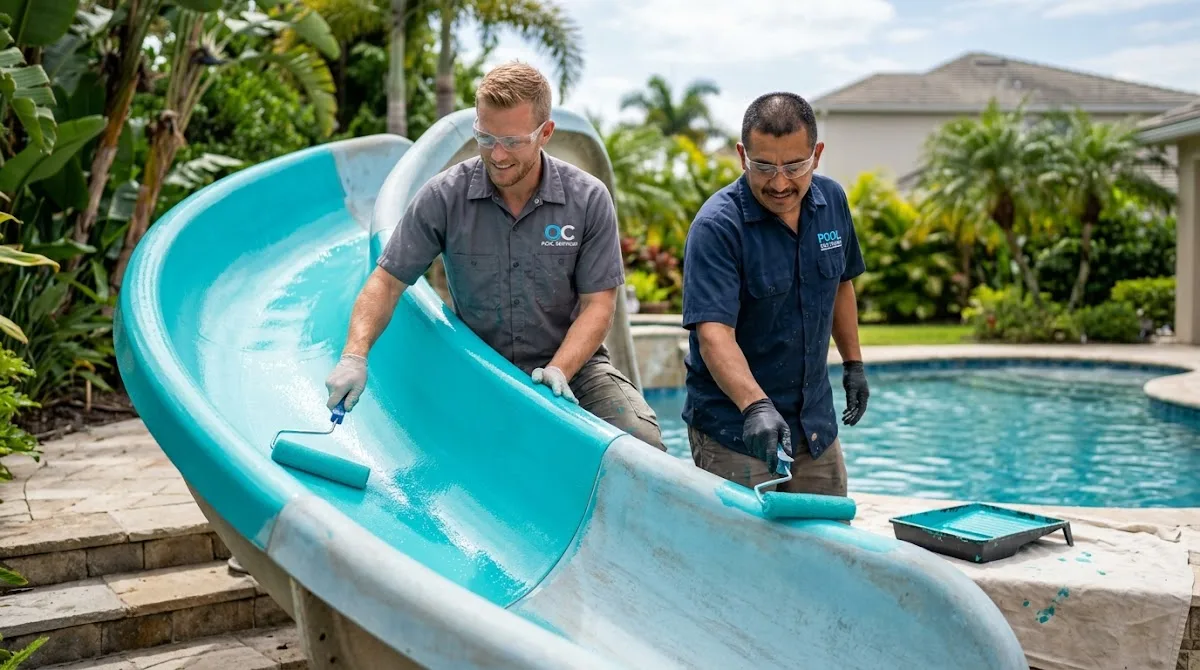
If you need to repaint a faded water slide, don’t rush the cure just because the forecast looks good. Weather swings, humidity, and heat can all affect the final result.
Expanding Your Renovation: Comprehensive Aquatic Solutions
Sometimes a worn slide is a clue that the rest of the area needs attention too. Decks age. Waterline details fade. Decorative concrete, splash features, and themed surfaces all take abuse.
That’s where full-system renovation planning helps. Facilities that demand NSF and Miami-Dade NOA certified, antibacterial, antimicrobial, and antiviral finishes in a fiberglass pool or larger swimming pool environment usually want the same standard across nearby surfaces.
Creative Polymers, based in St. Louis with more than 40 years of experience, offers a wider product family for contractors handling full renovations. Complementary options include:
- Deck Armor I & II for deck systems
- Splash Armor for renovation kits
- Foam Armor for foam surfaces
- Theme Armor and Rock Armor for decorative features
Good maintenance is not only about what you fix. It’s about choosing systems that stay resistant to chemical wear, sun, and daily use.
Conclusion
A successful pool slide refinishing job comes down to three things: honest prep, the right coat system, and careful application. Clean thoroughly, repair every damaged area, and choose a finish made for UV, water, and rider contact. Done right, an older slide can look better, ride smoother, and stay in service much longer.
Frequently Asked Questions About Pool Slide Refinishing
Can you resurface a pool slide?
Yes. You can resurface it if the structure is sound and the damaged outer surface is properly repaired.
Can you paint an old pool slide?
Yes. Old slides can be painted after you clean, prep, and repair the shell.
How to recoat a fiberglass slide?
Remove failed coating, fix damage, sand lightly, and apply the recommended kit per instructions.
How to rejuvenate a plastic slide?
Clean it well, inspect for damage, and use a coating made for that specific material and exposure level.
What kind of paint for a pool slide?
Use a coating designed for slide use, ideally UV-stable aliphatic polyurethane rather than standard epoxy.
Can old slides be restored?
Yes. If the shell is solid, you can often restore the slide instead of replacing it.