
Pool Finishes
Pool Plaster Color Chart
The color of your pool plaster does more than set a mood. It shapes how the water looks, how warm it feels, and how the entire backyard reads from a distance. A white finish gives you classic light-blue water. A dark grey turns the pool into a reflective mirror. The right shade ties the pool to the landscape, the home, and the way you actually use the space. This guide walks through each SKIN Microplaster color option, what it does to the water, and how to choose the shade that fits your project.
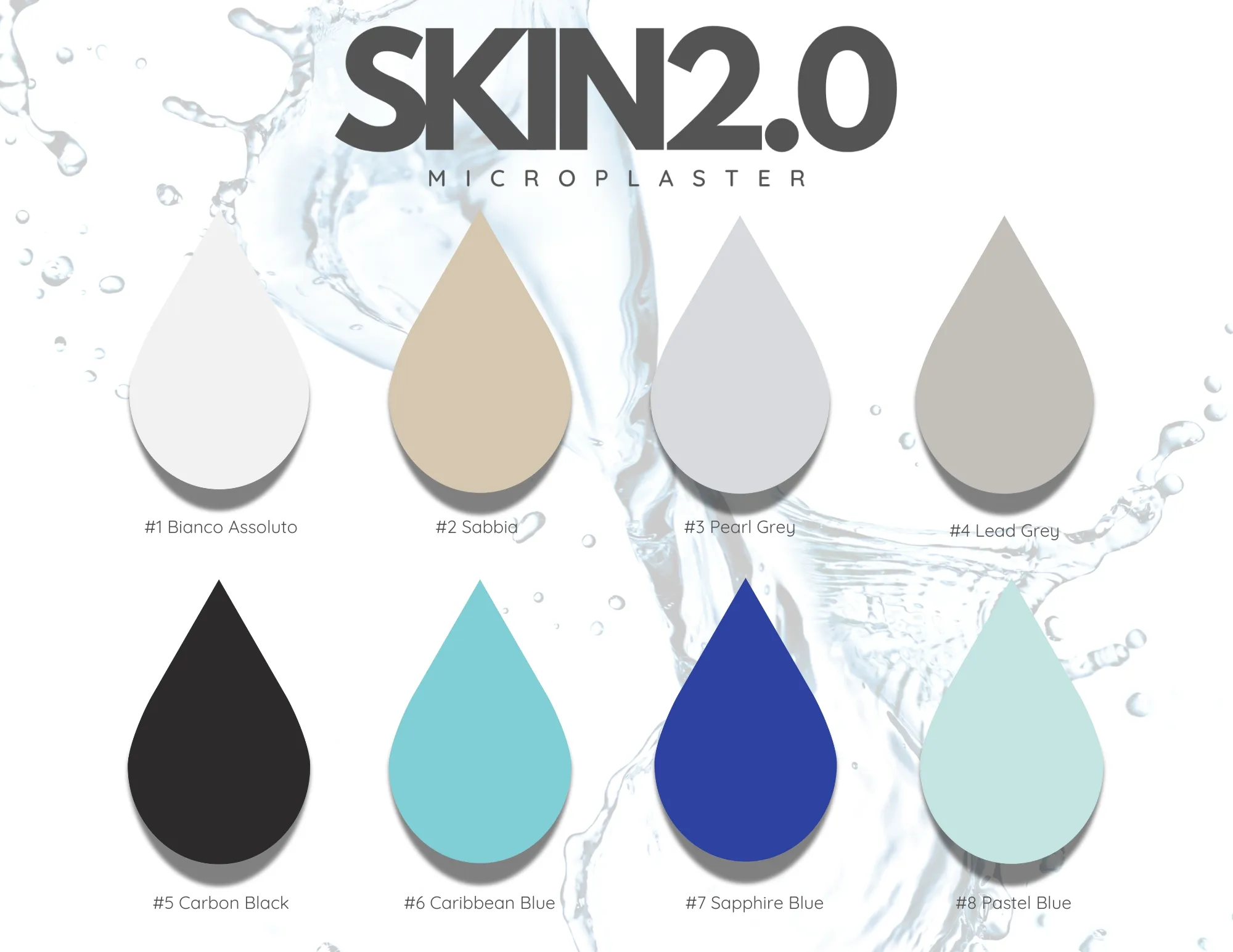
The 8 SKIN Microplaster Shades
Every SKIN shade is engineered into the same micro-ceramic waterproofing system. That means color is not a compromise — each option delivers the same impervious, certified performance regardless of tone.
Neutral Tones
#1 Bianco Assoluto — A clean, bright white that delivers the most traditional pool look. Water appears light turquoise in shallow areas and shifts to a deeper aqua toward the deep end. This is the go-to for homeowners who want the classic backyard pool aesthetic with maximum brightness.
#2 Sabbia — A warm sand tone inspired by Mediterranean coastlines. Water takes on a soft aqua-green hue, similar to what you see in natural limestone lagoons. Sabbia works well with travertine decking, warm-toned stone, and earth-colored landscaping.
#3 Pearl Grey — A subtle, refined grey that gives the water a silvery blue tone. It reads as modern without being dramatic. Pearl Grey suits contemporary architecture, minimalist patios, and properties where the pool should complement the design rather than dominate it.
#4 Lead Grey — A deeper, more assertive grey that shifts the water toward a rich blue-grey. The effect is more moody and architectural. Lead Grey is popular for vanishing-edge pools, rooftop installations, and builds where the pool is designed to feel like a feature piece.
#5 Carbon Black — Bold and unapologetic. Carbon Black creates a dark, reflective surface that mirrors the sky and surrounding landscape. Water appears deep and dramatic, similar to a natural cenote. This shade absorbs more sunlight, which can raise water temperature slightly — a practical benefit in cooler climates.
Blue Tones
#6 Caribbean Blue — A vibrant teal that gives the pool a tropical lagoon quality. Water looks lively, saturated, and inviting even on overcast days. Caribbean Blue is one of the most popular choices for residential pools where the homeowner wants the water itself to make a statement.
#7 Sapphire Blue — A deep royal blue that produces vivid, jewel-tone water. The effect is intense and luxurious, especially in direct sunlight. Sapphire Blue pairs well with darker coping and decking materials and tends to be a favorite for resort-style builds.
#8 Pastel Blue — A soft, muted mint-blue that creates a gentle, spa-like atmosphere. The water reads calm and serene rather than bold. Pastel Blue is ideal for freeform pools, wellness features, and settings where relaxation is the priority over visual impact.
Custom colors: Need a tone outside the standard eight? SKIN Microplaster can be custom-tinted by working with oxides to match your specific design vision. Contact us for samples and color-matching options.
How Plaster Color Changes the Way Water Looks
Pool water has no color of its own. What you see is the result of three forces working together: the plaster shade on the basin floor, the depth of the water above it, and the angle of sunlight passing through. A lighter surface reflects more light upward, producing bright, airy tones. A darker surface absorbs more light, creating depth and richness.
Depth amplifies the effect. The shallow shelf of a tanning ledge will look different from the deep end — even though the same plaster covers both. In a Bianco Assoluto pool, the shelf reads almost transparent while the deep end glows aqua. In a Carbon Black pool, the shelf appears dark green-grey while the deep end becomes near-black.
Surrounding materials also play a role. Light-colored coping and decking bounce reflected light into the water, brightening the perceived tone. Dark stone and landscaping let the plaster color speak for itself. When selecting a shade, think beyond the swatch — picture it under eight feet of water at noon and again under landscape lighting at night.
Why Color Holds Better in a Micro-Ceramic Finish
Traditional pool plaster is porous. Over time, minerals, chemicals, and organic matter work their way into the surface and alter the original color. That is why so many white plaster pools eventually look grey or mottled — the staining is not on the surface, it is inside it.
SKIN Microplaster solves this differently. The micro-ceramic waterproofing system creates a dense, impervious membrane that blocks absorption at the surface level. Chemicals stay in the water where they belong, not embedded in the finish. The result is a color that holds truer for longer, with less fading, less staining, and less need for acid washing to restore appearance.
Every shade in the SKIN color chart carries the same certified performance: ASTM, NSF, and Miami-Dade NOA tested. The finish is antimicrobial, antibacterial, and antiviral. It applies in thin coats with no cold joints, cures in days instead of weeks, and delivers a smooth, velvety surface that is comfortable underfoot. Whether you choose Bianco Assoluto or Carbon Black, the protection is identical.
Frequently Asked Questions About Pool Plaster Colors
What color pool plaster makes water look bluest?
White and light grey plasters tend to produce the clearest blue water because they reflect sunlight back through the water column. Pastel blue and Caribbean blue plasters intensify that effect further, giving the pool a vivid tropical appearance.
Does dark pool plaster make water warmer?
Yes. Darker plaster colors absorb more solar energy, which can raise water temperature by a few degrees compared to a white or light-colored finish. Carbon black and deep grey finishes show the strongest warming effect.
Can pool plaster color hide stains?
Medium and darker tones like Lead Grey or Sabbia are more forgiving with minor mineral staining and surface marks than a pure white finish. However, the best defense against staining is proper water chemistry and an impervious surface that resists absorption in the first place.
How many colors does SKIN Microplaster come in?
SKIN Microplaster is available in eight standard colors ranging from Bianco Assoluto (bright white) to Sapphire Blue (deep royal blue). Custom tones can also be created by working with oxides to match specific design visions.
Does pool plaster color fade over time?
Traditional plaster can fade due to chemical exposure, UV degradation, and surface porosity. Advanced micro-ceramic finishes like SKIN Microplaster resist fading better because the dense, impervious surface limits chemical penetration and mineral absorption that cause discoloration.

Invest in your projects.
Invest in SKIN2.0

Your Source for SKIN2.0 Updates
Stay in the loop with our SKIN newsletter, where we deliver the latest updates